
Thai Customs to seek DSI, NACC probes into e-waste smuggling
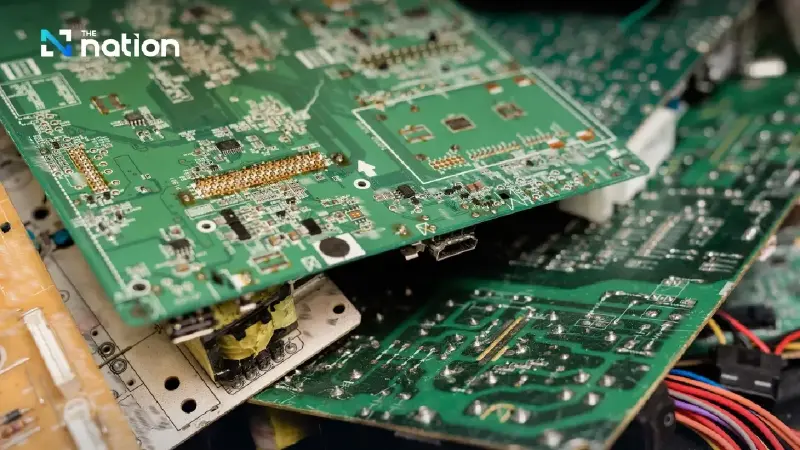


Thai Customs plans criminal and corruption referrals over alleged e-waste smuggling by seven firms and bribery claims against its officials.
- Thailand's Customs Department will ask the Department of Special Investigation (DSI) to launch a criminal probe into seven companies for allegedly smuggling electronic and hazardous waste.
- The companies are accused of concealing the illegal waste by falsely declaring the cargo as scrap metal when importing it through Laem Chabang Port.
- A separate investigation will be requested from the National Anti-Corruption Commission (NACC) to investigate Customs officials suspected of accepting bribes to allow the illegal shipments to pass.
Thailand’s Customs Department plans to ask the Department of Special Investigation (DSI) to investigate seven companies over alleged electronic waste smuggling and the National Anti-Corruption Commission (NACC) to investigate Customs officials accused of soliciting bribes to let the shipments through.
The companies allegedly imported hazardous industrial waste and electronic waste through Laem Chabang Port by falsely declaring the cargo as scrap metal or scrap iron to conceal its contents.
Customs director-general Phantong Loykulnanta outlined the planned referrals at a press conference on inspections of containers suspected of carrying hazardous waste covered by the Basel Convention.
DSI referral could lead to criminal proceedings
Phantong said the department was preparing to hand the DSI the names of operators, details of containers in which violations had been detected and information on the seven companies named in complaints.
Customs will ask the DSI to take up the matter as a special case and pursue criminal proceedings. If wrongdoing is established, the department also plans to refer the matter to the Anti-Money Laundering Office for money laundering proceedings.
The separate NACC referral would concern Customs officials allegedly involved in soliciting bribes to allow the illegal imports.
Phantong explained that the action was intended to disrupt hazardous waste smuggling networks and prevent further social and environmental harm to Thailand.

Violations detected in 89 flagged containers
According to inspection data as of October 22, 2026, authorities had identified 833 containers following tip-offs.
Of these, 447 did not enter Thailand, violations had been detected in 89, and another 74 remained under inspection.
Separately, the department reported 198 enforcement cases during fiscal year 2026, an increase of 82% from the previous year.
The weight of hazardous waste and illegal scrap materials seized or detained increased fourfold to 20.5 million kilograms, with an estimated value of 243 million baht. These figures cover the department’s annual enforcement activity, rather than the allegations involving the seven companies alone.
Blacklisting would trigger checks on every container
The Customs Department also plans to blacklist importers and freight forwarders found to have committed offences.
Every subsequent import container handled by blacklisted companies would be detained, opened and thoroughly inspected.
Alongside the enforcement measures, Customs will work with the Department of Industrial Works, Pollution Control Department, Department of Foreign Trade and Ministry of Natural Resources and Environment to propose tighter import controls.
The proposed restrictions would prohibit scrap metal imports shipped loose in bulk or packed into large bags that prevent thorough inspection. Only clean, properly sorted scrap metal or material already processed into recycled metal ingots would be permitted.
The measures are intended to balance the economic benefits of recycling with environmental protection.
Dense scrap cargo hampers detection
Phantong noted that Thailand legally imports approximately 6.4 billion kilograms of scrap metal and waste paper each year for use as raw materials in the recycling industry, with the two categories accounting for roughly equal shares.
However, inspections have uncovered attempts to conceal prohibited materials, including electronic waste, circuit boards and electrical wiring, among scrap metal and other recyclable materials.
He warned that melting such materials in factories operating under unsanitary conditions could generate hazardous dust and chemical residues, seriously affecting the environment and the health of nearby communities.
Customs also faces practical constraints in inspecting cargo. Approximately 13 million containers move into and out of Thailand each year, including more than 11 million through Laem Chabang Port.
Opening every container would be difficult and time-consuming. Cargo X-ray equipment also cannot clearly identify electronic waste or circuit board components when they are tightly packed deep inside containers, beneath scrap metal or within large bulk bags.
