
UNODC commends Thailand after Laem Chabang e-waste seizure
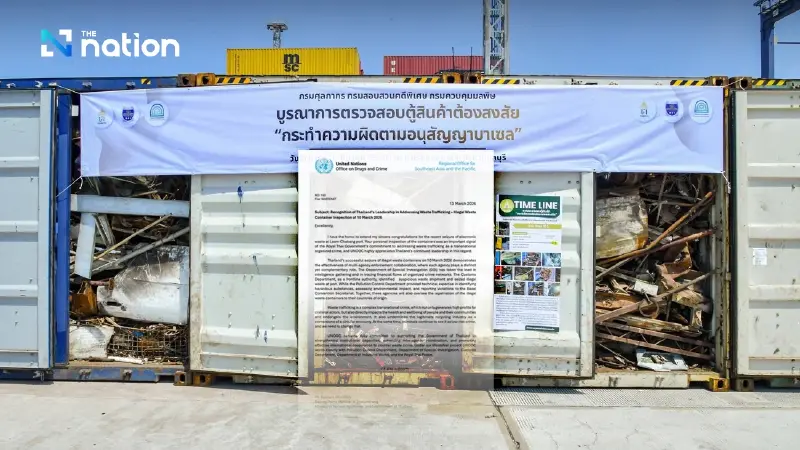


UNODC has praised Thailand’s proactive leadership in tackling transnational environmental crime after a major illegal e-waste seizure at Laem Chabang Port, with the government vowing tighter enforcement and deeper regional cooperation.
Thailand has received formal recognition from the United Nations Office on Drugs and Crime (UNODC) after authorities intercepted illegal electronic waste at Laem Chabang Port, in a case that underscores the country’s tougher stance on transnational environmental crime.
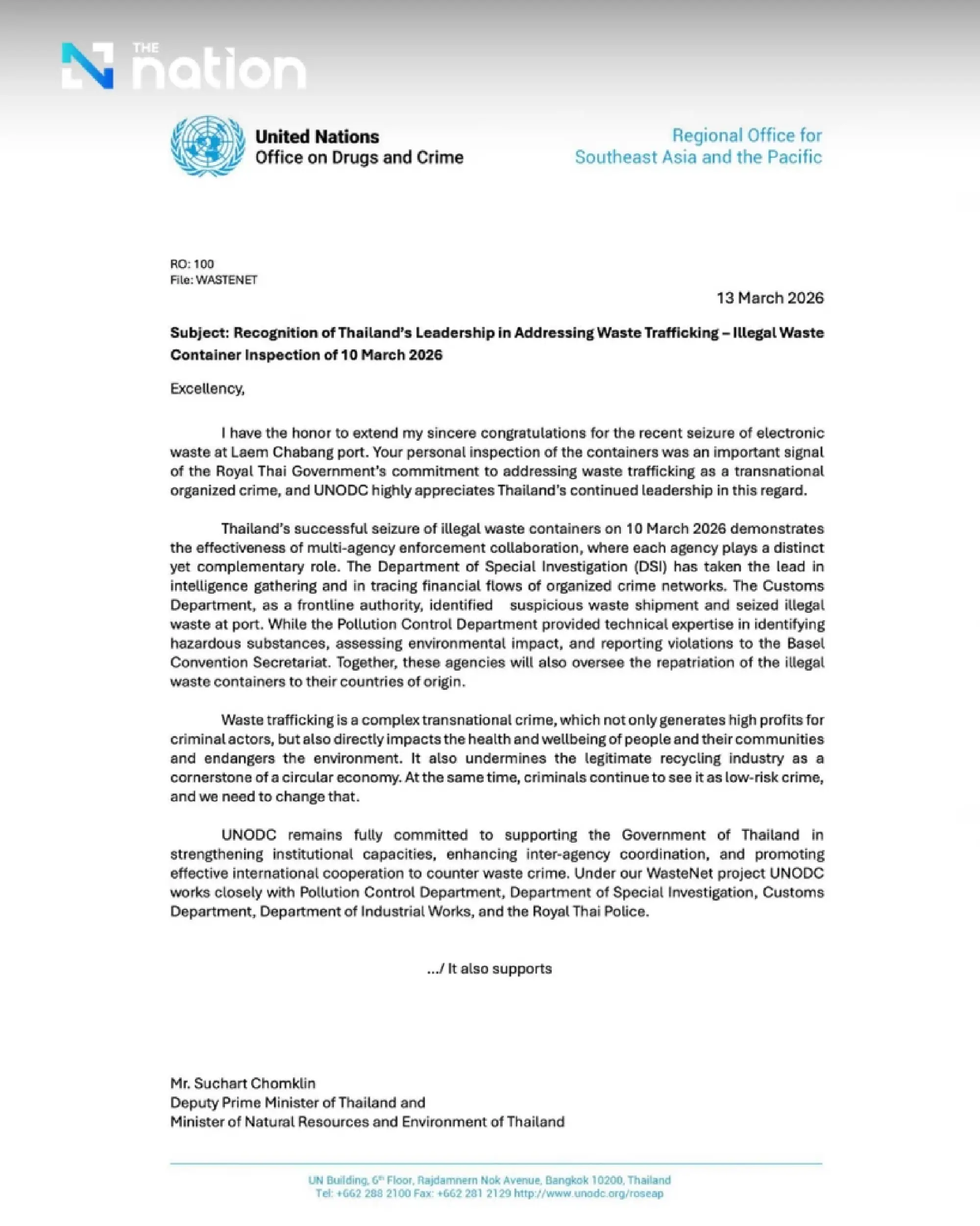
In a letter dated March 13, 2026, Delphine Schantz, Regional Representative of UNODC’s Regional Office for Southeast Asia and the Pacific, formally recognised Thailand’s “proactive leadership” in combating cross-border environmental crime.
UN praise follows March 10 port seizure
The commendation followed a major enforcement success on March 10, 2026, when Thai authorities intercepted and seized several containers of illegal electronic waste at Laem Chabang Port.

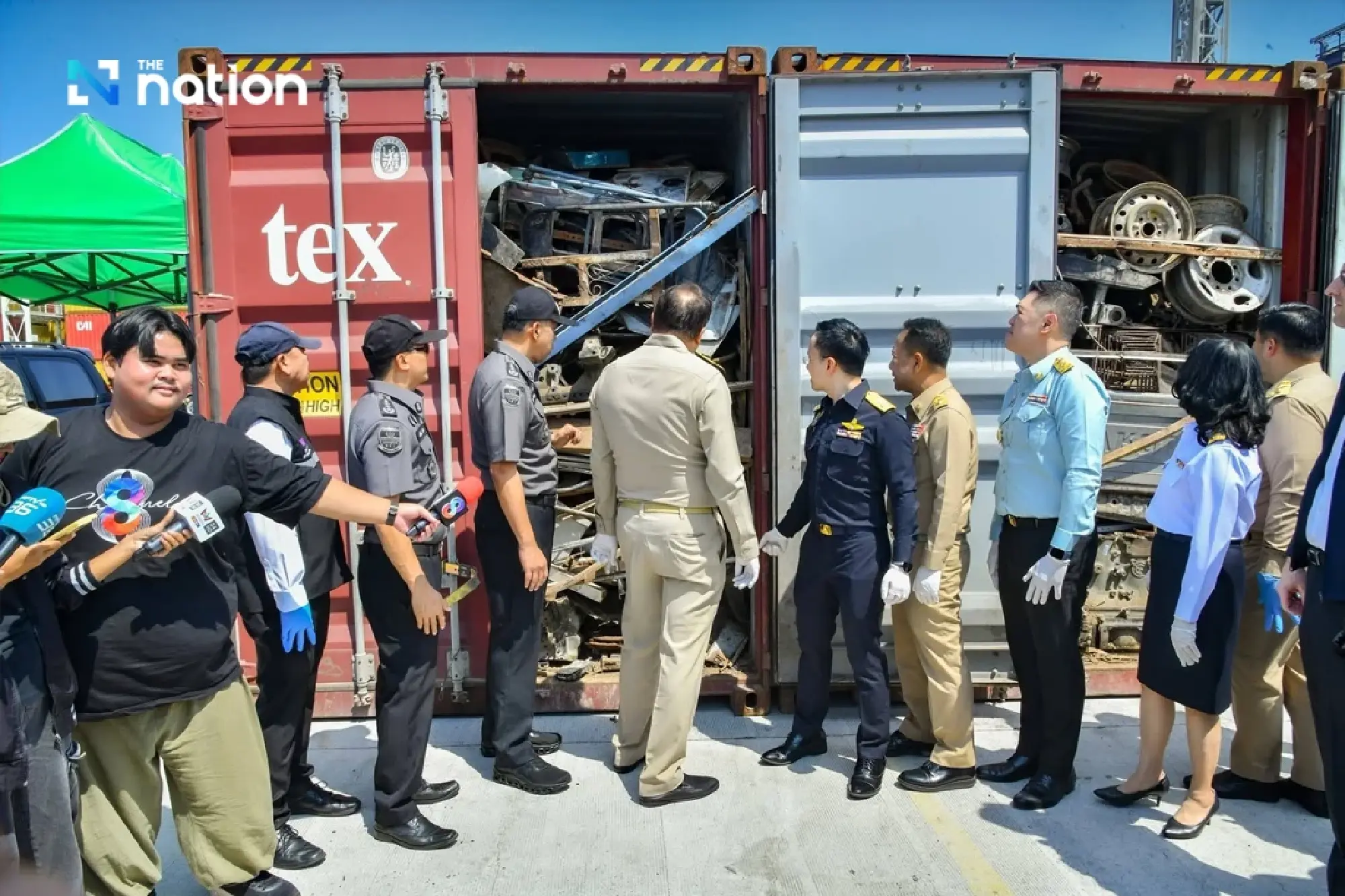
UNODC said the operation reflected strong policy commitment from Thailand, particularly highlighting the on-site inspection carried out by Suchart Chomklin, Deputy Prime Minister and Minister of Natural Resources and Environment. The agency said such high-level involvement sent a clear signal that the government was taking the issue seriously.
The recognition is especially significant because it signals a shift in how Thailand is viewed — from being seen mainly as a destination for illegal waste to becoming a more proactive frontline state working to disrupt criminal supply chains.

Agencies credited with coordinated action
UNODC also highlighted the close coordination among Thai agencies involved in the crackdown.
According to the statement, the Department of Special Investigation played a key role in intelligence gathering and tracing financial links to criminal networks, while the Customs Department handled frontline detection and seizure at the port. The Pollution Control Department, meanwhile, provided technical analysis of hazardous materials and ensured compliance with the Basel Convention.
Suchart said the success of the operation was the result of joint efforts by all agencies involved, particularly the in-depth investigation by DSI, the proactive inspections by Customs, and the technical support of the Pollution Control Department, which together allowed the seizure to be carried out swiftly and effectively.
“I personally inspected the containers because I believe tackling transnational crime requires seriousness and leadership from senior officials. The government will never allow Thailand to become the world’s dumping ground for toxic waste,” he said.

WasteNet to deepen regional cooperation
UNODC also reaffirmed its continued support for Thailand through the WasteNet programme, which is aimed at improving information-sharing, strengthening cross-border coordination, and developing operational manuals for frontline officers.
The programme also supports Thailand’s Bio-Circular-Green (BCG) economy model, with the goal of promoting more sustainable waste management.
Looking ahead, the Thai government plans to strengthen measures in three main areas: enhancing domestic capacity through better intelligence systems and port surveillance technology; expanding regional cooperation with countries of origin; and pushing for stricter laws and policies to improve the systematic prevention of illegal waste imports.

UNODC said it stood ready to support Thailand in expanding international cooperation to tackle increasingly complex environmental crime, while encouraging the country to play a bigger role in advancing sustainable waste management standards across Southeast Asia.
The latest development reflects Thailand’s increasingly clear policy direction of protecting the environment while strengthening law enforcement standards and promoting a transparent, sustainable circular economy as part of its long-term green growth strategy.
