
Thailand proposes trade pact review and closer energy ties with Japan
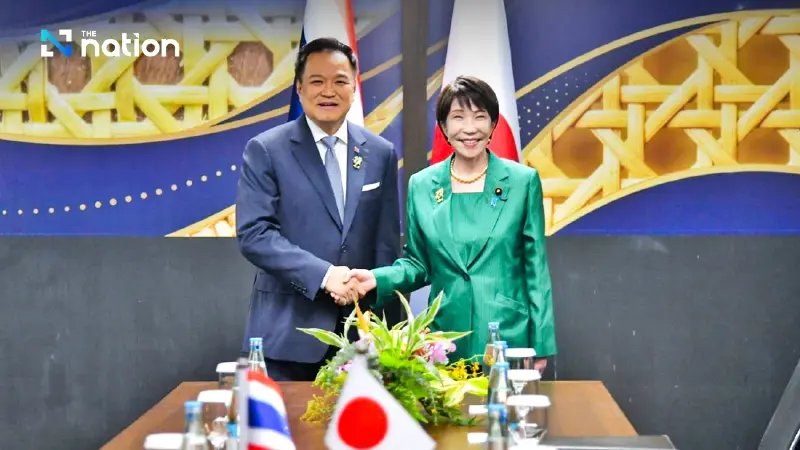


In Manila, Anutin Charnvirakul and Sanae Takaichi discussed energy security and how Thai parts makers could expand into satellite components and space equipment.
- Thailand's Prime Minister proposed a review and upgrade of the Japan–Thailand Economic Partnership Agreement to create new business opportunities.
- The proposal includes closer cooperation on energy security through regional initiatives, namely the Asia Zero Emission Community and the Partnership on Wide Energy and Resources Resilience Asia (POWERR Asia).
- Discussions also covered expanding the economic relationship to support Japanese electric vehicle production in Thailand and developing new industries like satellite component manufacturing.
Thailand proposed reviewing and upgrading its economic partnership agreement with Japan to open new opportunities for businesses in both countries. Thai Prime Minister and Interior Minister Anutin Charnvirakul raised the proposal with Japanese Prime Minister Sanae Takaichi in Manila on November 17, 2026.
The leaders met at the Philippine International Convention Center, where they discussed how to build on existing investments and the supply chains that link the two economies, Thai government spokesman Ekkapob Pianpises said.
Trade pact review and energy security
Anutin proposed a review of the Japan–Thailand Economic Partnership Agreement and closer cooperation through two regional initiatives. The Asia Zero Emission Community supports efforts to cut emissions, while the Partnership on Wide Energy and Resources Resilience Asia, known as POWERR Asia, focuses on securing supplies of energy and other resources.
With Thailand and Japan due to mark 140 years of diplomatic relations in 2027, Anutin cited Thailand’s economic foundations, government stability and policy continuity as reasons Japan could count on it as a long-term partner. He said Thailand was ready to work with Japan on both food and energy security.
From car parts to satellite components
Anutin said changes to Thailand’s excise tax on imported electric vehicles were intended to support domestic production, including by Japanese carmakers operating in Thailand.
He also outlined how Thai parts manufacturers could use their skills to produce satellite components and other space equipment. Moving into those industries, he said, could increase the value of what Thailand produces and create more jobs for highly skilled workers.
Visa exemptions and tourism
The prime ministers also discussed travel and exchanges between their countries. Anutin welcomed the increase in contacts between Thai and Japanese people and expressed hope that both countries would retain their visa exemptions to support tourism.
