
Anutin orders car-tax review to retain Japanese investment
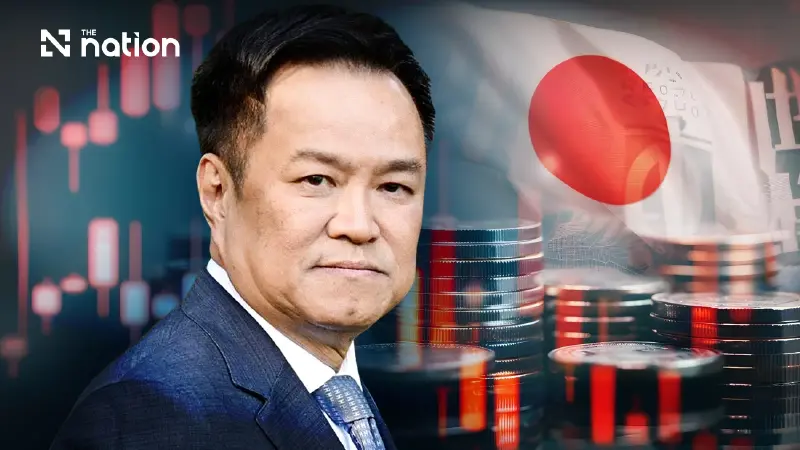


Thailand will review vehicle taxes and investment rules to ensure fair treatment for Japanese carmakers and preserve domestic production
- Prime Minister Anutin Charnvirakul has ordered a review of vehicle taxes and investment measures to retain Japanese automotive production in Thailand.
- The review aims to ensure fair treatment for established Japanese manufacturers during the country's transition to electric vehicles and address concerns they might relocate.
- The Finance Minister has been assigned to examine the tax structure to create fairer conditions and maintain investor confidence.
- Despite concerns, major Japanese carmakers like Mitsubishi, Mazda, and Isuzu have recently announced new multi-billion baht investments in their Thai operations.
Prime Minister Anutin Charnvirakul has ordered a review of vehicle taxes and other investment measures in an effort to retain Japanese automotive production and ensure established manufacturers are treated fairly during Thailand’s transition to electric vehicles.
Speaking to reporters in Canberra during an official visit to Australia, Anutin sought to ease concerns arising from speculation that Japanese carmakers could relocate production because of dissatisfaction with Thailand’s electric-vehicle policies.
He stressed that Thailand valued investors from every country, particularly Japanese companies that had used the country as a major production base for decades and had become deeply integrated into its industrial sector.
Government pledges to remove investment obstacles
Anutin said the government’s core policy was to remain open to investment and improve business conditions in ways that supported sustainable growth and long-term economic cooperation.
Thailand’s automotive industry relied heavily on Japanese manufacturers, he noted, with engines, bodies, chassis and numerous other components produced domestically under Japanese brands.
“Japanese investors were among the first to come to Thailand and have been here for so long that, when it comes to using Thailand as a production base, it is difficult to separate what is Thai from what is Japanese,” Anutin said.
“We are ready to remove obstacles and assure them that we have not abandoned them. We cannot agree to everything when we need them, only to impose additional conditions once they are doing well.”
The government wanted Japanese manufacturers to remain in Thailand and intended to preserve the country’s position as one of their strongest production bases, he added.
Ekniti assigned to review taxes and other measures
Anutin said he had instructed Deputy Prime Minister and Finance Minister Ekniti Nitithanprapas to examine tax structures and other measures affecting automotive investors.
The review is intended to create fairer conditions among manufacturers from different countries and prevent Japanese companies with longstanding Thai operations from being placed at a disadvantage.
Anutin did not announce a specific new tax rate. His remarks referred more broadly to restructuring taxes and related measures to maintain confidence among manufacturers investing in Thailand.
Although electric-vehicle production initially relies heavily on imported components, Anutin predicted that new domestic supply chains would develop as production expanded. These would include batteries, computer systems and other components that manufacturers would eventually need to produce or source in Thailand.
The government would also seek to maintain political and economic stability to support investment confidence over the longer term, he added.
Japanese carmakers commit further investment
Board of Investment (BOI) Secretary-General Narit Therdsteerasukdi said 3 Japanese carmakers had announced further investment in Thailand.
Mitsubishi Motors has outlined a THB16-billion investment plan over the next 5 years to support the expansion of its hybrid-vehicle production base.
The BOI has also approved investment of more than THB7.4 billion by AutoAlliance (Thailand), Mazda Motor Corporation’s joint venture, to upgrade its Rayong plant for new mild-hybrid electric vehicles.
The project is designed to support production capacity of 100,000 vehicles annually for domestic sales and exports.
Isuzu Motors is investing more than THB15 billion to upgrade its Thai production base through automation and robotics, cleaner energy and technology supporting Euro 6-compliant pickup trucks.
Survey points to continued Japanese commitment
The BOI recently met Ichiro Abe, president of the Japan External Trade Organization’s Bangkok office and chief representative for Southeast Asia, and Hiroyasu Kondo, president of the Japanese Chamber of Commerce, Bangkok.
They presented the results of JETRO’s survey of Japanese companies in Thailand for the first half of 2026.
The survey found that 23% of respondents planned to increase investment during 2026, while 48% intended to maintain existing investment levels.
Most investment plans focused on improving established production operations. Of the companies surveyed, 59% planned to replace ageing machinery, 31% intended to improve machinery efficiency and 22% planned to invest in digital transformation.
When asked what support they expected from the government, 29% identified tax and financial measures, 26% cited efforts to stimulate the domestic market and 24% sought wider access to third-country markets through free-trade agreements.
The survey also found that uncertainty over US trade and tariff policy had produced a limited effect for most Japanese companies in Thailand. Some 42% reported almost no impact, while 39% experienced some effect.
The findings indicate that Japanese businesses remain focused on raising productivity, strengthening competitiveness and diversifying markets while retaining Thailand as a major regional operating base.
