
Thailand backs 3:1 rule on feed maize and wheat imports for 2027
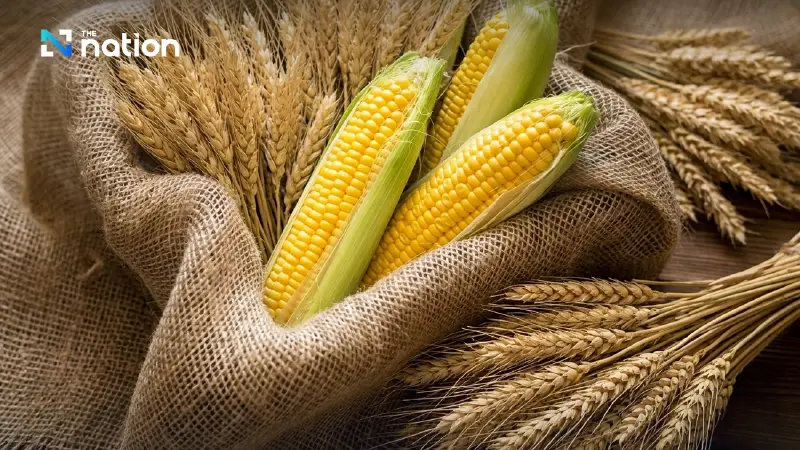


Thailand plans to keep its 3:1 rule for feed maize and wheat imports in 2027 to protect farmers and secure animal feed supplies, pending Cabinet approval.
- Thailand's Commerce Ministry has endorsed plans to continue its 3:1 import rule for feed maize and wheat throughout 2027.
- The regulation requires importers to purchase three tonnes of domestically grown maize for every one tonne of feed maize or wheat imported for animal feed.
- This policy is intended to protect local farmers by supporting domestic maize prices, whilst ensuring sufficient supply for the animal feed industry.
- Exceptions to the rule include a lower 2:1 ratio for pet food manufacturers and an exemption for some shrimp feed producers.
The Commerce Ministry has endorsed plans to retain existing import measures for feed maize and alternative feed ingredients in 2027, maintaining the 3:1 domestic purchase requirement to protect Thai farmers and ensure sufficient supplies for the animal feed industry.
Wattanasak Sur-iam, director-general of the Department of Internal Trade (DIT), said that the Maize Policy and Management Committee, chaired by Deputy Prime Minister and Commerce Minister Suphajee Suthumpun, approved the extension of the 2026 measures at its meeting on Thursday (November 26).
The decision aims to strike a balance between supporting farmgate prices and ensuring adequate supplies of animal feed ingredients, while avoiding increases in livestock production costs and consumer prices.
The committee instructed the DIT to work closely with farmers, agricultural produce aggregators and animal feed manufacturers to regularly monitor production, market conditions, prices, import volumes and demand for feed ingredients.
Should any factors emerge that could adversely affect farmers or the supply chain, the department will consider proposing an immediate review of the measures to reflect changing market conditions.
One-million-tonne duty-free maize quota retained
Yanee Srimanee, deputy director-general of the DIT, explained that Thailand would maintain its duty-free feed maize import quota of 1 million tonnes under the World Trade Organization (WTO) framework in 2027.
Imports exceeding the quota will be subject to a 73% tariff and a surcharge of 180 baht per tonne.
The existing requirement to purchase three tonnes of domestically grown feed maize for every tonne imported will remain in place. Proof of domestic purchases made from August 2026 onwards will be accepted.
Under the ASEAN Free Trade Area (AFTA) framework, general importers will be permitted to import feed maize duty-free between February 1 and August 31, 2027.
All feed maize imports, regardless of the trade framework, must be accompanied by documentation certifying that the crops were produced without burning.
The Commerce Ministry will submit the proposed import measures to the Cabinet for approval before the Department of Foreign Trade issues the relevant notifications and regulations, which are intended to take effect on January 1, 2027.
Wheat imports remain subject to 3:1 purchase rule
Manufacturers importing wheat for animal feed production must continue to purchase three tonnes of domestically grown feed maize for every tonne of wheat imported. Proof of purchases made from August 2026 onwards will be accepted.
Manufacturers of dog and cat food will be subject to a lower ratio of 2:1, while six shrimp feed manufacturers will remain exempt from the domestic purchase requirement, as wheat is a key ingredient in shrimp feed production.
Import quotas to safeguard Thai maize prices
The committee has appointed a subcommittee to oversee feed maize imports under the WTO Agreement on Agriculture’s tariff-rate quota arrangements, as well as wheat imports for animal feed production.
Chaired by the DIT director-general, the subcommittee will be responsible for allocating the one-million-tonne WTO import quota to feed mills.
Allocations will take into account feed production capacity, imports of alternative feed ingredients and proof of domestic maize purchases in line with the prescribed ratios.
The approach is designed to prevent imports from depressing domestic maize prices during the Thai harvesting season.
In 2026, approximately 570,000 tonnes of the WTO import quota were allocated, but actual imports under the quota amounted to just 140,000 tonnes.
Maize imports fall 15% in first nine months
Thailand imported 1.24 million tonnes of feed maize between January and September 2026, down 15% year on year, while wheat imports rose 5% to 1.46 million tonnes.
Barley imports fell to approximately 80,000 tonnes from 150,000 tonnes in the corresponding period last year.
Import volumes were affected by rising global raw material prices, adverse weather affecting crop yields and farmers switching to other crops.
The committee also considered the 2026–2029 feed maize strategy proposed by the Ministry of Agriculture and Cooperatives, covering production, marketing and processing.
The strategy promotes the adoption of technology to improve production efficiency, reduce costs and strengthen farmers’ capabilities.
Domestic maize prices remain above benchmark levels
Domestic feed maize prices remain favourable, exceeding the benchmark prices set by the Commerce Ministry.
Farmers are currently receiving 10.50 baht per kilogramme for maize with a moisture content of 14.5%, above the benchmark of 9 baht per kilogramme.
Meanwhile, feed mills are purchasing maize at 11.78 baht per kilogramme, compared with the ministry’s benchmark of 9.80 baht per kilogramme.
