
Mars opens THB7bn-plus Thai Pringles plant on Sept 18, employing over 170
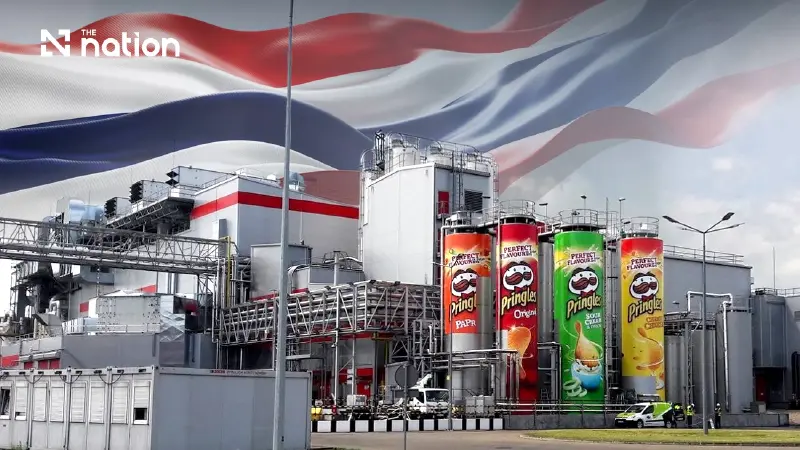


Mars’ first Pringles plant in Thailand has started a second production line for regional exports, with a third planned for late 2027
- Mars opened its first Pringles factory in Chonburi, Thailand, on September 18, following an investment of more than THB 7 billion.
- The new plant serves as a strategic production and export hub for markets across Asia Pacific, the Middle East, and Africa (AMEA).
- A second production line is now operational to increase export capacity, with a third planned for late 2027 to support long-term growth.
- The factory has created over 170 jobs and strengthens the local economy by sourcing nearly 50% of its procurement from Thai suppliers.
Mars, Incorporated has officially opened Thailand’s first Pringles factory following an investment of more than THB7 billion, establishing a production and export base in Chonburi. The opening ceremony took place on September 18, 2026, according to the Board of Investment’s announcement.
The factory is located within the Eastern Economic Corridor (EEC). Mars cited an area of 73,800 square metres for the factory and a total site area of 208,000 square metres.
Mars, a global business with more than a century of history, has a portfolio spanning pet care, confectionery and snacks, including Royal Canin, Whiskas, Pedigree, Snickers, M&M’s, Wrigley and Pringles.

Second production line expands Pringles export capacity
The Chonburi factory already supplies Pringles to India, Hong Kong and Taiwan. Its second production line has now started operating, increasing capacity to serve additional markets across Asia Pacific, the Middle East and Africa (AMEA).
Mars plans to start a third production line in late 2027, supporting the factory’s longer-term role as a manufacturing centre for markets within and beyond the region.
Gabriel Fernandez, president for AMEA at Mars Snacking, said the official opening and the start of the second production line demonstrated the company’s long-term commitment to Thailand as a strategic manufacturing and export base.

Fernandez pointed to Thailand’s infrastructure, skilled workforce and connections with regional markets as important factors in expanding the Pringles business and supplying consumers across AMEA.

“With its favourable location and increased capacity, this factory will strengthen regional manufacturing and supply while improving our ability to respond to market demand. The factory also supports the production of different Pringles flavours to suit consumer preferences in each market,” Fernandez said.
Thai workforce and suppliers support factory operations
The factory employed more than 170 people directly during its initial production phase. According to Mars, nearly 50% of its procurement budget goes to suppliers in Thailand.
Mars continues to invest in developing local employees, strengthening manufacturing capabilities and working with smaller suppliers. The company said local purchasing supported Thai products and generated wider economic benefits for the country.
Fernandez credited the factory’s diverse and talented workforce, including employees’ expertise, commitment and dedication, with helping bring the project to fruition.
“We aim to create quality employment opportunities, develop skills that meet future needs and strengthen leadership capabilities, so that together we can build a strong manufacturing system and create long-term value for employees, local communities and Thailand,” Fernandez said.
Digital systems monitor production in real time
Mars describes the Chonburi facility as a fully digitalised smart factory, combining advanced manufacturing technology with global food safety and quality standards.
Digital dashboards monitor production lines in real time, while continuous equipment-performance monitoring provides data to guide operational decisions. Mars said these systems would improve production uptime, productivity and overall operating efficiency.
The company said the factory’s production capabilities and infrastructure would support long-term growth and changing demand across AMEA. Mars expects the facility to play an increasingly important role in the regional Pringles manufacturing network and support expansion within the region and beyond.
BOI expects benefits for jobs and domestic supply chains
Anin Meksuksai, director of the Foreign Investment Marketing Division at Thailand’s Board of Investment (BOI), said the Chonburi investment demonstrated Thailand’s capacity to accommodate advanced manufacturing and long-term foreign investment.
“This factory will help create quality jobs, develop skills and strengthen domestic supply chains, while reinforcing Thailand’s position as a regional manufacturing and export hub,” Anin said.
