
Japan’s lower house passes bill to cut the tax on food and drink
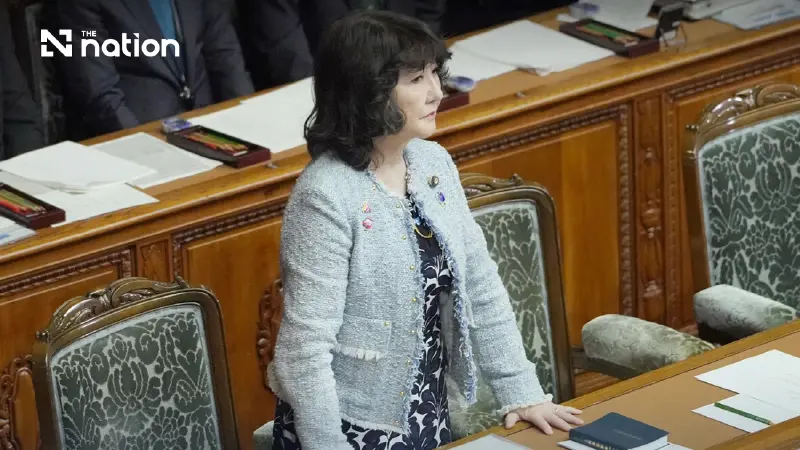


A reduced rate of 1% would take effect in April 2027 alongside income-linked payments for low- and middle-income workers.
- Japan's lower house of parliament has passed a bill to temporarily reduce the consumption tax on food and drink.
- The proposed legislation would cut the tax rate from 8% to 1% for a two-year period, scheduled to begin in April 2027.
- The bill, passed by the ruling coalition, now moves to the Senate (the upper house), where it will require support from opposition parties to become law.
- In addition to the tax cut, the measure includes income-linked payments to assist low- and middle-income earners.
A bill to give shoppers temporary relief from soaring prices by cutting the consumption tax on food and drink cleared Japan’s lower house on Friday (November 6).
Every opposition party voted against the bill, which the House of Representatives sent to the Senate, the upper chamber of Japan’s parliament, the Diet.
The ruling Liberal Democratic Party and its coalition partner, the Japan Innovation Party, secured a majority in the lower house’s plenary vote.
The coalition is short of a majority in the Senate and is expected to seek support from two opposition parties, the Democratic Party for the People and Komeito, to get the bill through.
The government and ruling parties aim to make the bill law by 12 December, the final day of the current extraordinary session.
The Liberal Democratic Party and the opposition Constitutional Democratic Party of Japan agreed on Friday that the Senate would begin debating the bill at Wednesday’s plenary sitting.
If enacted, the measure would mark the first reduction since Japan introduced the tax in 1989.
Food and drink now taxed at 8% would be subject to a 1% rate for two years starting in April 2027.
The bill pairs the tax cut with income-linked payments to ease the burden on low- and middle-income earners.
Over the first two years, the payments would be made on a scale equivalent to the 1% consumption tax on food and drink.
The full programme would follow in the 2029 financial year.
Opposition parties criticised the lack of clarity over how the tax cut would be funded and how the new benefit scheme would be designed.
“Details of the bill have not been clarified, so this amounts to disregard for the legislature,” Yuichi Goto of the Democratic Reform Party said.
Yuichiro Tamaki, who leads the Democratic Party for the People, expressed concern that middle-income earners would face a heavier burden once the tax cut expired.
“The lack of an adequate explanation from the ruling side about how to address the problem was the biggest reason for our opposition to the bill,” he said.
The government had previously put the number of eligible workers at about 20 million, based on an annual income range of 1 million yen to 3.5 million yen.
That group represented 30% of the workforce.
Answering questions from opposition lawmakers at the lower house’s Committee on Financial Affairs before the plenary sitting, Prime Minister Sanae Takaichi said 30% or more of Japan’s workers would qualify.
Her reference to broader eligibility appeared intended to make the proposal more acceptable to opposition parties.
After the committee finished its deliberations, the ruling and opposition parties agreed to a committee vote followed by referral of the bill to the full house.
“The prime minister gave detailed answers,” Shinichi Isa of Komeito, who led the opposition side on the committee’s board, told reporters.
“We have decided to put the bill to votes in order to allow deliberations to proceed in the Senate.”

[Copyright The Jiji Press, Ltd.]
