
Thailand’s branded residences become luxury safe-haven as wider property market slows
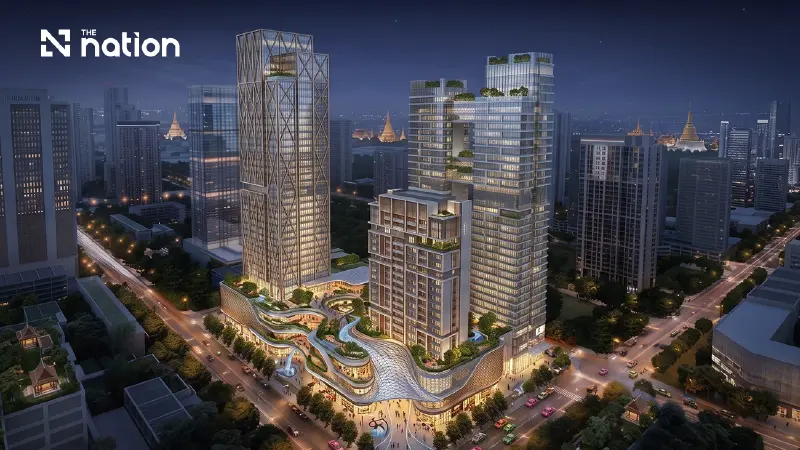


Thailand’s branded residence market has passed 205 billion baht, with Bangkok, Phuket and resort destinations emerging as Asia’s luxury property battleground.
- While Thailand's overall property market is slowing, the luxury branded residence sector is experiencing a boom, driven by affluent Thai and international buyers seeking safe-haven assets.
- Thailand has become Asia's largest market for branded residences by supply, with Bangkok and Phuket acting as dual engines for urban and resort-style luxury properties.
- Demand is fueled by buyers viewing these residences as "collectible assets" that offer hospitality-grade management, global brand association, and long-term value protection.
- The market is expanding beyond traditional hotel partnerships to include exclusive lifestyle, fashion, and automotive brands, enhancing the properties' appeal as unique investments.
Thailand’s property market may be moving cautiously, but at the very top end developers are racing in the opposite direction. A new wave of branded residences — backed by global hotel, fashion, design and automotive names — is turning Bangkok, Phuket and resort destinations into a regional test ground for luxury homes sold not merely as places to live, but as managed, long-term collectible assets.
The shift comes as Thailand’s wider residential market faces a more selective buying environment. CBRE Thailand reported that Bangkok’s overall condominium market had a slow start to 2026, with only 12 new project launches in the first quarter, as buyers took longer to make decisions amid geopolitical risks, a weak local economy and elevated oil prices.
Luxury end moves against the market
While the mass and mid-market segments remain cautious, demand at the top end is being supported by affluent Thai buyers, expatriates and international investors looking for assets that combine lifestyle, service, security and long-term value.
CBRE said completed luxury and super-luxury condominium projects in prime Bangkok locations continued to record strong sales rates in the first quarter of 2026, with completed luxury projects at 95 per cent and super-luxury projects at 86 per cent. Pipeline luxury and super-luxury projects reached sales rates of 72 per cent and 82 per cent, respectively, reinforcing Bangkok’s position as a resilient investment-grade market.
This two-speed market is changing how developers position premium residences. In the past, prime location, views and large unit sizes were enough to define luxury. Today, buyers are increasingly looking for a full ecosystem: hospitality-standard management, private owner benefits, global brand association, rental flexibility and long-term asset protection.
Thailand tops Asia by launched supply
According to C9 Hotelworks’ Asia Branded Residences Market Review 2026, Thailand has emerged as Asia’s largest branded residence market by launched supply. The kingdom’s branded residence market is valued at 205.3 billion baht, or US$6.4 billion, up 13.3 per cent year on year, with 13,124 launched units. Thailand now accounts for 26 per cent of Asia’s launched branded residence supply, the highest country share in the region.
Across Asia, the branded residence sector has reached 1.3 trillion baht across 50,025 launched units, up 30.3 per cent year on year. Although Vietnam leads the region by aggregate market value, Thailand has become the front-runner in the luxury tier, with 30 luxury-branded residence projects, ahead of Vietnam and South Korea.
The figures underline Thailand’s changing role in regional real estate. Rather than competing only on price or destination appeal, the country is increasingly competing on brand depth, lifestyle infrastructure and the ability to attract mobile global wealth.
Bangkok and Phuket form dual growth engines
Thailand’s strength lies in having more than one luxury market. Bangkok remains the country’s largest urban branded residence destination, with 5,031 units, supported by demand for serviced, managed and brand-backed city residences. Phuket, with 3,465 units, leads Asia’s resort segment by unit count, while Hua Hin, Pattaya and Koh Samui are expanding Thailand’s resort-led supply base.
In Bangkok, the appeal is tied to freehold ownership, business connectivity, healthcare, luxury retail and transport infrastructure. In Phuket, branded residences are being driven by long-stay buyers, villa investors and families seeking international schools, lifestyle amenities and resort-style management.
This dual-city model gives Thailand an advantage over markets that rely heavily on either urban towers or resort villas. Bangkok offers the investment-grade city address; Phuket offers the global lifestyle destination. Together, they create a wider platform for developers and brands to target high-net-worth buyers from Asia, Europe and the Middle East.
Global brands reshape Bangkok’s luxury map
Several Bangkok projects show how branded residences are becoming more specialised and more competitive.
InterContinental Residences Bangkok Asoke, a freehold hospitality-branded project on Sukhumvit 16, has only 88 residences ranging from 139 to 547 square metres, with prices from 40.8 million baht. The project is scheduled for completion in the second quarter of 2029 and is being positioned around hotel-standard services, concierge support and InterContinental brand management.
On Wireless Road, Upper House Residences Bangkok and The Wireless Residences by Upper House mark the world’s first Upper House branded residences. The two ultra-luxury freehold towers are being developed by City Dynamic, a joint venture between City Realty and Swire Properties, with panoramic views of Lumphini Park and Benjakitti Park. The project is expected to be completed by 2030.
At the ultra-exclusive end of the market, Porsche Design Tower Bangkok highlights the rise of non-hotel branded residences. Developed through a collaboration between Porsche Design and Ananda Development, the project will feature 22 duplex and quadplex “Sky Villas” ranging from 525 to 1,135 square metres, with an average price of US$15 million and prices reaching US$40 million.
From hotel branding to collectible assets
The market is also moving beyond the traditional hotel-linked model. Standalone branded residences now account for 3,008 units in Thailand, or 22 per cent of total supply, higher than Asia’s 17 per cent average. C9 Hotelworks said the next phase of growth is shifting beyond hotel-connected residences, with lifestyle, fashion and automotive brands entering the sector.
This trend is important for Thai developers because it allows them to differentiate projects in a crowded high-end market. A hotel brand may signal service quality, but a lifestyle or design brand can create a more emotional proposition: identity, scarcity, exclusivity and belonging.
For ultra-high-net-worth buyers, these homes are increasingly treated as “collectible assets” — scarce, brand-backed properties that can function as a residence, second home, lifestyle membership and long-term store of value.
Next battle: management, not logos
As supply expands, the key challenge for developers will be proving that a brand delivers value after handover. C9 Hotelworks noted that the brand name alone is no longer enough to carry a project, with developers now competing on operating platforms, owner benefits, destination strategy and long-term residential value.
This means the next battleground will not only be location or architecture, but property management, service consistency, rental programmes, maintenance standards and access to global lifestyle networks.
For Thailand, the opportunity is clear. The country already has the fundamentals that appeal to global wealth: tourism, healthcare, hospitality, international schools, lifestyle retail and comparatively attractive living costs. The challenge now is whether developers can turn those advantages into professionally managed assets that hold their value over time.
In a cautious property market, branded residences have become one of Thailand’s clearest premium growth stories. But as more global names arrive, the winners will be those that can offer more than a famous logo — they will need to deliver a lasting ownership experience.
Sources: Thansettakij, CBRE Thailand, Hospitality Net
