
Don Mueang’s transport links draw luxury housing investment



Sansiri plans September 12–13 presales for Don Mueang homes priced at 15–40 million baht, about 400 metres from the Red Line station.
- Improved transport links, including the Red Line suburban railway and expressways, are transforming Don Mueang into a major infrastructure hub, attracting investment in luxury housing.
- Demand for high-end properties is expanding beyond airport staff to include affluent local families, high-earning professionals, and regional business owners drawn to the area's transport network and international schools.
- The trend is evidenced by an 11% average annual increase in land values, high rental yields of around 7%, and developers like Sansiri launching projects with homes priced up to 40 million baht.
- Proposed zoning changes to allow for denser residential development are expected to further support land values and encourage long-term investment in the district.
Don Mueang is attracting more high-end housing development as transport links, international schools and demand from affluent families broaden its appeal beyond the airport, according to Cushman & Wakefield Thailand.
Surachet Kongcheep, the firm’s head of research and consultancy, described the district as an emerging “major infrastructure hub” in northern Bangkok. He cited an average annual increase of about 11% in appraised land values.
Rental yields at Sansiri’s low-rise residential projects in the area have reached around 7%, a level Surachet described as high compared with the wider low-rise property market.
Sansiri is preparing to launch detached homes priced from 15 million to 40 million baht, reflecting developers’ interest in buyers seeking larger, higher-end properties with access to the area’s transport networks and amenities.

Affluent local families anchor demand
Cushman & Wakefield Thailand identifies three main target groups whose purchasing power distinguishes Don Mueang from many other Bangkok housing markets.
The largest, described as local wealth and relocation, is estimated at around 50–60%. It includes affluent individuals and established families from Don Mueang, Chatuchak, Lak Si, Phaya Thai and Nonthaburi city who need more space as their families grow but want to remain in familiar surroundings.
High-earning professionals and parents account for an estimated 30–40%. This group includes pilots, senior executives and personnel at Airports of Thailand (AOT), doctors, business owners and parents of children attending schools such as Harrow International School Bangkok and Brighton College Vibhavadi.
A third group, regional wealth, is put at around 20%. These are business owners from major provincial centres in central and northern Thailand seeking a Bangkok home as a long-term family asset. Access to the airport and expressways is particularly important to them.
Together, these groups provide demand beyond the district’s traditional base of airport employees, drawing attention to Don Mueang as a location for luxury housing.

Schools and transport broaden the market
International schools and government facilities have helped attract families, employees and economic activity to the wider area. Harrow International School Bangkok began accepting students in 1998, while the Government Complex on Chaeng Watthana Road opened in 2008.
Brighton College Vibhavadi began accepting students in 2025, adding to the area’s appeal among higher-income families looking for homes near international schools with convenient connections to other parts of Bangkok.
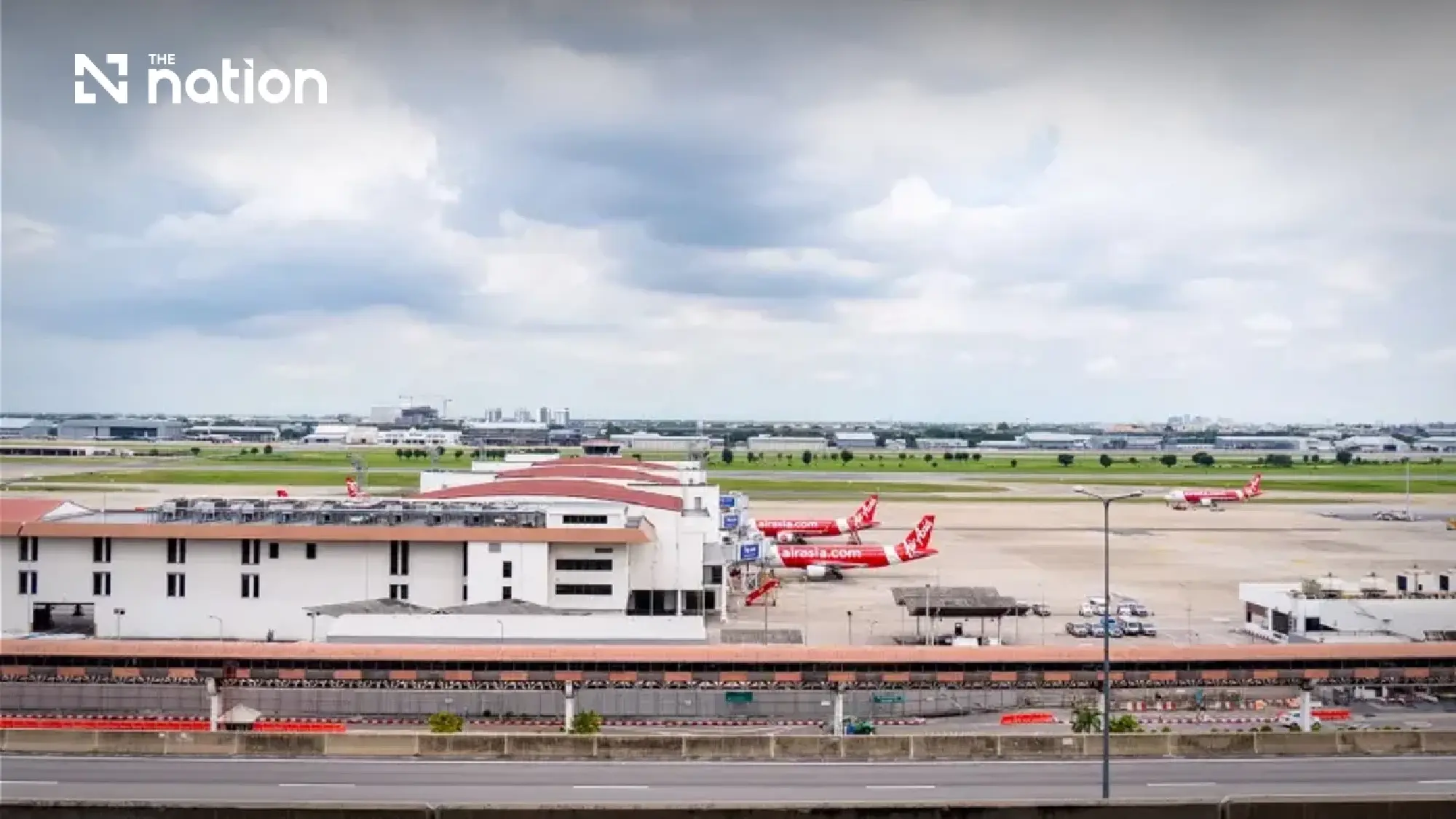
Airport passenger traffic and airline personnel remain important sources of demand. Developers continue to launch both housing estates and condominiums, serving airport-related demand as well as buyers from elsewhere seeking access to northern Bangkok’s infrastructure.
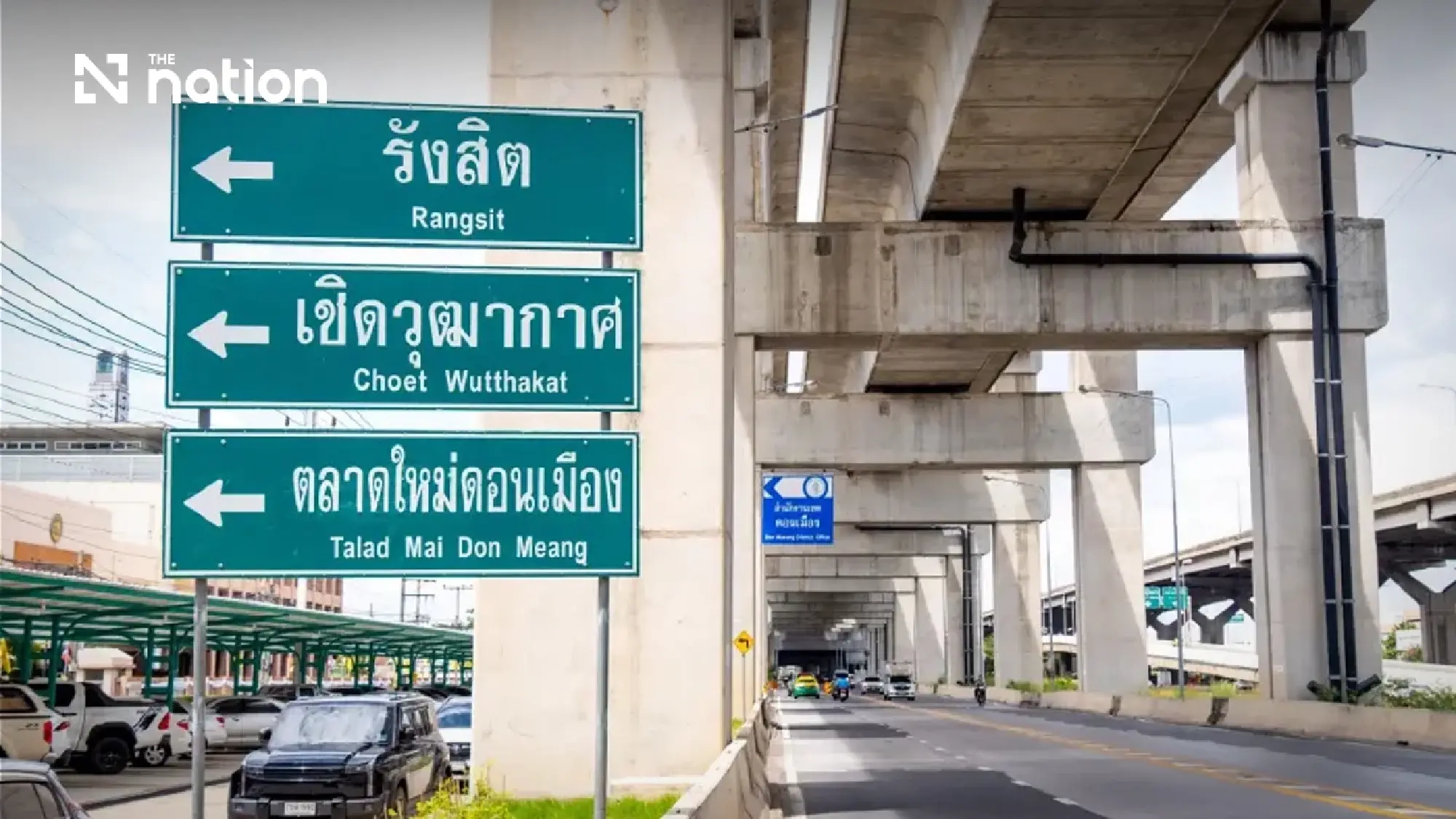
The district’s road connections include Vibhavadi Rangsit Road, the Don Muang Tollway and the Si Rat Expressway. Kamphaeng Phet 6 Road and Choet Wutthakat Road provide additional routes within the area.
The opening of the Bang Sue–Rangsit section of the Red Line suburban railway in 2021 brought significant changes to land use around stations, particularly on the side opposite Don Mueang Airport.
Transport has shaped the district’s development for decades. Community expansion accelerated after Vibhavadi Rangsit Road opened in 1966, improving access to an area where the airport was already operating. Early communities included Royal Thai Air Force personnel, airport employees and long-established residents.
Housing estates became more widespread after 1977, extending along Song Prapha Road, Chang Akat Uthit Road and connecting side streets. Much of the vacant land was gradually developed to accommodate the growing population.

Proposed zoning changes increase development potential
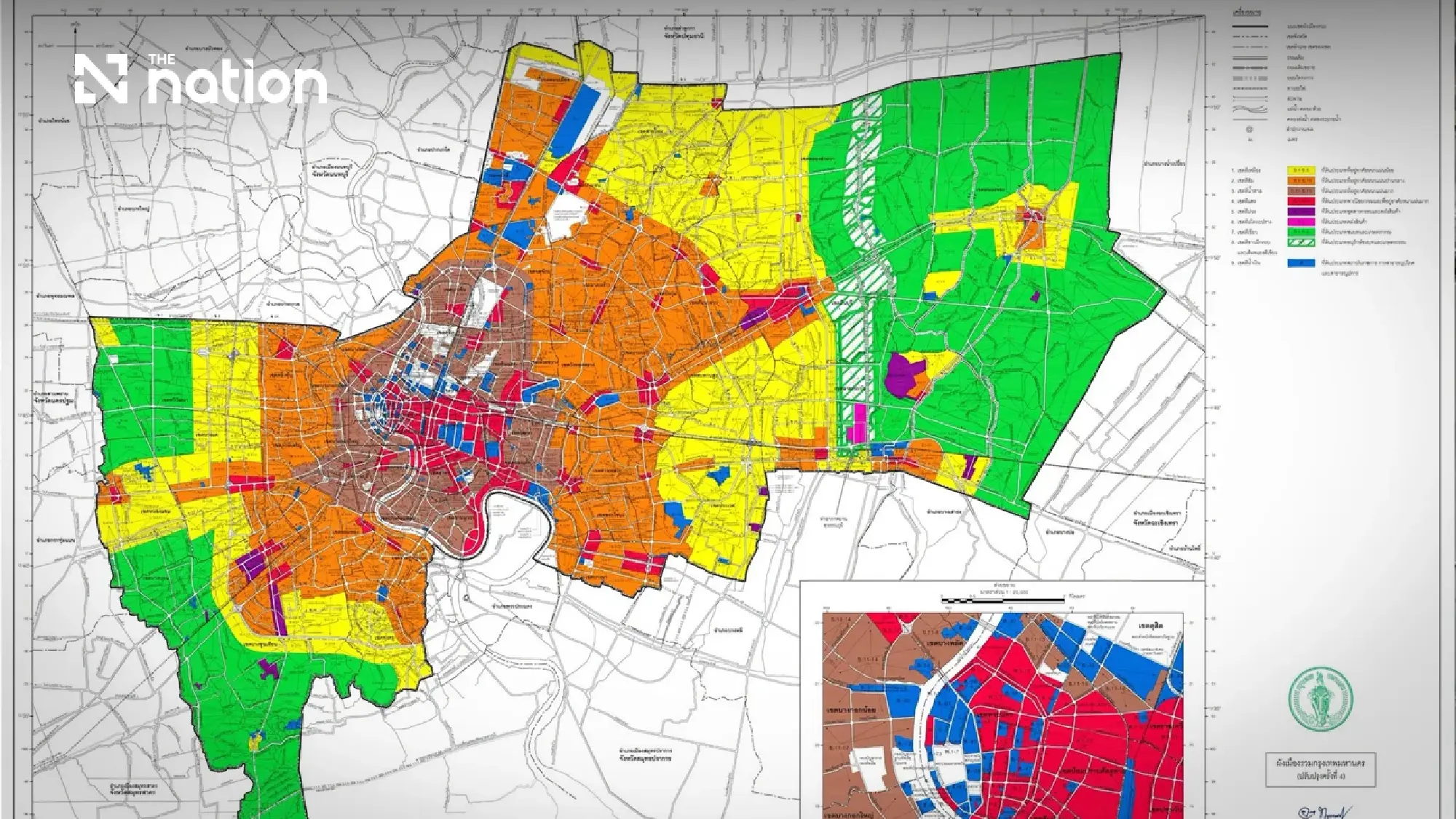
The railway’s arrival has coincided with proposed changes under the fourth revision of the Bangkok Comprehensive Plan, in the version issued for a 90-day public notice period.
Some parts of Don Mueang would move from yellow-coded, low-density residential categories Y.3 and Y.4 to orange-coded, medium-density residential categories Y.6 and Y.7.
The corresponding floor area ratios (FAR) would increase from approximately 2.5–3 to around 3.5–4.
Although the increase is relatively modest, it would expand the development potential of affected sites. The proposed changes could support land and housing values over the longer term, alongside investment in transport infrastructure.
Building-height restrictions associated with proximity to the airport remain a constraint, however. The zoning proposals do not remove that limitation.
Sansiri chooses detached homes near the Red Line
Sansiri’s approach illustrates the growing focus on higher-end housing. The developer has selected land with potential for condominium development near the railway for an upscale detached-house project instead.
Setthasiri Great Don Mueang forms part of the Sansiri Community concept, bringing the company’s low-rise and high-rise residential developments together within the same area.
The project is approximately 400 metres from Don Mueang Red Line station.
Although buyers of homes in this price range may not rely primarily on public transport, the railway offers an alternative for journeys into central Bangkok and other areas without using a private car.
The project could attract both existing Sansiri customers and new buyers seeking higher-end homes close to the airport, rail services, expressways, international schools and other amenities.
Presales are scheduled for September 12–13, 2026.
