
Bangkok luxury housing outpaces major global cities
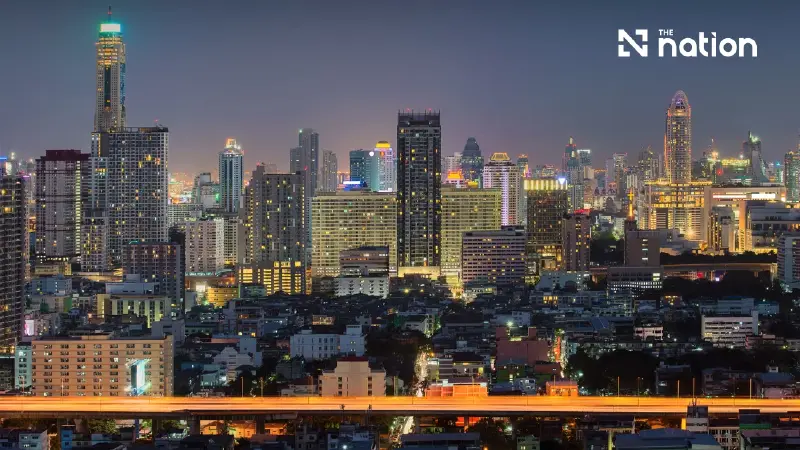


Bangkok luxury home prices have risen 75% in 10 years, outpacing several global cities, while a 3.8% rental yield keeps the market attractive in Asia-Pacific.
Bangkok has recorded one of the strongest increases in luxury residential prices among major global cities over the past decade, with values rising by about 75%, according to Savills Research.
Although Bangkok is not among the world’s most expensive residential markets, the scale of its price growth has been notable. Over the past 10 years, luxury home prices in the Thai capital have climbed by around 75%, reflecting a significant expansion of the upper-end residential market.
That growth has put Bangkok ahead of several major global economic and investment centres, including Berlin, Miami, Los Angeles, Sydney, Paris, Singapore and Hong Kong.
The figures highlight another dimension of Bangkok’s property market. While residential prices remain below those of Asia’s most expensive cities, the capital has recorded a sharp cumulative increase in luxury property values over the past decade.

Market begins to correct in 2026
However, sustained growth does not mean the market will continue rising in a straight line.
Savills Research data for the first half of 2026 show signs of a shift, with both luxury residential sale prices and rents in Bangkok falling by more than 5%.
The decline was attributed mainly to softer demand and price adjustments at some large developments, suggesting that the market is entering a period of rebalancing after years of accumulated growth in the upper-end segment.
The key question is therefore not simply how far prices have fallen, but whether the current correction represents a temporary pause or a turning point in Bangkok’s luxury property cycle.

Bangkok remains well below Asia’s most expensive markets
Despite the strong growth of Bangkok’s luxury residential market, prices remain considerably below those in several leading Asian cities.
Savills estimates current luxury residential prices in Bangkok at around THB404,000 per square metre, compared with:
- Singapore: about THB667,000 per sq m
- Seoul: about THB703,000 per sq m
- Tokyo: about THB1.13 million per sq m
- Hong Kong: about THB1.35 million per sq m
The gap means Bangkok luxury property remains comparatively more accessible than in many of Asia’s leading cities, despite the substantial price increase recorded over the past decade.

Rental yield of 3.8% remains a key attraction
Another factor supporting Bangkok’s luxury residential market is its 3.8% rental yield, which Savills ranks second in the Asia-Pacific region.
The figure is significant from an investor’s perspective because returns are not based solely on potential capital appreciation, but also on rental income.
In 2024, luxury residential rents in Bangkok rose by as much as 15.4%, supported by demand from foreign high-net-worth individuals, expatriates and the recovery of tourism and the hospitality sector.
This suggests that Bangkok’s luxury residential market is not driven by domestic purchasing power alone, but is also closely linked to international mobility, tourism and the city’s wider economic activity.

Strong growth meets a new demand challenge
Taken together, the figures place Bangkok’s luxury residential market at an important point.
On one hand, prices have risen by around 75% over 10 years, representing strong cumulative growth compared with many major global cities, while current price levels remain significantly below those in key Asian markets.
On the other, the decline of more than 5% in prices during the first half of 2026 signals that demand and purchasing power are becoming increasingly important factors.
The focus for Bangkok’s luxury housing market may therefore be shifting away from whether prices can continue rising and towards finding a new balance between property values, rental returns and demand from both Thai and foreign buyers.
The relatively high rental yield, together with Bangkok’s price gap compared with Asia’s leading cities, could continue to support the capital’s competitiveness in the regional luxury residential market.
The 2026 correction, however, will be an important test of whether the market can move from a period of price-led growth towards one driven by the quality and sustainability of demand.
Source: Krungthep Turakij
