
Bangkok floods act like a hidden tax on the economy, World Bank warns
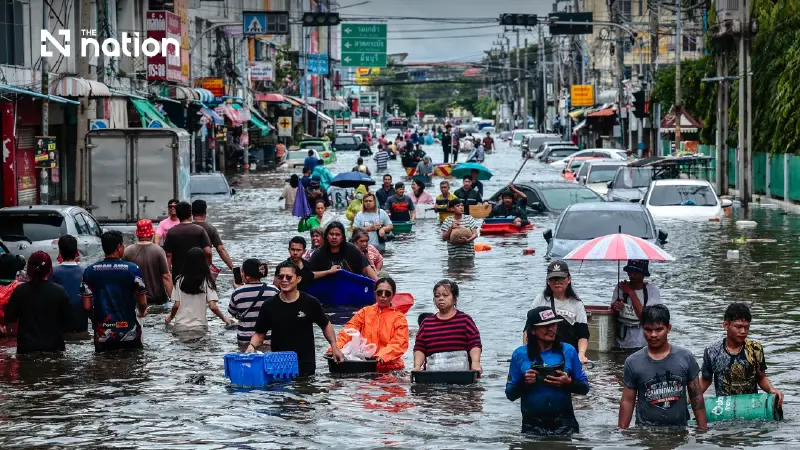


World Bank analysis warns recurring Bangkok floods impose a hidden economic burden, disrupt transport and could intensify sharply as climate risks rise.
Bangkok’s geography and increasingly severe rainfall are turning flooding from an occasional emergency into a structural economic constraint, adding recurring costs for households, businesses and the wider Thai economy, according to a recent World Bank assessment.
Much of Bangkok lies only about one to two metres above sea level on the low-lying lower Chao Phraya floodplain. Land subsidence, continuing urban expansion and tidal influences further increase the capital’s vulnerability, while heavier and more intense rainfall is placing growing pressure on drainage and flood-protection systems.
The World Bank’s latest report, Thailand Cities of the Future: Urban Foundations for a High-Income Economy, says seasonal monsoons and unusually heavy rainfall repeatedly strain those systems.
As a result, flooding is becoming a recurring condition shaping everyday decisions by businesses, households and government agencies, rather than simply an occasional disaster.

Flooding creates a hidden annual economic cost
The economic impact extends beyond visible damage to homes, roads and other physical assets.
Repeated disruption to normal economic activity creates what the report describes as “hydro-economic drag” — lost output, income and productivity when workers, businesses and services cannot operate normally.
The World Bank estimates the broader economic impact of flooding at about US$18 billion a year on average, equivalent to almost 3% of Thailand’s gross domestic product (GDP).
Bangkok accounts for a particularly large share of the losses because of its concentration of businesses, jobs, services and economic activity.
These costs can accumulate even in years without a major disaster, effectively acting like a recurring “tax” on productivity that gradually erodes economic growth.
Every millimetre of rain slows Bangkok traffic
Transport disruption is one of the main channels through which flooding weighs on Bangkok’s economy.
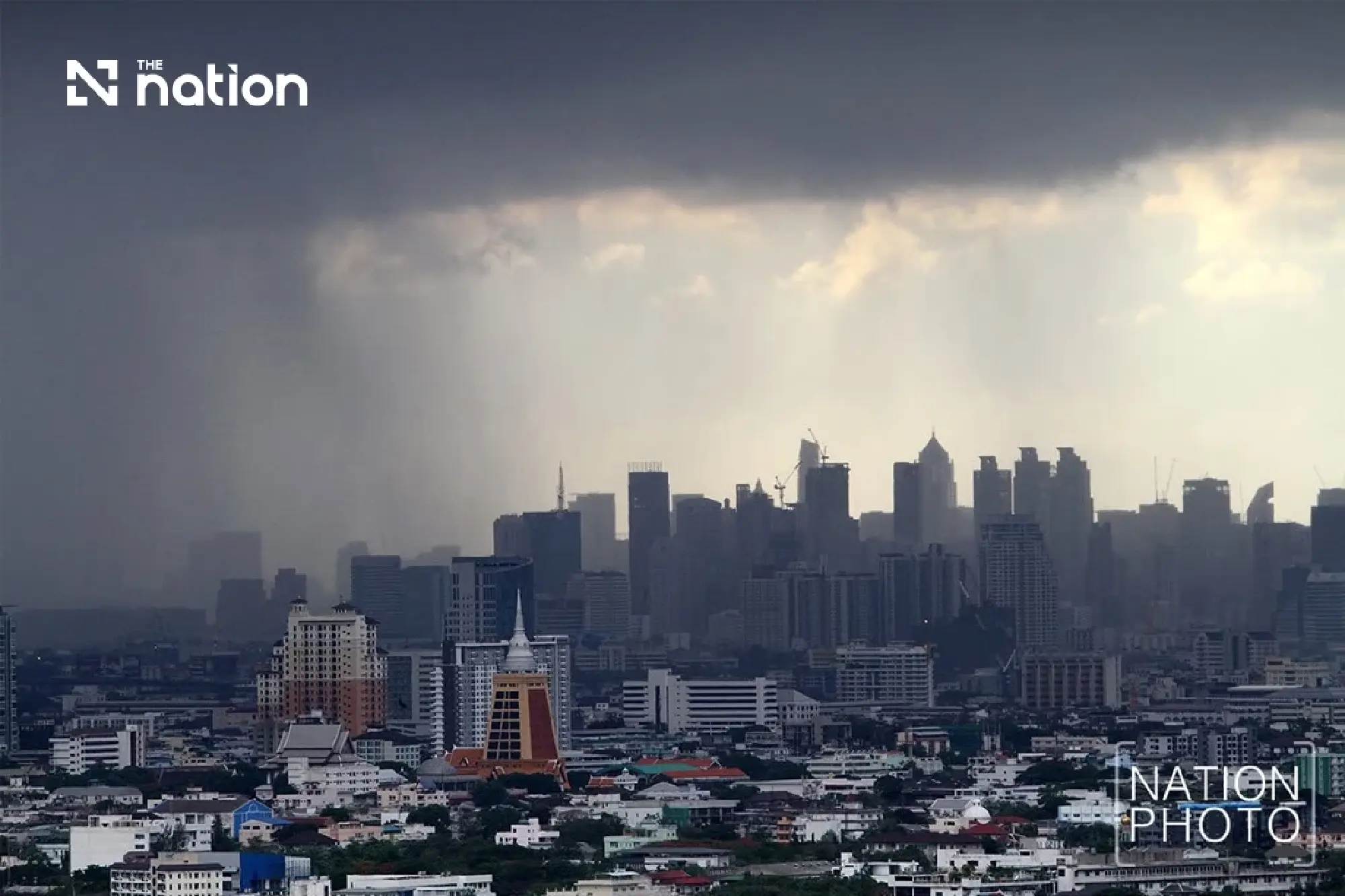
Empirical evidence cited in the report indicates that average traffic speeds fall by about 0.02 kilometres per hour for every additional millimetre of rainfall.
The effect is economically significant in a city where peak-hour traffic is already slow.
Even an ordinary seasonal rainstorm can reduce average speeds by around 7%, increasing journey times, fuel consumption and uncertainty in goods deliveries.
Heavy rain also affects freight transport and port operations, increasing truck waiting times at major logistics gateways.
Those delays raise costs across supply chains that depend on Bangkok as Thailand’s principal transport and commercial hub, underlining how flooding can become a source of structural inefficiency rather than merely a temporary inconvenience.

Upper Gulf makes drainage more difficult
Future flood risks are expected to become more complex because several factors can interact and amplify one another.
The upper Gulf of Thailand is shallow and semi-enclosed. Even a modest rise in sea level can raise tailwater levels at river mouths, making it more difficult for inland water to drain into the sea.
During periods of heavy rainfall and high river flows, this can increase both the depth and duration of urban flooding.
The combination of intense rainfall, river conditions and higher coastal water levels therefore creates a compounded risk for Bangkok’s drainage system.

Climate-related flood losses could reach US$2.6bn a year by 2030
The World Bank estimates that flooding attributable to climate change alone could cause average annual losses of around US$2.6 billion, or approximately 0.5% of GDP, by 2030 under a business-as-usual scenario.
A single major flood with an estimated 50-year return period occurring in 2030 could cause losses equivalent to 10–15% of national GDP.
The report also projects that the number of people affected by flooding during 2035–2044 could be about 2.5 times higher than in 2011, as climate change increases both the frequency and severity of major flood events.
Flood resilience increasingly tied to Thailand’s growth prospects
For a capital region responsible for nearly half of Thailand’s economic value, the findings suggest that flood risk could become a constraint on the country’s longer-term growth and competitiveness.
Without investment in resilience keeping pace with rising risks, recurring flooding could continue increasing costs for businesses, households and public infrastructure.
The challenge therefore extends beyond emergency flood response. The World Bank’s analysis points to the need for long-term urban planning and investment capable of addressing Bangkok’s geography, drainage constraints, coastal conditions and increasingly extreme rainfall together, rather than treating each flood as an isolated event.
Source: Krungthep Turakij
