
Four sponge-city models show how cities can adapt to heavier rain
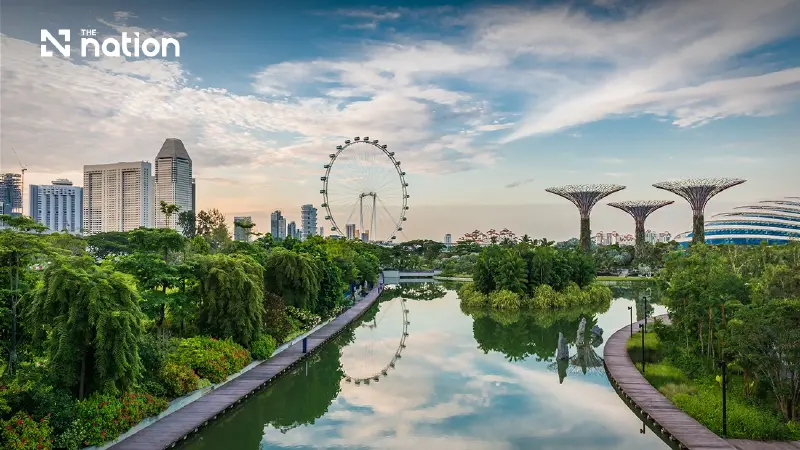


China, Germany, the Netherlands and Singapore offer different sponge-city approaches to absorbing, storing and reusing rainwater as urban flood risks rise.
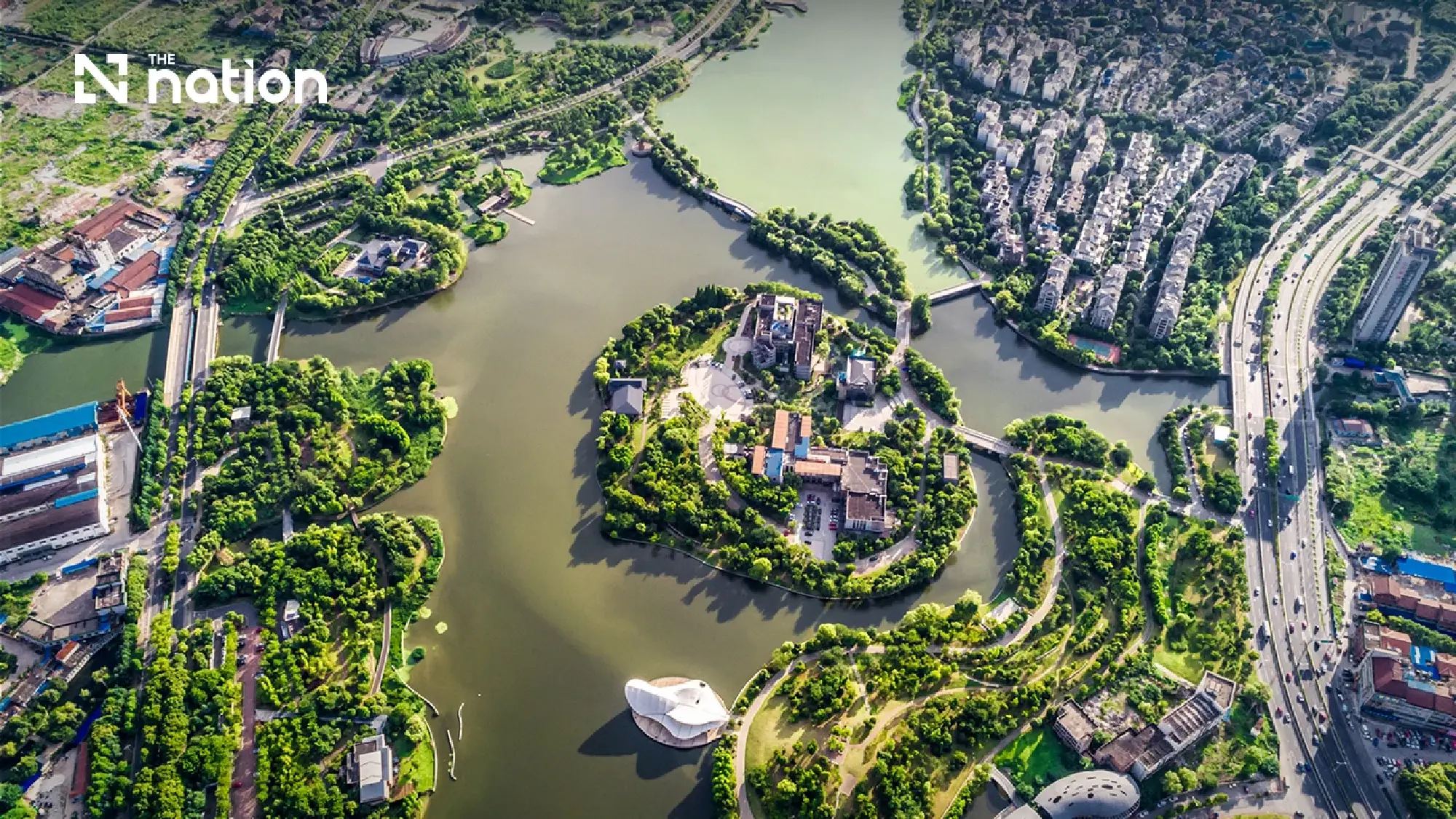
- China has implemented a large-scale national policy, creating sponge parks, artificial wetlands, and using permeable paving in pilot cities like Shanghai and Wuhan.
- Germany's model, seen in cities like Berlin, emphasizes on-site rainwater management and natural evaporation, requiring new developments to store and release water through natural processes.
- The Netherlands creates multifunctional public spaces, such as Rotterdam's Benthemplein Water Square, that serve as recreational areas in dry weather but become temporary water storage basins during heavy rain.
- Singapore's "Active, Beautiful, Clean Waters" program transforms concrete drainage canals into naturalized rivers and parks, and incentivizes green roofs on private buildings to manage rainwater.
As Bangkok and other parts of Thailand face increasingly severe rainfall and flooding, international examples of the “sponge city” concept are drawing fresh attention as an alternative approach to urban water management.
A sponge city is designed to absorb, store, slow, filter and reuse rainwater, reducing the pressure placed on conventional drainage systems during heavy rainfall.
China, Germany, the Netherlands and Singapore have each adapted the concept differently, reflecting their own geography, urban form and climate risks.
The approach is particularly relevant to Bangkok after continuous heavy rain from September 24, 2026 pushed accumulated rainfall above 300 millimetres in several areas and caused widespread flooding.
The episode has highlighted the challenge of managing not only local rainfall, but also standing water and inflows from surrounding areas, while keeping drainage systems operating effectively.

Urban growth leaves less space for water
Rapid urbanisation has increased the amount of impermeable surface in cities, including concrete and asphalt, significantly disrupting the natural water cycle.
Traditional urban water management has generally relied on “grey infrastructure” such as concrete canals, underground drainage pipes and pumping stations, with the primary objective of removing rainwater from cities as quickly as possible.
Although such systems remain essential, they can be expensive and may shift flood risks downstream. Rapid drainage can also reduce opportunities to retain water that could be valuable during dry periods.
The sponge-city concept therefore represents a shift from simply draining water away quickly towards retaining and managing more rainwater within the urban environment.
Sponge cities work with nature
Developed partly in response to growing climate risks, the sponge-city approach uses green and blue infrastructure alongside water-sensitive urban design.
Its aim is to increase a city’s capacity to:
- absorb rainwater;
- store and temporarily retain it;
- slow surface run-off;
- filter water naturally; and
- reuse rainwater where possible.
For Bangkok, the concept is directly relevant to rainfall falling inside the city itself.
Rather than treating all rainwater as something that must immediately be pumped or drained away, sponge-city design creates additional areas capable of receiving and temporarily storing water before it enters the main drainage network.

Four mechanisms help cities manage floods and heat
The hydrological principles behind sponge cities can be grouped into four main mechanisms.
The first is infiltration, using more permeable surfaces to reduce surface run-off.
The second is storage and detention, holding water temporarily to lower peak flows during intense rainfall.
The third is natural treatment, using soil and vegetation to filter water through biological processes.
The fourth is evaporation and evapotranspiration, which return water to the atmosphere while also helping reduce the urban heat-island effect and improve local microclimates.
Together, these mechanisms allow streets, parks, buildings and public spaces to become part of a city’s water-management system.
China makes sponge cities a national policy
China has pursued the sponge-city concept on a large scale and in a systematic manner.
The programme began after the Ministry of Housing and Urban-Rural Development issued technical guidance on sponge-city construction in 2014.
The central government selected 30 pilot cities, including Wuhan, Shenzhen and Shanghai, providing direct subsidies of around 700 million to 1.1 billion yuan per year for three years.
China’s strategy has included converting large urban areas into sponge parks, constructing artificial wetlands and replacing conventional pavements with permeable paving blocks.
Shanghai developed the Starry Sky Sponge Park to address land subsidence and stormwater management, while Wuhan has integrated rain gardens and permeable wetlands across parts of the city.
The Chinese programme has nevertheless faced structural challenges.
More than half of the country’s major cities have experienced land subsidence associated partly with historical groundwater extraction, while coordination between ministries and local administrative areas can be slow.
Germany designs cities to store and release water naturally
Germany is considered one of Europe’s pioneers of the sponge-city concept, known locally as Schwammstadt.
Berlin, Hamburg and Dresden are among the cities applying variations of the approach.
One distinctive element of the German model is its emphasis on evaporation and plant transpiration, recognising that urban development greatly reduces natural evaporation and contributes to heat accumulation.
Following severe rainfall and flash flooding in Berlin in 2017, the city introduced requirements for new developments to manage rainwater within their own sites rather than discharge it directly into the combined sewer network.
The redevelopment of the former Tegel Airport is being designed as a sponge-city district in which rainwater is stored and released through decentralised natural processes.

Netherlands turns public spaces into temporary reservoirs
The Netherlands has gradually shifted from relying exclusively on flood barriers towards a broader philosophy of “living with water”.
Its national Dutch Delta Programme allocates close to €1 billion a year to water management and climate resilience.
Rotterdam has developed multifunctional public spaces that double as temporary water-storage areas.
One prominent example is Benthemplein Water Square.
In normal weather, the site functions as a public plaza and basketball court. During heavy rain, however, parts of the square become temporary basins that store stormwater and reduce pressure on the city’s main drainage system.
The model shows how public infrastructure can serve both everyday urban life and flood protection.
Singapore transforms concrete canals into natural waterways
Singapore applies similar principles through its Active, Beautiful, Clean Waters (ABC Waters) Programme, which aims to transform conventional concrete drainage infrastructure into more natural waterways and public spaces.
A leading example is Bishan-Ang Mo Kio Park, where a 2.7-kilometre concrete drainage canal was transformed into a winding naturalised river.
Vegetation surrounding the river helps absorb water and filter pollutants while also creating recreational space.
Singapore also encourages private buildings to incorporate green roofs and vertical greenery through the Skyrise Greenery Incentive Scheme, extending water-sensitive and nature-based design beyond public infrastructure.
Bangkok needs more than faster drainage
The flooding experienced in late September illustrates how Bangkok must manage several interconnected sources of water: local rainfall, water moving through the wider basin and flows from upstream areas.
Conventional drainage infrastructure — canals, pipes, pumping stations and tunnels — will therefore remain essential.
However, applying sponge-city principles would not mean replacing these systems.
Instead, the approach would add another layer of protection by creating more urban spaces capable of absorbing, storing, slowing, filtering and reusing water before it reaches the main drainage network.
For Bangkok, the emerging question is therefore not simply how to drain rainwater faster, but how much more water the city can safely hold, delay and manage within its own urban landscape before conventional drainage systems become overwhelmed.
Source: Thansettakij
