
TRACIT Report Ranks Thailand Third in ASEAN, Citing Smuggling and Corruption Hurdles
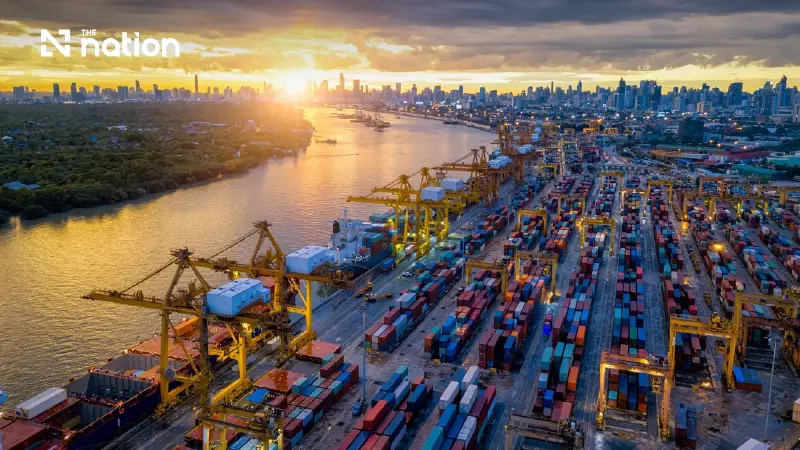


A comprehensive TRACIT study ranks Thailand third in ASEAN for illicit trade resilience, warning that regional supply chains face critical oversight gaps
- A TRACIT report ranks Thailand third among ten ASEAN nations for its resilience against illicit trade, placing it 56th globally out of 158 countries.
- Despite a strong ranking in customs and border control, Thailand faces significant hurdles from cross-border smuggling and entrenched illicit markets for counterfeit goods, tobacco, and alcohol.
- The report identifies weak criminal deterrence, low penalties for offenders, and a large informal economy as major enforcement challenges that undermine economic security.
- As a regional priority, the report recommends integrating anti-corruption policies directly into national strategies to combat illicit trade more effectively.
A comprehensive TRACIT study ranks Thailand third in ASEAN for illicit trade resilience, warning that regional supply chains face critical oversight gaps.
Thailand has achieved a third-place ranking among ten ASEAN economies in its resilience against illicit trade, according to a landmark report released this week by the Transnational Alliance to Combat Illicit Trade (TRACIT).
However, the study warns that while the Kingdom maintains relatively strong border and customs frameworks, widespread regional vulnerabilities, cross-border smuggling, and regulatory gaps throughout the supply chain continue to undermine economic security.
The report, "Assessing ASEAN's Performance on the Illicit Trade Index," was launched in Manila during the Regional Intellectual Property Summit on Enforcement (RISE 2026), organised by the Intellectual Property Office of the Philippines (IPOPHL) in cooperation with the European Union Intellectual Property Office (EUIPO) alongside the 18th ASEAN Network of Intellectual Property Enforcement Experts (ANIEE) meeting.
ASEAN-Wide Performance and Disparities
The comprehensive regional evaluation underscores that ASEAN countries collectively perform just below the global average, lagging significantly behind other regional groupings such as the OECD, EU, G20, and BRICS.
None of the ten ASEAN member states secured a position in the global top 20.
Performance across the region reveals stark disparities in governance, enforcement capacity, and supply chain oversight:
The Frontrunners: Singapore, Indonesia, and Thailand, lead the bloc, ranking 29th, 39th, and 56th, respectively, out of 1,58 countries evaluated globally. Singapore and Indonesia join Thailand as regional bright spots, benefiting from more developed institutional structures.
The Low Performers: At the other end of the spectrum, Laos, Myanmar, and Cambodia rank 100th, 117th, and 138th worldwide, representing the lowest performers in the region.
TRACIT leaders emphasised that these vast capability gaps create dangerous vulnerabilities, allowing criminal networks to exploit differences between national legal systems.
“Illicit trade undermines the economic and social benefits that ASEAN integration is intended to deliver,” said TRACIT Director-General Jeffrey Hardy. “As ASEAN works toward Vision 2045, it’s imperative to implement stronger trade-integrity safeguards to control illicit trade. Our report calls for a regional action plan, a permanent coordination mechanism, national focal points, stronger public-private cooperation and a useful list of best practices that can be taken up at national levels.”
Suriya Padmanaabhan, TRACIT’s Director of Programs and principal author of the report, added: “Yet, perhaps the most revealing insight is that ASEAN’s resilience to illicit trade is only average. This suggests that ASEAN's emergence as a global manufacturing and trading hub has not been matched with regulatory measures necessary to protect the region from illicit trade. They all have different strengths and weaknesses, but average is not good enough for a region that has become so important to global trade.”
Scoring 53.0 out of 100, Thailand sits in the moderate-risk category, comfortably above the ASEAN regional average of 49.7.
Trade, Customs and Borders: This represents Thailand's strongest category, scoring an impressive 79.6 and placing second in the region behind Indonesia. The Kingdom benefits from an Authorised Economic Operator programme, container-profiling initiatives, and a dedicated customs IP recordation system.
Sectoral Indicators & Intermediaries: Conversely, sectoral indicators scored a low 32.4, driven by entrenched illicit markets in counterfeit goods, tobacco, alcohol, pharmaceuticals, and environmental products. Furthermore, approximately 65% of employment in Thailand remains informal, creating a vast parallel economy outside standard tax and regulatory oversight.
Enforcement Hurdles: Weak criminal deterrence, low penalties, limited civil remedies, and the absence of landlord-liability provisions allow persistent retail hotspots—such as Bangkok’s MBK Center—to repeatedly host counterfeit vendors even after enforcement actions.
In addition, high excise taxes have spurred massive illicit markets, with smuggled or unrecorded items accounting for significant volumes in tobacco (particularly in southern provinces) and alcohol.
Shifting Vulnerabilities: Beyond the Border
A central finding of the TRACIT report is that ASEAN’s biggest vulnerabilities are no longer confined to physical borders but extend deeply throughout the supply chain.
While ports, free trade zones (FTZs), and e-commerce platforms facilitate legitimate commerce, bad actors increasingly exploit them to conceal and reroute illicit consignments.
Online Marketplaces: Digital platforms, social media, and messaging channels have supercharged the trade of counterfeit items, illegal medicines, and unregulated pesticides.
While initiatives like IPOPHL’s E-Commerce MoU and Vietnam’s rigorous new e-commerce laws provide positive benchmarks, TRACIT calls for enforceable regional standards requiring zero-tolerance seller verification, proactive listing blocks, and permanent bans for repeat offenders.
Goods in Transit: Major transshipment hubs like Singapore and transit corridors in Thailand create enforcement blind spots where goods moving through international channels often fall outside customs scrutiny, inadvertently facilitating the flow of contraband across borders.
Strategic Regional Priorities
To safeguard regional economic integration and achieve the ambitions of ASEAN Vision 2045, TRACIT, alongside the EU-ASEAN Business Council (EU-ABC), recommends a coordinated six-point regional response:
- Tighten enforcement measures on goods in transit and transshipment.
- Establish shared risk profiles across ASEAN customs administrations for high-risk goods and supply chain methods.
- Build interoperable customs IP recordation systems throughout the region.
- Set enforceable regulatory requirements for online marketplaces and social media platforms.
- Apply strict supply-chain accountability to free trade zones and special economic zones.
- Integrate anti-corruption policies directly into national strategies combating illicit trade.
“ASEAN has made considerable progress in modernising its customs systems, but regulatory frameworks are only as effective as their enforcement,” noted Chris Humphrey, Executive Director of the EU-ASEAN Business Council. “We have consistently called for a consolidated, multi-stakeholder operational platform that brings together customs authorities, law enforcement agencies and the private sector to coordinate intelligence sharing, capacity building and joint action.”
Concluding the summit, Hardy stressed: “ASEAN has built an integrated trading economy, now it must build an equally integrated defence against illicit trade. TRACIT and EU-ABC are prepared to work with the ASEAN Secretariat and individual countries to narrow capability gaps, share practical experience and ensure that stronger safeguards accompany greater connectivity.”
