
Anutin backs biofuels and solar, pushes for US trade deal
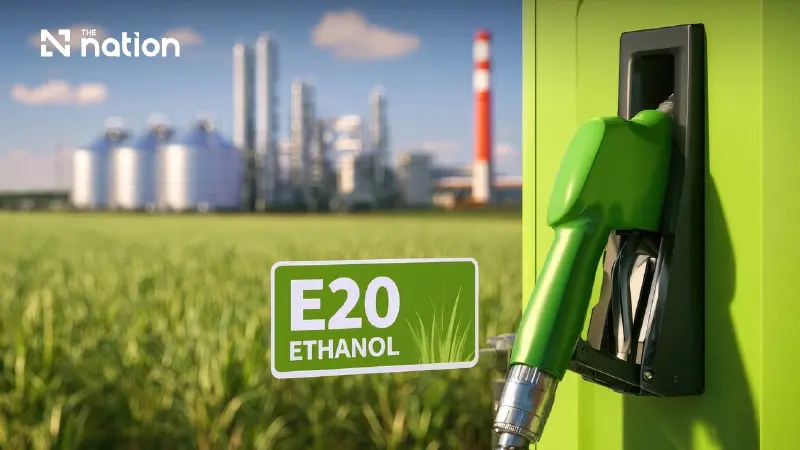


Anutin’s energy plan pairs B20 and E20 incentives with rooftop solar support, aiming to cut fuel imports and raise farm incomes.
- Prime Minister Anutin is promoting the use of B20 diesel and E20 petrol blends to lower fuel costs, reduce import reliance, and increase incomes for farmers growing energy crops.
- The government is encouraging household rooftop solar power by offering financial support and allowing homeowners to sell surplus electricity back to the grid, aiming to reduce reliance on fossil fuels.
- Anutin is using the APEC meeting to push for the conclusion of an Agreement on Reciprocal Trade (ART) with the United States, emphasizing that any deal must be mutually beneficial.
Prime Minister and Interior Minister Anutin Charnvirakul has outlined plans to expand biofuel use and household solar power while pressing for a trade agreement with the United States and new foreign investment.
Speaking on his weekly programme, “Talk with Anutin's Cabinet”, on November 14, 2026, he set out the economic priorities Thailand would take to meetings of the Association of Southeast Asian Nations (ASEAN) and Asia-Pacific Economic Cooperation (APEC).
The government’s energy strategy aims to lower fuel costs, reduce reliance on imports and increase farmers’ incomes by encouraging greater use of B20 diesel and E20 petrol blends.

Biofuel demand rises following tax cuts
Anutin reported that daily B20 consumption had increased from about 6 million litres to 10–11 million litres, while E20 use had risen from around 4 million litres to 6–7 million litres following excise tax reductions.
He put B20’s price advantage over conventional diesel at approximately THB10 a litre.

The government wanted affordable access to gas, oil and renewable energy, Anutin added. Encouraging biofuels would also retain more spending within Thailand and create demand for domestically grown energy crops.
“The benefits go beyond cheaper fuel. We reduce fossil fuel imports and money flowing out of the country, while increasing demand for energy crops such as oil palm, sugar cane and cassava,” he said.
Over the longer term, the government was considering reducing the number of gasohol 91 pumps and adding E20 pumps as motorists became more confident in the fuel.
Anutin linked increased ethanol demand to higher demand for sugar cane and cassava. He also argued that using agricultural residues, including bagasse and cassava materials, for ethanol or other bioenergy could reduce the amount burned as waste.
Household solar forms part of international pitch
Anutin identified rooftop solar as another policy Thailand would promote internationally, noting interest from abroad.
The policy combines household electricity generation with the ability to sell surplus power back to the grid, alongside support of THB50,000 per household for rooftop solar.
“We want people to help produce their own energy, use it first and sell any surplus back to the grid,” he said.
“In the long term, this will help reduce electricity generation from oil and gas and turn household rooftops into a source of energy for the country.”
US trade negotiations and regional partnerships
Anutin described APEC as an important opportunity to engage major economies. On negotiations with Washington, he stressed that the priority was reaching a conclusion on the Agreement on Reciprocal Trade (ART), rather than whether he would meet the US president.
“Sometimes we have to take two steps back to move seven steps forward. But we will not take three steps back only to gain one,” Anutin said.
“Negotiations must benefit Thailand, and our negotiating partners must see mutual benefits too.”
Thailand would also use the ASEAN and APEC meetings to promote cooperation on the energy transition and action against technology-enabled crime, illicit businesses, money laundering and drugs.
Anutin argued that ASEAN cooperation could proceed through smaller groups of countries with complementary strengths. Examples included working with Laos on hydropower, Vietnam on logistics and exports, and linking the capabilities of Thailand, Malaysia and Singapore.
He urged a broader view of Thailand’s investment appeal, explaining that companies establishing operations in the country could reach an ASEAN market of around 700 million people and expand further under the “ASEAN and Beyond” concept.
Anutin reported continuing discussions with major international investors about expanding their businesses in Thailand, including billion-dollar projects.
Investors placed particular importance on reliable electricity supplies, infrastructure, transport links and Thailand’s location as a distribution base for regional markets, he added.
The two regional forums would provide opportunities to present those strengths, expand markets and attract investment through closer cooperation on energy, infrastructure and economic security.
