
Reported Thai gasohol 91–95 phase-out in 1–2 years raises 70bn-baht annual tax question
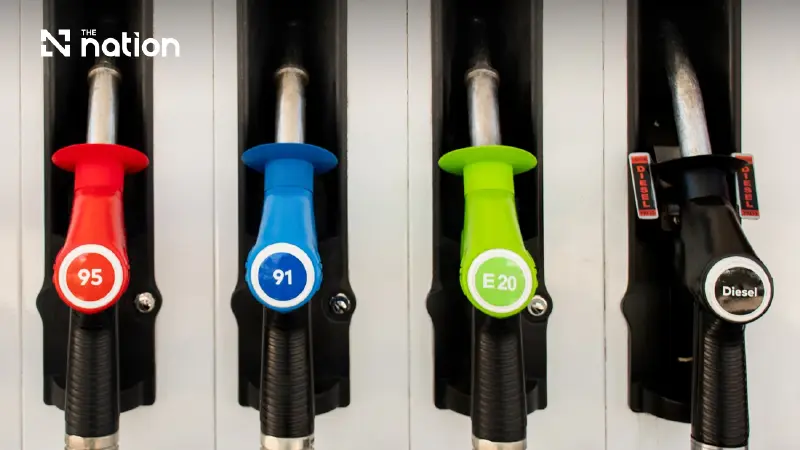


Thailand’s gasohol 91 and 95 account for over 25 million litres of daily demand, while many vehicles cannot use E20, complicating any phase-out.
- A potential phase-out of gasohol 91 and 95 raises concerns over the loss of an estimated 70.3 billion baht in annual excise and municipal tax revenue.
- The proposal to end sales within 1-2 years is currently unconfirmed, with Thailand's Prime Minister stating that any such plan would require detailed supporting evidence before being considered.
- Beyond the fiscal impact, a key challenge is vehicle compatibility, as many vehicles, particularly motorcycles, are unable to use potential replacement fuels like E20.
- The two fuel grades are widely used, with combined daily consumption of 25–26 million litres, making their tax revenue a significant consideration for the Finance Ministry.
Thailand would need to address vehicle compatibility and the future of an estimated 70.3 billion baht in annual tax receipts before withdrawing gasohol 91 and 95, according to an analysis by Krungthep Turakij. Prime Minister Anutin Charnvirakul challenged reports of a phase-out on November 11, 2026, insisting that any proposal must be supported by detailed information.
The estimated 70.3 billion baht represents excise and municipal taxes collected from the two fuel grades at the consumption levels cited in the report. The figure does not establish the net revenue loss from a switch to other fuels, which would depend on replacement sales and the tax rates applicable when any transition takes place.
Anutin, who is also interior minister, indicated that he had not been briefed on the reported proposal to end sales within one to two years. Any plan submitted for consideration would require evidence and concrete figures rather than unsupported assertions.
Proposals to reduce Thailand’s range of retail fuels have surfaced before. Supporters have cited greater use of renewable fuel components, including ethanol and biodiesel, alongside simpler operations for retailers through fewer pump grades and easier stock management.
Any withdrawal would nevertheless extend beyond the responsibilities of the Energy Ministry and fuel retailers. The Finance Ministry would also need to assess the revenue implications and determine how any shortfall would be covered.

Gasohol 91 and 95 account for over 25 million litres a day
Department of Energy Business figures cited by Krungthep Turakij put combined consumption of gasohol 91 and 95 at approximately 25–26 million litres a day. Thailand’s total fuel consumption averages 153–154 million litres daily, according to the figures in the report.
Gasohol 95 accounts for 19.4–19.5 million litres a day, while gasohol 91 contributes another 6.5 million litres. Demand for E20 is substantially lower, at 5.1–5.4 million litres daily.
Professor Praipol Koomsup, an independent energy economist and former dean of Thammasat University’s Faculty of Economics, cautioned that many vehicles cannot use E20. Motorcycles account for a substantial share of the vehicles affected, making compatibility an important consideration in any transition.
The tax calculation depends on replacement fuels and future rates
Gasohol 91 and 95 carry excise duty of 6.75 baht per litre, alongside municipal tax of 0.675 baht, equivalent to 10% of the excise charge. Those components total 7.425 baht per litre.
Applied to the consumption figures cited, the combined taxes generate just over 192 million baht a day, or approximately 70.3 billion baht annually. Krungthep Turakij identifies the scale of these receipts as a major consideration for the Finance Ministry.
E20 currently carries a much lower excise rate of 0.358 baht per litre. At that rate, equivalent sales of E20 would generate substantially less excise revenue than gasohol 91 or 95.
However, the Excise Department’s published schedule shows that the reduced E20 rate is temporary, applying from October 28, 2026, until January 27, 2027. The schedule lists a return to 6 baht per litre from January 28, 2027.
The temporary reduction therefore cannot, by itself, establish the annual fiscal impact of a phase-out taking place over one to two years. A full assessment would need to account for the fuels motorists purchase instead, consumption volumes and the tax rates in force at the time.
The government’s medium-term fiscal plan, as cited by Krungthep Turakij, projects Excise Department revenue of approximately 610 billion baht for the 2027 fiscal year. Fuel duties form an important part of that revenue base.
Praipol calls for transition planning and a review of benefits to farmers
Praipol called for a comprehensive, long-term transition plan before withdrawing gasohol 91 and 95. The government would need to explain the changes gradually and account for the impact on motorists whose vehicles cannot use E20.
Praipol also urged the government to evaluate its tax incentives for E20 and B20 biodiesel after approximately three months of implementation, examining whether the measures deliver the intended benefits.
“The government has said that reducing E20 and B20 prices through tax cuts is intended to help farmers,” Praipol said. “After about three months, the measures should be assessed for value for money and how much of the benefit reaches small farmers.”
Praipol questioned whether the principal beneficiaries might instead be large companies within the fuel supply chain.
Source: Bangkokbiznews
