
What Bangkok can learn from the Dutch approach to floods


The Netherlands combines flood barriers with space for overflowing rivers, offering Bangkok lessons in water management beyond higher defences.
- The Dutch employ a dual strategy, combining massive engineering projects like the Delta Works to block sea surges with the "Room for the River" program, which creates space to accommodate river flooding.
- Instead of only building higher dykes, the "Room for the River" approach involves moving defenses inland, lowering floodplains, and creating designated areas to absorb excess water, reducing pressure on communities.
- Flood management is treated as a continuous and integrated national system that combines infrastructure, land-use planning, forecasting, and ongoing maintenance under a cooperative framework involving all levels of government.
The Netherlands protects low-lying communities in two complementary ways: holding back dangerous sea surges and giving swollen rivers more room. For Bangkok’s flood debate, the Dutch example extends beyond the height of a barrier to how water, land and infrastructure are managed together.
In an early July warning about Bangkok’s flood risks, Prof Dr Suchatvee Suwansawat, leader of the Thai Kao Mai Party, wrote on his personal Facebook page: “Bangkok is a million per cent certain to sink below sea level if water continues to be managed in the same way.” Suchatvee’s warning drew on data and views gathered from numerous experts who shared that assessment.
The Dutch experience provides a practical comparison for that debate. Much of the Netherlands lies in a river delta, with extensive areas below sea level, yet centuries of water management have allowed cities, economic activity and infrastructure to develop alongside the water. Flood protection has evolved through both major engineering works and changes to the space available for rivers.

Delta Works protects land below sea level
Around 60% of the Netherlands would be at risk of flooding without protective systems, according to Rijkswaterstaat, the country’s infrastructure and water-management authority. The vulnerable areas include large population centres and economically important land, making flood protection a national concern rather than a task confined to individual coastal towns.
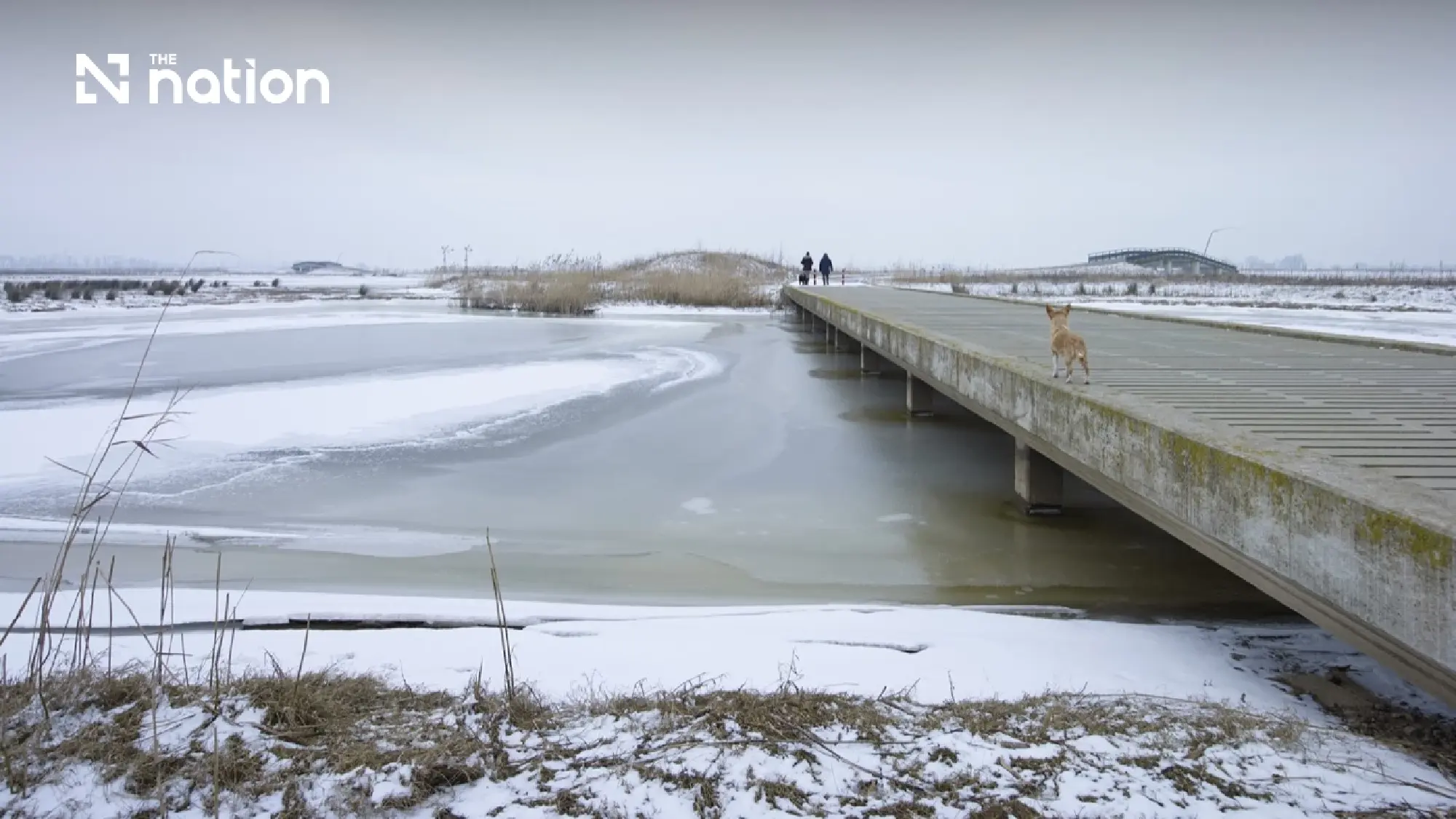
At Krimpen aan den IJssel, the Hollandsche IJsselkering helps protect some of the country’s lowest-lying terrain, reaching approximately 6.76 metres below Normaal Amsterdams Peil (NAP), the Dutch reference level for measuring elevation. The barrier forms part of the Delta Works, the extensive network developed to defend vulnerable areas against the sea.
The turning point came with the 1953 North Sea flood. A severe storm and exceptionally high water breached dykes, allowing seawater to inundate coastal areas. The disaster killed 1,836 people and flooded around 150,000 hectares, prompting the Dutch government to accelerate the construction of the Delta Works.
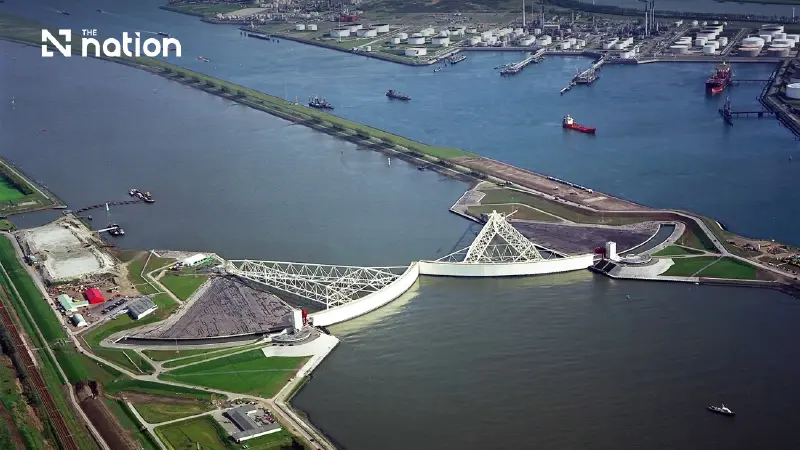
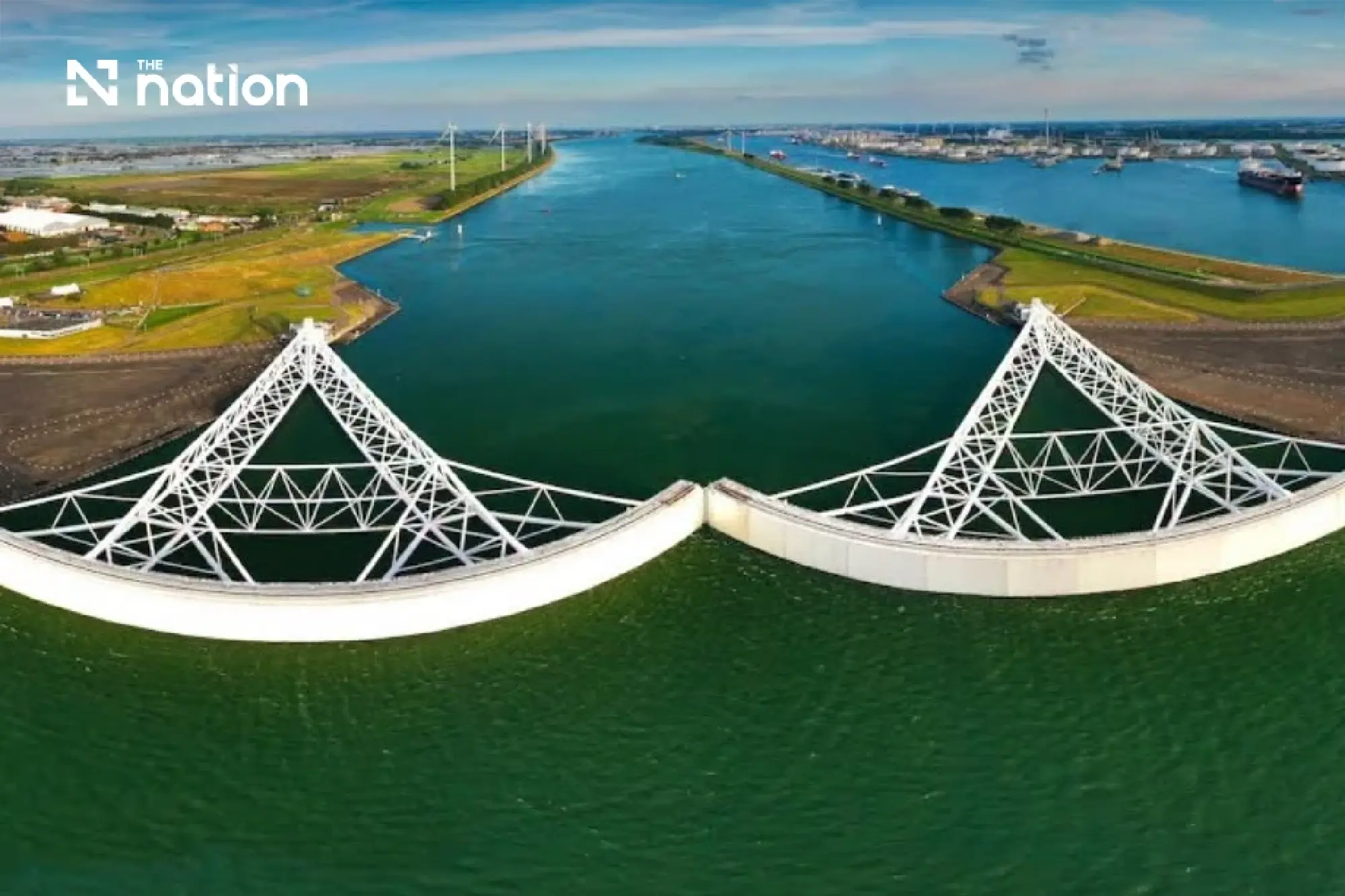
The Delta Works brought together dams, storm-surge barriers and other water-control structures. Among the most prominent is the Maeslant Barrier near Rotterdam, whose two gates are each 210 metres wide and 22 metres high. The gates close automatically when forecasts indicate that water will reach a specified threshold; the structure is designed to withstand storm surges reaching five metres above NAP.

Room for the River moves beyond higher dykes
The Dutch response to river flooding developed along a different, complementary path. Exceptionally high river levels in 1993 and 1995 exposed the limitations of relying indefinitely on taller dykes, helping to establish the principle behind Room for the River: flood protection also requires space for excess water.
Under Room for the River, dykes were moved further inland, areas available to accommodate river water were expanded, new channels were excavated and floodplains were lowered. Selected areas were also adapted to receive water when river levels rose, creating routes and space for flows that might otherwise threaten surrounding communities.
Rijkswaterstaat says the programme involved 39 projects at 34 locations along major rivers, including the IJssel, Waal, Nederrijn and Lek. Increasing the capacity to accommodate water was paired with improvements to landscapes and ecosystems, linking flood protection with the way land was used and managed.
Noordwaard creates space for rising river water
The Noordwaard project puts the Room for the River approach into practice across 4,450 hectares. Designed to accommodate higher river levels, the area combines space for floodwater with pumping stations, hydraulic structures and numerous bridges. Rijkswaterstaat
When river water reaches a predetermined level, water can enter Noordwaard and flow through the designated area, helping to reduce water levels and pressure elsewhere. The project has also created space for nature, with flood management and increased biodiversity forming parts of the same landscape. Rijkswaterstaat
Dutch flood protection continues beyond construction
The Netherlands’ water-management system depends on more than individual dams or barriers. Dykes, storm-surge defences, canals, areas that accommodate floodwater, pumping stations, forecasting and land-use planning operate as connected parts of a wider system. Defences require monitoring and maintenance, while forecasts help authorities prepare for changing conditions.
The National Delta Programme provides the framework for cooperation between central government, provinces, local authorities and water bodies. The programme addresses flood risks, freshwater shortages and the effects of more extreme weather, treating water management as a shared national responsibility rather than a problem belonging to one city or agency.
Dutch water management therefore combines construction with continuing investment, maintenance, testing and adjustment. Rising sea levels, heavy rainfall and changing river flows mean that completed infrastructure does not end the work of flood protection.
The Netherlands is continuing that work through Room for the River 2.0, developing measures for both high and low river flows as climate change increases pressure on the water system. The programme carries forward the principle that protecting communities involves not only containing water, but also planning where it can safely go.
