
AWC’s Golden Hen Strategy: Freehold Assets Fuel THB 32 Billion Capital Recycling Drive
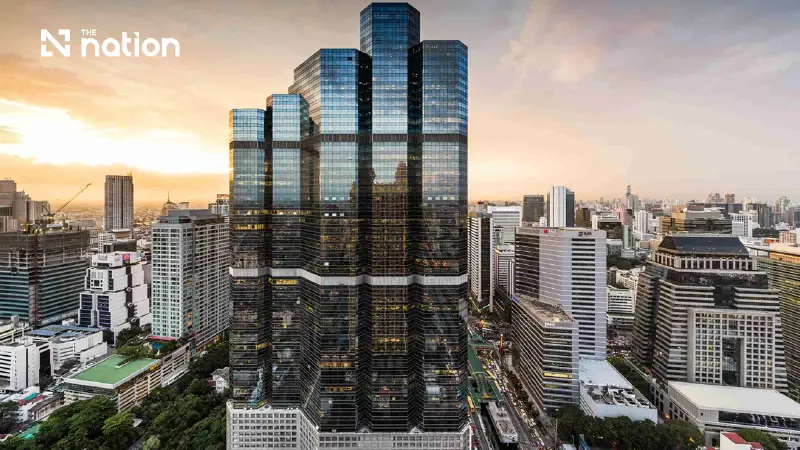


Developer expects THB 10bn in net gains from 48.4bn baht asset injection into AWR REIT, as management seeks to balance lower debt with investor returns
- Asset World Corporation (AWC) is launching a capital recycling drive to raise approximately THB 32 billion by transferring five prime freehold properties into a new real estate investment trust (AWR REIT).
- The "Golden Hen Strategy" refers to monetizing these wholly-owned freehold assets, which are considered superior long-term income generators that provide sustained value, unlike depreciating leasehold properties.
- The asset injection, valued at THB 48.4 billion, is expected to generate THB 10 billion in net gains for AWC and significantly reduce its debt-to-equity ratio from 0.9 to 0.6.
- The initial portfolio for the REIT includes four luxury resorts and The Empire office tower, making AWR the only wholly freehold trust among its major Thai peers.
The developer expects THB 10bn in net gains from 48.4bn baht asset injection into AWR REIT, as management seeks to balance lower debt with investor returns.
Asset World Corporation (AWC) expects the transfer of five prime freehold properties into a new real estate investment trust to raise approximately THB 32 billion after tax, driving its debt-to-equity (D/E) ratio down from 0.9 times to 0.6 times.
Speaking at a media briefing on Friday (October 2), Chief Executive Wallapa Traisorat confirmed that AWC’s REIT manager submitted the registration statement and draft prospectus for the AWC Lifestyle Property Real Estate Investment Trust (AWR) to the Securities and Exchange Commission (SEC) on Tuesday (September 29).
The developer is targeting a listing on the Stock Exchange of Thailand (SET) in early 2027. While acknowledging wider market uncertainty, Wallapa expressed confidence that long-term institutional investors would embrace the structural model.
Capital Recycling as an Engine for Growth
AWC positions itself primarily as a "development engine"—acquiring or redeveloping assets, driving operational yields, and subsequently monetising mature projects through its REIT vehicle.
Wallapa noted that development profits are recognised annually because AWC transfers whole commercial projects rather than individual residential units.
Deploying a "golden hen" metaphor to explain the strategic necessity of freehold ownership, Wallapa emphasised: "Normally, a hen lays well only in the first one to three years before output declines. Our golden hen keeps laying and growing without stopping. Because we operate a freehold model, we do not have to worry that productivity drops off over time."

According to company comparisons, AWR will stand as the only wholly freehold trust among six major Thai REIT peers, two of which are entirely leasehold, with the remainder holding between 49% and 77% freehold assets.
The initial portfolio comprises four high-end resorts providing 647 keys—Banyan Tree Krabi, Banyan Tree Koh Samui, Meliá Koh Samui, and Pattaya Marriott Resort and Spa—alongside The Empire, a 58-storey office tower in Bangkok's financial district.
The conservative appraisal benchmark from CBRE and Cushman & Wakefield values the initial portfolio at THB 48.1 billion against a book value of THB 33.6 billion, while AWC’s total investment value is capped at THB 51.39 billion.
With an actual transfer value set at THB 48.45 billion, AWC anticipates booking approximately THB 10 billion in net development gains after retaining an equity stake of up to 28%.

Valuation Dependencies and Hospitality Growth Trends
Because AWC already carries The Empire at fair value, its THB 25 billion appraisal represents an incremental gain of just THB 1.5 billion over book value.
Consequently, about THB 13 billion of the total THB 14.5 billion valuation spread rests on the four hospitality properties, which are carried at cost.
This valuation relies heavily on hospitality earnings forecasts at a time when growth at established resorts shows signs of moderating. While hospitality revenue surged 33% in the first half of 2026, the bulk of this expansion was driven by Pattaya Marriott, which opened in July 2025.
Across the remaining three resorts, revenue grew by roughly 5%, while EBITDA growth decelerated from approximately 30% in 2024 to 10% in 2025 and fell below 5% in the first half of 2026.

Across all five assets, AWC reports a two-year EBITDA rise of 20%, though EBITDA at The Empire remained virtually static—moving from THB 943 million in 2023 to THB 957 million in 2025.
Nonetheless, AWC forecasts total portfolio EBITDA will rise from THB 1.54 billion in 2024 to THB 2.79 billion by 2028, representing a compound annual growth rate of 16%.

De-leveraging versus Return on Equity
Lowering leverage brings balance sheet resilience but creates a potential headwind for equity returns. Wallapa noted that while 0.9 times D/E is already among the lowest in the Thai property sector, a 0.6 times ratio aligns with international standards.
Proceeds will be split between debt reduction and shareholder distributions, though AWC has yet to decide whether initial gains will trigger a special dividend beyond its standard 40% payout policy.
However, management acknowledged that ultra-low leverage can dilute return on equity (ROE). AWC is currently recalibrating its five-year strategic plan to balance financial safety with ROE performance, relying on ongoing management fees, REIT distribution shares, development gains, and reduced depreciation to offset transferred asset cash flows.

Governance, Asset Quality, and Pipeline Trajectory
The initial AWR portfolio is split between office/retail (54% of rental revenue) and hospitality (46%).
To manage dual-role conflicts—where AWC acts as developer, master lessee, and REIT manager—SCB Asset Management will serve as trustee holding a "golden share" in the master lessee subsidiary, holding voting rights over key operational decisions, including hotel brand changes and annual budgets.
Dr Paitoon Wongsasutthikul, chief executive of the REIT manager, noted that AWC’s 28% retained stake aligns interest with unitholders without choking market liquidity.
At least 72% of units will be allocated to public investors, targeting more than 50% domestic institutional and retail participation.

Looking ahead, AWC has identified nine pipeline assets comprising 3,100 keys for potential future injection into AWR, alongside a right of first refusal over 48 other projects—including Fairmont Bangkok Sukhumvit and The Ritz-Carlton Phuket.
However, asset availability remains constrained by operational maturity: only 23% of AWC’s total THB 170.8 billion property portfolio is currently classified as stabilised, with 35% undergoing repositioning and 27% under active development.
As the listing awaits final SEC approval, investors will be closely watching whether AWC's capital recycling model can maintain earnings momentum while expanding gross asset value toward its ambitious THB 300 billion target by 2030.
