
Young Thais favour value and energy savings over large homes
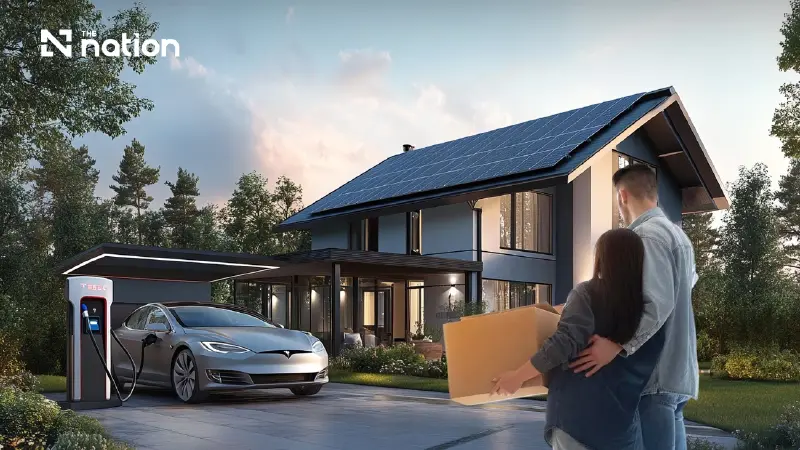


Homes priced at THB2.51–10 million made up 72% of expo bookings as Thailand’s homebuilders report growing demand for value and lower running costs.
- Younger Thais are prioritizing practical space, energy efficiency, and long-term running costs over large homes built to display social status.
- There is a growing preference for homes with adaptable layouts suited to smaller households, which can accommodate work-from-home needs and reduce future renovation costs.
- Buyers are increasingly focused on long-term value, considering future expenses like air conditioning and repairs, which drives demand for energy-conscious designs and materials.
- This trend is reflected in recent sales data, where mid-priced homes (THB2.51–10 million) accounted for 72% of bookings at a major homebuilders' expo.
Younger Thais planning to build homes are placing greater importance on practical space, energy efficiency and long-term running costs than on large properties designed to display social status, according to the Home Builder Association (HBA).
Anantakorn Amornwatee, president of the HBA, said younger consumers and families starting out increasingly wanted homes suited to the number of occupants, with useful layouts, straightforward maintenance and manageable expenses after moving in.
Anantakorn explained that value now extended beyond the construction budget to encompass space planning, materials, energy consumption and upkeep. Homebuilders therefore needed to offer designs that reflected how customers would live, rather than relying on size or appearance alone.
Mid-priced homes account for 72% of expo bookings
The Home Builder and Materials Expo 2026 recorded construction bookings for 185 homes worth THB1,643.61 million, with properties priced at THB2.51–10 million accounting for 72% of the number booked.
Homes priced at THB2.51–5 million attracted the largest number of bookings at 71, representing 38% of the total. The THB5.01–10 million bracket followed with 62 homes, or 34%.

The HBA cited the combined share of these two price brackets as a sign of demand for homes that balance practical needs with household budgets.
Homes priced at THB20 million or more also retained buyers, recording 15 bookings, or 8% of the total number. These properties generated THB492.5 million, equivalent to about 30% of the event’s booking value.
The expo results showed the importance of serving different customer groups, from households focused on controlling expenditure to buyers able to commission high-value homes. Anantakorn said builders needed designs and services suited to customers in each price bracket.
Smaller households reshape layouts
The HBA identified smaller households, energy efficiency and the need to limit future upkeep costs as three factors influencing younger consumers’ decisions.
Households of one to three people have less need for extensive space that may go unused, the HBA explained. Additional floor area brings construction costs and continuing maintenance obligations.
Younger customers increasingly value living rooms that accommodate shared activities, space for working from home and rooms that can change function if their families grow. The emphasis is on making effective use of available space.
Anantakorn said adaptable layouts could also reduce the need for major extensions or renovations later, making flexibility an important consideration from the design stage.
Energy and maintenance costs influence design
The HBA said consumers were assessing value through the costs of occupying a home over many years, alongside the initial construction price.
Energy-conscious design can include positioning a house to take account of sunlight and natural airflow, installing thermal insulation and using rooftop solar panels. Multipurpose rooms and appropriate materials also help owners make better use of their investment.
The HBA’s assessment highlighted the recurring costs associated with unnecessarily large homes, including air conditioning, cleaning and repairs as materials and equipment deteriorate.
Choosing a suitable house size and planning for maintenance from the outset can help control those accumulated expenses. The association said builders needed to make these benefits clear to customers who were becoming more cautious about household spending.
Association forecasts 8.7% sales growth
The HBA forecasts combined sales among member homebuilding companies will reach approximately THB10 billion in 2026, an increase of 8.7% from THB9.2 billion in 2025.
Anantakorn said homebuilders needed to continue improving designs and services for customers with different budgets, focusing on efficient layouts and the ability to accommodate changing needs.
The HBA plans to work with member companies, construction-material suppliers and financial institutions to broaden access to quality homes that offer value and support sustainable living.
The association’s outlook places greater importance on matching designs to household requirements and demonstrating savings over a home’s lifetime. Quality materials, useful space and manageable running costs are becoming central to competition as consumers weigh their budgets against economic uncertainty.
