
Cooperation is the Best Defence as AI Sharpens the Cyber Threat to Finance
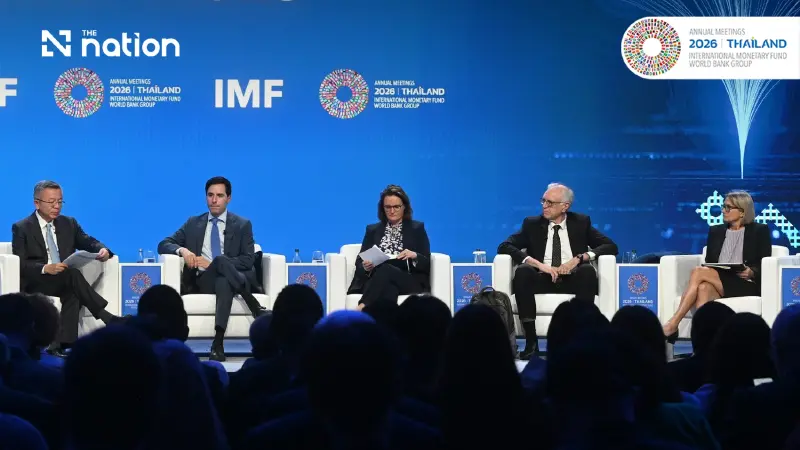


IMF panel of regulators and an AI developer agrees that old-fashioned cyber hygiene, joint drills and shared data matter most as attacks reach machine speed
- An IMF panel of regulators and AI developers concluded that as AI makes cyber attacks faster and cheaper, the best defense is enhanced cooperation, strong cyber hygiene, and joint planning.
- Cooperation involves sharing threat data, conducting joint drills, and increasing supply chain transparency, as the financial system's interconnectedness means a single incident can become a wider shock.
- While AI is also a powerful defensive tool, experts urge a 12-month "sprint" for the financial sector to fix vulnerabilities while defenders still hold an advantage.
- Incident response plans must be rehearsed with senior leaders to reduce "decision latency," as the machine-speed nature of AI attacks shortens traditional recovery times.
IMF panel of regulators and an AI developer agrees that old-fashioned cyber hygiene, joint drills and shared data matter most as attacks reach machine speed.
Banks, regulators and artificial intelligence developers are united on one message: the best defence against AI-powered cyber attacks is to get the basics right, plan for the worst and work together, while using the same technology to defend the financial system.
That was the consensus at an International Monetary Fund (IMF) panel on AI and escalating cyber risks, held in Bangkok. Speakers from Switzerland's financial regulator, the Bank for International Settlements (BIS), Brazil's central bank and AI developer Anthropic agreed that AI is making attacks faster, cheaper and easier to carry out.
They also agreed that it is a powerful tool for defenders and that few of the answers are new. The discussion, moderated by IMF Deputy Managing Director Bo Li, matters beyond the banking sector.
When payment systems, cash machines and card networks fail, ordinary people cannot pay for food, fuel or rent. Banks, payment systems and markets increasingly depend on the same digital infrastructure, the panel heard, so a single incident can quickly become a wider shock to confidence or liquidity.
A familiar threat, moving faster
Michael Sellitto, Anthropic's head of global affairs and a former White House cyber policy official, said attackers still rely on stolen passwords, unpatched devices, exposed services and phishing. What has changed is speed and reach.
Breaches that once took a team weeks or months can now be carried out by one person in hours, he said, with AI agents working in parallel across every stage of an attack.

Anthropic held back wide release of its Mythos model earlier this year because it was so capable at finding and exploiting software flaws. Instead, it gave defenders early access through an initiative called Project Glasswing.
Over about 90 days, Sellitto said, Anthropic and its partners found roughly 130,000 vulnerabilities, around 30,000 of them critical or severe. Most remain unpatched months later, he said, because verifying and fixing flaws across the world takes far longer than finding them.
Glasswing has now ended, he said, replaced by a cyber verification programme with tiered identity checks for access to defensive tools. He urged the financial sector to "sprint" over the next 12 months while defenders still hold an advantage.
Three ways a cyber incident becomes a crisis
Marlene Amstad, chair of the Swiss Financial Market Supervisory Authority (FINMA), set out three routes by which an incident could threaten financial stability.
The first is an attack on a core system, such as payments or account management, at one or a few institutions. Old code, including the COBOL programming language still found in many banks and insurers, makes this harder to fix.
The second is an attack on widely shared technology. She cited the 2023 MOVEit file-transfer breach, which hit organisations across many sectors.
Regulators usually treat small or non-core suppliers as less risky, she said, but AI could make them systemic. The third and, in her view, hardest is a loss of confidence without any confirmed breach.
A bank can prove it has enough capital and liquidity, she noted, but it is very difficult to prove it has not been hacked.

Supervisors face three particular difficulties, she said: cheaper and more personalised attacks, weak links buried several contracts down the supply chain, and speed.
The time between finding a flaw and exploiting it is shrinking from days to minutes or seconds, so banking's traditional "resolution weekend" may no longer be available.
She said a widening resilience gap between large and small institutions was a reality and called for supply chain transparency and common incident data so authorities can see attacks across borders.
She also pointed to supervisory technology, in which regulators themselves use AI, as a source of hope.

Lessons from Brazil
Paulo Picchetti, deputy governor of the Central Bank of Brazil, described attacks on technology providers connected to Pix, the country's instant payment system.
Many banks and retailers are too small to run their own infrastructure and rely on shared providers, he said. Where those providers were poorly regulated, attackers found openings, in one case through something as mundane as a networked printer.
He also stressed the human factor: some people were bribed to sell access credentials. Cheap hacking kits, he added, had pushed criminals away from physical robberies.
Brazilian bank branch robberies have almost vanished as crime has moved online. Brazil, he said, does not yet have access to the latest defensive tools being tested by some foreign institutions.
Banks there use both open-source and paid AI models, he said. Since Pix is being linked to foreign payment systems, he argued, everyone needs strong tools because the weakest link affects the whole chain.
Brazil's response includes AI-based fraud detection, tougher capital and technology requirements for participants, and joint exercises through a national cybersecurity council.

The bottleneck is decision-making
Andrea Maechler, BIS deputy general manager, said AI cyber risk is neither purely an AI risk nor a simple operational risk. Speed, scale and simultaneity can turn an ordinary cyber incident into a financial stability issue.
Shared software and interconnected payment systems mean resilience depends on the weakest participant, she said. She was upbeat about central banks' readiness, noting they adapted quickly during the pandemic and have invested in technology.
But she said their resilience frameworks must be tested more often, faster and more thoroughly. The biggest gap, she suggested, lies less in technology than in "decision latency": who has authority to make which decisions, such as shutting down critical infrastructure, in the middle of a crisis.
Exercises must therefore reach senior decision-makers, she said. The BIS runs simulations using a "digital twin" of central banking, and she called cyber risk a global public good that demands cross-border and public-private cooperation.
Smaller central banks, with less budget and access to top models, are more vulnerable, she said, though AI could eventually help level the field.

Beyond prevention
Li said the IMF wants authorities to move beyond prevention to containment and restoration. Ms Amstad responded with three principles.
Crisis plans should offer decision-makers options rather than script every detail, because real crises rarely follow the script. Public and private roles must be clear, with firms owning their own operational risk, and regulators should watch for moral hazard where profits are private and risks are public.
And efficiency should not be pursued to the last ounce, she argued: keeping legacy systems as a fallback, or designating "no-fly zones" where core functions are shielded from automation, could improve resilience.
Sellitto offered a parallel from Anthropic's own engineers, who once approved every AI coding action and grew fatigued, clicking "yes" without scrutiny. They now supervise the overall design and behaviour of the system instead, he said.
On regulation, Sellitto said voluntary measures such as pre-deployment testing with government AI security institutes and embedded outside auditors are useful, but that catastrophic risks ultimately require "regulations with teeth".
Asked for a single priority, Sellitto called for a 12-month cross-sector sprint to fix vulnerabilities while defenders hold an advantage. Amstad added supply chain transparency and knowledge sharing. Maechler's answer, echoed by the panel, was one word, repeated three times: cooperation.
