
From washing cabbages to leading the IMF: Kristalina Georgieva’s remarkable journey
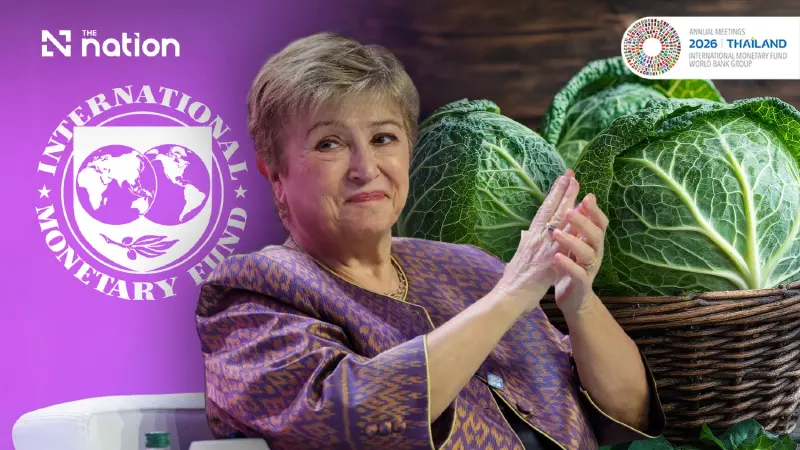


IMF chief Kristalina Georgieva rose from a childhood of shortages in communist Bulgaria to lead the global financial institution, drawing on experiences that shaped her views on economic hardship.
Kristalina Georgieva’s journey to the top of the International Monetary Fund (IMF) began in circumstances far removed from the world of international finance. Born in Sofia in 1953, Georgieva grew up under Bulgaria’s communist regime, where consumer goods were often scarce and access to Western products was limited. Her childhood experiences would later shape her understanding of how economic policies affect ordinary people.
She recalled once entering a shop to find that vinegar was the only product available. “Nothing else,” she remembered telling an interviewer.
Even Coca-Cola, one of the few recognisable Western brands available, was an exception. Bulgaria began producing the drink domestically in the 1960s, making it unusual among countries allied with the Soviet Union. The economy was burdened by foreign debt, while shortages were part of everyday life.
For Georgieva, those experiences were not simply memories of childhood. They helped shape her conviction that economic decisions have consequences far beyond government statistics, affecting families’ ability to obtain food, save money and build secure lives.
From washing cabbages to learning the value of hard work
Georgieva began working at the age of 15, washing and arranging cabbages at Sofia’s central food market to make them look clean and appealing to customers.
During school holidays, she travelled to Lyubimets, a rural town near Bulgaria’s borders with Greece and Turkey, where she stayed with her grandparents and experienced a different way of life.
Her days began at dawn. She would climb aboard a donkey-drawn cart and help her family harvest tobacco, learning the importance of contributing to the household through hard work.
“My grandparents taught me that you have to work. We all had to pitch in,” she recalled.
The experience helped establish a work ethic that would remain with her throughout her career, from her early years in academia to her eventual leadership of major international financial institutions.
Yet determination alone could not shield her from the political restrictions of communist Bulgaria.
Her brother’s imprisonment threatened her academic career
One of the most difficult periods in Georgieva’s early life came when her older brother, an artist, was imprisoned after attempting to leave Bulgaria.
The family’s political background subsequently became an obstacle to her own professional advancement.
Georgieva had emerged as the leading candidate for an academic appointment at what is now the University of National and World Economy in Sofia. However, her brother’s detention delayed the appointment despite her qualifications.
At the time, her father was seriously ill in hospital and her mother was caring for him. Georgieva decided not to tell them that her appointment had been blocked because of her brother’s political circumstances.
Instead, she borrowed money and pretended that she had already received her university salary.
For six months, she maintained the illusion, even buying gifts for her family and presenting them as purchases made with her earnings.
Eventually, the borrowed money ran out. She approached neighbours who knew her family and were aware of her dedication to studying. One neighbour with influence in the Communist Party spoke in her favour, helping her secure the appointment at last.
The episode illustrated the extent to which political considerations could affect professional opportunities, even for highly qualified people.
It also reinforced Georgieva’s determination to pursue knowledge and seek opportunities beyond the system in which she had grown up.
London opened a window to economic freedom
Although Georgieva had established herself as an academic in Sofia, discussing capitalism remained sensitive under the communist system.
She became determined to study in Britain, which she regarded as a centre of economic thought.
To prepare, she undertook an intensive five-month English course and listened constantly to the BBC World Service, using its broadcasts to improve her language skills.
“I had BBC radio on 24/7,” she recalled. “Whenever I slept it was right next to me. To this day, I love the sound of the BBC.”
Her efforts paid off. In August 1987, she arrived in London on a British Council scholarship to study at the London School of Economics (LSE).
Britain was undergoing major economic changes under Margaret Thatcher, whose government was pursuing privatisation and market-oriented reforms. For Georgieva, studying in London provided an opportunity to encounter economic ideas and personal freedoms that had been difficult to explore openly at home.
One seemingly minor incident left a lasting impression.
She noticed a university notice inviting students to attend an event organised by an LGBT group. Coming from a society where notices displayed in public places often carried official instructions, she initially wondered whether attendance was compulsory.
She eventually realised that the invitation was simply an option.
The experience helped her appreciate the freedom to make personal choices without automatically having to follow instructions from an authority.
A first bank account at 34
Georgieva’s arrival in Britain also marked another milestone: opening her first bank account at the age of 34.
She arrived with just £21 and received a monthly scholarship allowance of £361.
Living on a tight budget, she carefully managed her spending on rent and food, saving what she could to buy economics textbooks.
Her first purchase was an economics dictionary, which she said she still carried with her wherever she went.
The experience was striking for someone who would later oversee an institution responsible for advising governments on financial stability, monetary policy and international lending.
It also reflected the importance she attached to education as a means of expanding opportunities.
Although her childhood ambition had been to study journalism, circumstances eventually led her towards economics. She completed a doctorate in economic science and a master’s degree in political economy and sociology, then taught at the University of National and World Economy in Sofia.
After returning from London, she continued developing her academic career before deciding to seek opportunities abroad.
From the World Bank to the European Commission
In 1993, Georgieva joined the World Bank as an environmental economist, beginning a career that would take her through increasingly senior positions.
She became a vice-president and corporate secretary in 2008, acting as a link between the institution’s senior management, board and member countries.
She subsequently served as chief executive officer of the World Bank Group from 2017 and as its interim president from February to April 2019.
Her career also included a senior role at the European Commission, where she served as vice-president for Budget and Human Resources.
In that position, she was responsible for a budget of approximately €161 billion and a workforce of about 33,000 people, according to the account provided in the original report.
The range of her experience, spanning economic development, environmental policy, public administration and international finance, prepared her for the challenges of leading a global financial institution. Her official IMF biography confirms her academic qualifications and career progression through the World Bank and European Commission.
From £21 to the leadership of the IMF
On October 1, 2019, Georgieva became managing director of the International Monetary Fund, making her the first person from an emerging-market economy to lead the institution and the second woman to hold the position.
The IMF, established in 1944, works with member countries to support international monetary cooperation, financial stability and economic growth. It also provides financing and policy advice to countries facing economic difficulties.
Georgieva’s appointment placed her at the centre of decisions affecting economies across the world, a considerable distance from her early life in a country where shortages and restrictions had been part of daily existence.
Her first year at the IMF brought an extraordinary test: the Covid-19 pandemic.
As economic activity ground to a halt across the world, governments urgently needed financial support to protect their economies and maintain essential services.
During the first year of the pandemic, the IMF approved more than 100 financing arrangements for 85 countries, according to an interview published by the institution. Georgieva said the scale of uncertainty made the Fund’s ability to respond rapidly particularly important.
The demands of the job meant taking calls at almost any hour.
She recalled receiving a telephone call at around 2am during the pandemic from a world leader who wanted to thank the IMF for approving emergency financial assistance for his country.
Such experiences brought her responsibilities into sharp focus: behind every loan approval were governments attempting to protect their populations from economic hardship.
A second five-year term amid global uncertainty
Georgieva’s leadership continued beyond the pandemic, as the IMF confronted the economic consequences of war, inflation, rising debt and uncertainty in international markets.
In April 2024, the IMF’s Executive Board selected her for a second five-year term, beginning on October 1 that year. The decision was made by consensus.
Her second term has placed her at the forefront of discussions about how countries can manage mounting debt, strengthen economic resilience and protect vulnerable populations during periods of disruption.
Those responsibilities have particular significance for developing economies, where limited financial resources can make it harder for governments to respond to economic shocks.
Georgieva has repeatedly emphasised the need for sound economic policies and international cooperation, drawing on her own experience of the consequences of economic mismanagement.
Her career has also included periods of controversy. During her time at the World Bank, allegations were raised over the handling of China’s position in the institution’s Doing Business report. Georgieva denied wrongdoing, and the IMF Executive Board subsequently expressed confidence in her leadership. The controversy contributed to the eventual discontinuation of the report.
From queuing for milk to warning the world about economic hardship
Today, Georgieva is known for warning governments about mounting public debt, inflation, inequality and the risk that poorer countries could be left behind as the global economy changes.
Yet her perspective is rooted in experiences that predate her international career by decades.
She remembers growing up amid shortages, working at a food market, helping her grandparents harvest tobacco and discovering in London that a notice on a university wall could be an invitation rather than an instruction.
She also remembers the period after Bulgaria’s transition away from communism, when economic turmoil and hyperinflation devastated household savings.
As a mother, she faced another form of scarcity. She has recalled waking at 4am to queue for milk for her daughter, because supplies were insufficient to meet demand. The experience occurred during Bulgaria’s difficult economic transition in the 1990s.
That memory helps explain why Georgieva often stresses that economic decisions must be judged not only by their effects on national accounts, growth rates or financial markets, but also by their consequences for ordinary people.
For her, economic policy is not an abstract exercise. It can determine whether a family can afford food, whether savings retain their value and whether children have access to better opportunities.
The journey from a young woman growing up behind the Iron Curtain to the head of the IMF is therefore more than a story of professional advancement.
It is also a reminder that the consequences of economic decisions are ultimately measured in people’s lives — a lesson Georgieva learned long before she entered the corridors of global financial power.
Source: Krungthep Turakij
