
Small modular reactors: What Thailand needs to assess first
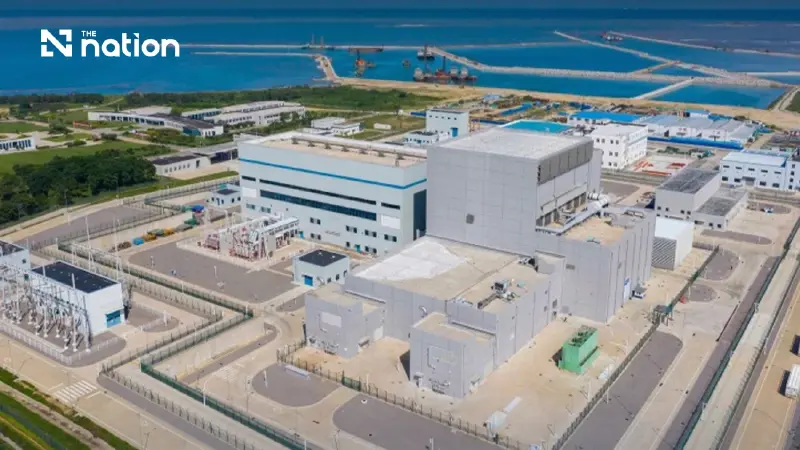


Thailand is studying small modular reactors for reliable low-carbon power, assessing safety records, grid compatibility and long-term costs before choosing a technology.
- Thailand must prioritise SMR technologies with proven safety records and acceptance from international regulatory bodies.
- The generating capacity of a chosen reactor must be compatible with the country's national electricity system and infrastructure to ensure grid stability.
- A thorough assessment of the long-term economic value is required to ensure the technology can provide electricity at a reasonable cost and strengthen energy reliability.
As artificial intelligence (AI) and data centres drive demand for reliable electricity, small modular reactors (SMRs) are emerging as a potential source of round-the-clock, low-carbon power.
For Thailand, however, adopting the technology involves more than choosing a nuclear reactor. Safety, compatibility with the national electricity system and long-term economic value must all be carefully considered.
SMRs are attracting growing international interest because they offer the prospect of continuous electricity generation with low carbon emissions. Their smaller size and modular construction could also provide greater flexibility in power plant development, although their economic competitiveness will depend on the technology and project conditions.
Thailand is among the countries exploring the potential of SMRs as part of its long-term energy security strategy and efforts to achieve net-zero emissions.
Understanding how SMR technology works
Unlike conventional large-scale nuclear power plants, SMRs are generally designed to generate up to 300 megawatts of electricity per reactor unit.
Their compact designs allow major components to be manufactured and assembled into modules under controlled factory conditions before being transported to installation sites. This approach can simplify construction, improve manufacturing quality control and potentially reduce project complexity.
Another important feature is the use of passive safety systems in many SMR designs. These systems rely on natural physical processes to maintain essential safety functions, including reactor shutdown and cooling, without requiring external electricity supplies or immediate human intervention.
However, not all SMRs use the same technology or safety arrangements.
More than 80 SMR designs have been developed or proposed across 18 countries, with significant differences in reactor types, cooling systems, generating capacities and technological readiness.
This diversity demonstrates growing international interest in SMRs while highlighting the importance of examining individual designs before committing to a particular technology.

SMR technologies already generating electricity
Two notable examples of SMR technology in commercial operation are found in Russia and China, offering different approaches to small-scale nuclear electricity generation.
Akademik Lomonosov, Russia
The Akademik Lomonosov is a floating nuclear power plant with an electricity generation capacity of 70 megawatts. Located in Pevek in northern Russia, it demonstrates how nuclear technology can supply electricity to remote communities where conventional power infrastructure may be difficult to develop.
The facility uses pressurised water reactors (PWRs), in which water serves as both a coolant and a neutron moderator.
Designed to meet the electricity needs of a population exceeding 100,000, the plant began commercial operation in May 2020 and underwent its first refuelling in late 2023.
Its principal advantage lies in its ability to provide a stable electricity supply in geographically isolated areas.
HTR-PM, China
China's HTR-PM nuclear power plant, located in Shandong province, represents a different approach to SMR development.
With a generation capacity of approximately 210 megawatts, the facility uses high-temperature gas-cooled reactor (HTGR) technology. Helium acts as the coolant, while graphite serves as the neutron moderator.
One of the technology's main advantages is its ability to support combined electricity and high-temperature steam production, making it particularly relevant to industrial applications.
The plant was connected to the electricity grid in December 2021 and entered commercial operation in December 2023.
Together, these projects demonstrate how different SMR technologies can be designed to meet varying electricity and industrial energy requirements.
Emerging SMR technologies approaching operation
Beyond existing commercial projects, several other SMR technologies are progressing through construction and testing, offering further options for countries considering nuclear energy.
Linglong One (ACP100), China
Linglong One, also known as ACP100, is being developed in Hainan province in southern China.
Designed to generate 125 megawatts of electricity, the reactor uses an integrated pressurised water reactor system that reduces the need for some large external cooling pipes. It became the first commercial onshore SMR design to pass a safety review by the International Atomic Energy Agency (IAEA).
The project has progressed to hot functional testing, an important stage before nuclear fuel is loaded into the reactor. During these tests, the plant's systems operate at temperatures and pressures approaching normal operating conditions, but without nuclear fuel in the reactor core.
Engineers examine cooling circuits, valves, monitoring instruments and other essential equipment to confirm that they function according to design requirements. Successful completion of these checks is necessary before fuel loading and subsequent commissioning tests.
Commercial operation had been targeted for 2026, although the project remained in the testing phase in October.
BREST-OD-300, Russia
Another significant project is Russia's BREST-OD-300 reactor, under development in Seversk, western Siberia.
The facility is designed to generate 300 megawatts of electricity using a lead-cooled fast-neutron reactor. Unlike conventional water-cooled reactors, this system uses liquid lead as its primary coolant.
BREST-OD-300 is among the advanced nuclear technologies associated with Generation IV reactor development, which seeks to improve safety, efficiency and sustainability.
Commercial operation is currently targeted for around 2028, making the project another important example of emerging SMR technology.

How Thailand can choose the right SMR design for national benefit
Although Russia and China have demonstrated commercial SMR operation, many other designs remain under development or construction, with further commercial deployments expected around 2030.
For Thailand, which is still examining the feasibility of adopting SMRs, this creates an opportunity to study international developments before selecting a technology.
The Electricity Generating Authority of Thailand (EGAT) is assessing SMR technologies from several countries as part of preparations to address future electricity demand, strengthen energy security and support the country's net-zero ambitions.
Rather than committing prematurely to a particular reactor design, Thailand can evaluate available technologies against three essential criteria.
1. Proven safety and international regulatory acceptance
Safety must be the foremost consideration.
Thailand should prioritise technologies with demonstrated operating experience, established safety performance and recognition by nuclear regulatory authorities in multiple countries.
International safety standards and evidence from actual reactor operations will be important in reducing technological risks.
2. Compatibility with Thailand's electricity system
The selected reactor's generating capacity must be compatible with the infrastructure and electricity requirements of Thailand's national power system.
Choosing a technology suited to local conditions would help ensure that SMRs can contribute effectively to electricity supply and overall grid stability.
3. Long-term economic value
Economic considerations are equally important.
Thailand must evaluate whether the technology can provide electricity at a reasonable cost while strengthening the reliability of the country's energy system over the long term.
A commercially viable choice should deliver benefits that justify the investment and operating costs involved.
International safety standards remain essential
As SMR technologies develop, the central challenge for Thailand is determining which designs can deliver reliable electricity while meeting internationally recognised safety requirements.
Demonstrated operating performance, independent regulatory scrutiny and economic suitability will be essential in assessing the available options.
Adhering to rigorous international standards can help minimise potential risks while building confidence among policymakers, businesses and the wider public.
With numerous technologies still progressing towards commercial maturity, a thorough assessment of international experience will be crucial before Thailand takes the next step towards introducing SMRs into its electricity generation system.
