
Suphajee heads to US with three Agreement on Reciprocal Trade red lines intact
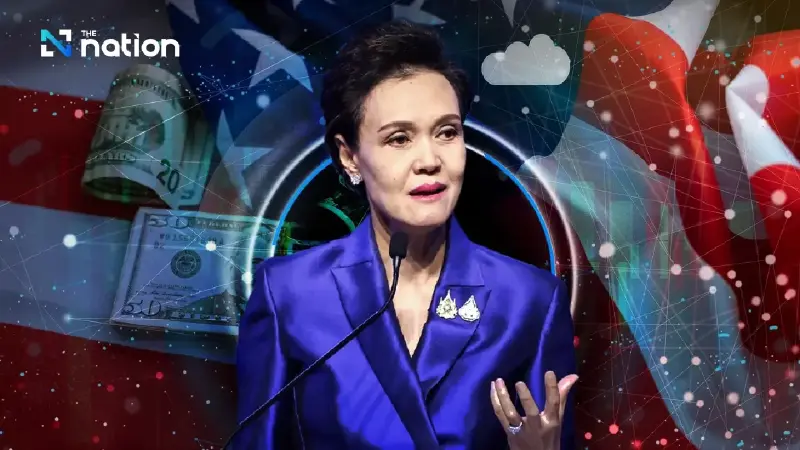


Technical talks run from August 27-29 before policy negotiations, with Thailand seeking tariff relief without conceding on three sensitive areas
- Deputy Prime Minister Suphajee Suthumpun is traveling to the US to lead negotiations on an Agreement on Reciprocal Trade (ART).
- Thailand is maintaining its position on three non-negotiable issues, or "red lines," in the trade talks.
- The first red line is the refusal to accept imported pork containing beta-agonist growth promoters.
- The other two red lines involve protecting national security and resisting US demands for 100% ownership in sensitive industries like telecommunications.
Thailand will send a technical team to the United States from August 27 to 29 for further negotiations on an Agreement on Reciprocal Trade, or ART, before policy-level talks led by Deputy Prime Minister and Commerce Minister Suphajee Suthumpun.
Suphajee will travel to the US from August 30 to September 1, seeking to conclude the negotiations while retaining Thailand’s positions on three issues the government considers non-negotiable.

Representatives from the Agriculture and Cooperatives Ministry and Public Health Ministry will join the technical discussions because several unresolved points fall within their responsibilities.
Prime Minister Anutin Charnvirakul chaired a preparatory meeting earlier in the week and authorised greater flexibility on some outstanding issues.
“Anything that can be done should be done, provided it does not cause excessive long-term damage to the country,” Suphajee quoted the prime minister as saying.
Thailand retains three negotiating red lines
Suphajee identified three areas in which Thailand would not accept US demands.
The first concerns sanitary and phytosanitary standards, or SPS rules, which govern food safety and animal and plant health. Thailand will retain its restrictions on imported pork containing beta-agonist growth promoters.
The other two red lines concern national security and US demands for investors to be allowed full ownership in sensitive Thai industries, including telecommunications.
“Thailand still has the same three red lines that cannot be crossed: sanitary and phytosanitary rules for imported pork containing growth promoters, security and investment in sectors where the US wants 100% ownership, such as telecommunications,” Suphajee said.
Policy talks scheduled in Washington
During the August 30 to September 1 visit, Suphajee is scheduled to meet representatives of the Office of the United States Trade Representative and White House Chief of Staff Susie Wiles.
Thailand will stress its intention to help narrow the US trade deficit by maintaining planned purchases of American energy, aircraft and agricultural products.
The Thai delegation will also highlight investment by Thai businesses in the United States, valued at more than US$20 billion, and argue that about 30% of the US trade deficit with Thailand is generated by exports from American companies operating production facilities in Thailand.
Suphajee said she wanted the ART negotiations to reach a conclusion but warned that Washington could use a separate Section 301 investigation into alleged excess production capacity to press Thailand to accept conditions already agreed by some neighbouring countries.
The investigation covers three industries: vehicles and automotive parts, rubber products, and machinery.
She expressed concern that an unresolved ART could leave Thai goods facing a tariff above 19.5%, potentially weakening their competitiveness if rival exporters received lower rates.
The figure remains Thailand’s negotiating concern rather than a confirmed US tariff decision.
Thailand seeks exemptions for seven product groups
Thailand will continue asking the United States to exempt 78 tariff lines across seven product groups from measures linked to the Section 301 investigation into alleged excess production capacity:
- Agriculture and food security
- Consumer products and household goods
- Medical and public-health products
- Electronics and semiconductors
- Vehicles and automotive parts
- Machinery parts and industrial equipment
- Handicrafts and value-added products
The government hopes the final rate resulting from the investigation will be comparable with those applied to Thailand’s competitors and will not exceed 19.5%.
If Washington imposes a higher rate, Thailand plans to request further consultations and tariff relief while preparing assistance for affected businesses.
Talks target remaining tariff exposure
Commerce Ministry figures indicate that about 72% of the relevant Thai product lines covered by US Sections 301 and 232 measures are exempt, while negotiations will target the remaining 28%.
Thailand exported goods worth US$91.255 billion to the United States in 2025.
Exemptions from the 12.5% tariff imposed under the forced-labour-related Section 301 action cover about 2,120 tariff lines valued at US$56.201 billion.
A further US$7 billion in exports covered by Section 232 measures, which concern US national-security interests, are not subject to the additional 12.5% Section 301 tariff.
