
Suphajee to visit US in early May to answer USTR’s Section 301 questions, expects decision within seven days
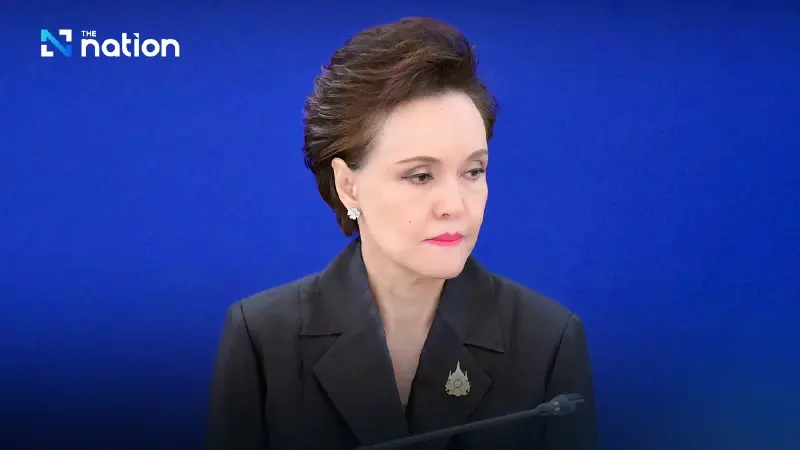


Deputy PM and Commerce Minister Suphajee Suthumpun says Thailand has submitted its Section 301 response to the US and will travel to Washington in early May to clarify concerns, with a USTR decision expected within seven days after hearings.
Deputy Prime Minister and Commerce Minister Suphajee Suthumpun said she will travel to the United States in early May to provide further clarification to the US Trade Representative (USTR) over a Section 301 probe covering three Thai export sectors: automobiles and parts, electrical appliances, and rubber products.
Suphajee said the Commerce Ministry submitted Thailand’s written response to the US on April 15, addressing issues including alleged overcapacity and forced labour.
She said Thailand’s position is that the three industries do not have overcapacity, and stressed that Thailand has long pursued policies—continuing from the previous government—encouraging private firms to maximise the use of domestic inputs (local content) to support Thai products.
She said the US may be concerned that Thailand could be used as a transit point for goods from other countries that are then re-exported to the United States to avoid higher tariffs. On forced labour, she said Thailand has informed the US that it does not import goods from countries that use forced labour.
Suphajee said the USTR has asked Thailand to provide further clarification in person in the United States. She will lead the delegation herself in early May, before a technical negotiating team travels later in the month for additional discussions.
“After the clarification in mid-May, the USTR will take no more than seven days to consider the case and will announce the outcome of its investigation, including what measures it will apply to Thailand,” Suphajee said.
The US government under President Donald Trump opened Section 301 investigations into 16 trading partners, including Thailand, in early March 2026, alleging unfair trade practices that could lead to additional import tariffs as a replacement for earlier tariff measures that were struck down by the US Supreme Court.
The 16 partners named in the probe are: Thailand, China, the European Union, Singapore, Switzerland, Norway, Indonesia, Malaysia, Cambodia, South Korea, Vietnam, Taiwan, Bangladesh, Mexico, Japan and India.
Suphajee said the investigation focuses on three main areas:
- Trade surpluses: countries that export significantly more to the US than they import
- Overcapacity: particularly for products seen as being state-subsidised and abnormally cheap
- Intellectual property violations: including rules that force technology transfer
