
Suphajee to visit US for USTR talks on Section 301
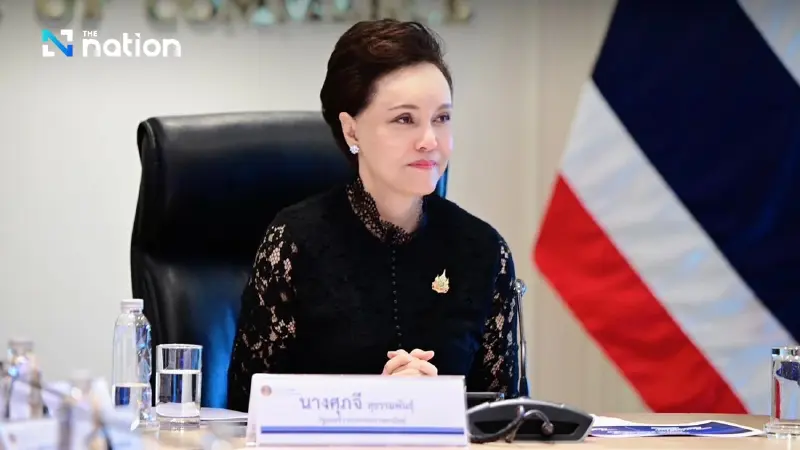


Thai Commerce Minister Suphajee Suthumpun will travel to the US in May for USTR talks on Section 301 probes, while also attending SelectUSA and pushing for tariff exemptions.
Deputy Prime Minister and Commerce Minister Suphajee Suthumpun will visit the United States from May 3-6 for talks with the Office of the United States Trade Representative over the Section 301 issue, as Thailand moves to contain trade risks while reinforcing investor confidence.
Suphajee said the trip will also include participation in the 2026 SelectUSA Investment Summit and a Thai private-sector investment showcase aimed at underscoring the continuity of Thai investment in the US and strengthening bilateral economic ties. The summit is scheduled for May 3-6 in National Harbor, Maryland.
Washington trip to focus on trade risk and investment
Suphajee said Thailand is accelerating trade negotiations in a bid to expand the exempt list for as many products as possible during the current tariff window. She said Bangkok wants to make full use of the period under Section 122 of the US measures, which has imposed a 10% import tariff and is due to run until July 24, 2026.
She added: “Regarding the United States, the matter is still under way. As for China, it is trying to address the trade balance, while China is in the process of developing its next five-year economic plan. So we have to look at the issue of reducing the deficit.”
Section 301 scrutiny centres on transshipment and labour
On Section 301, Suphajee said Thailand could be interpreted by the United States as showing signs of transshipment in some industries, and Washington had asked for clarification on three product groups: automotive, rubber and machinery. She said Thailand had already submitted its response, insisting that the local-content ratio in those sectors was higher than the level questioned by the US side.
The pressure stems from two USTR actions launched in March. On March 11, USTR opened Section 301 investigations into structural excess capacity and production in manufacturing sectors across 16 economies, including Thailand. On March 12, it launched a separate set of Section 301 investigations into whether 60 economies, also including Thailand, had failed to prohibit or effectively enforce a ban on imports made with forced labour. USTR says Section 301 can be used against foreign government acts, policies or practices that are unjustifiable, unreasonable or discriminatory and that burden or restrict US commerce.
Suphajee said Thailand is still under investigation on several fronts. One case is the joint probe involving 16 other economies, while another concerns forced-labour allegations affecting more than 60 economies worldwide. She said Thailand had submitted complete information and that no evidence had been found to support the forced-labour allegation.
Hearings and technical talks set for late April and May
The next stage will shift to public hearings and technical consultations. USTR’s official notices show that hearings on the forced-labour cases are due to begin on April 28 and may continue until May 1, while hearings on the structural excess-capacity cases are set to begin on May 5 and may continue until May 8. Suphajee said the broader process involving Thailand would run from April 28 to May 14, with technical consultations with USTR scheduled for May 13-14.
For Thailand, the May trip is shaping up as both a damage-control mission and an investment pitch: a chance to rebut Section 301 concerns, push for wider tariff exemptions and reassure US counterparts that Thai trade and investment ties remain on a stable footing.
