
Thai UNCLOS move with Cambodia seeks sea border, not joint development
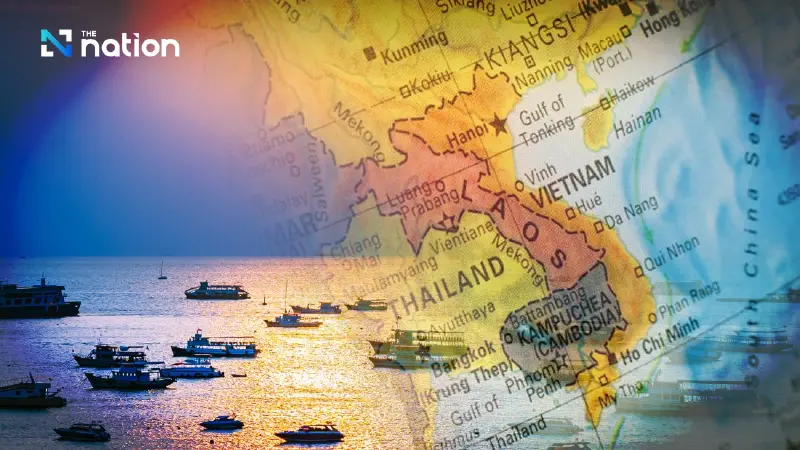


Rachada Dhnadirek says the UNCLOS process concerns maritime boundaries under international law, not joint development or sharing benefits from resources.
- Thailand has initiated a process with Cambodia under the UN Convention on the Law of the Sea (UNCLOS) with the specific goal of settling their maritime boundary dispute.
- The Thai government has explicitly clarified that this action is not a negotiation for the joint development of the overlapping area or for sharing its natural resources.
- Thailand's official position is that establishing a clear, internationally accepted sea border is a fundamental condition that must be met before any other matters can be addressed.
- The government assured the public that the process is a transparent legal mechanism and does not mean Thailand accepts Cambodia's claims.

Government Spokesperson Rachada Dhnadirek said that, following concerns over Thailand’s entry into a process under the United Nations Convention on the Law of the Sea (UNCLOS) on the issue of overlapping maritime claims between Thailand and Cambodia, the government wished to explain to the public that the process concerns consultations and consideration of maritime boundaries under international law.
It is not a negotiation for joint development of the area or for sharing benefits from resources.
Sihasak Phuangketkeow, Minister of Foreign Affairs, has clearly explained to the public and to diplomatic representatives from more than 70 countries that entering the UNCLOS process is an international legal mechanism to seek a solution to the issue of maritime delimitation, on which views still differ.
It is not related to the establishment of a joint development area or the sharing of benefits from resources in the area.
The Thai government’s position is clear: clarifying maritime boundaries and ensuring they are accepted under international law is a fundamental condition that must be addressed before all other matters, in order to safeguard the country’s rights, sovereignty and long-term national interests.
Thailand’s participation in the UNCLOS process does not mean that it accepts the other side’s claims or accepts any approach in advance.
It is the use of an international mechanism to which both countries are parties, so that consideration of the matter is transparent, based on facts and grounded in legal principles.
The government spokesperson said the prime minister had confirmed that every step would be taken carefully, with close coordination among those responsible for foreign affairs, security agencies and international law experts, to fully protect Thailand’s interests.
“The public should be assured that the government will not take any action that affects national sovereignty.
The UNCLOS process must first aim to establish clarity over maritime boundaries under international principles.
It is not joint development of the area, nor is it handing national interests to any one side,” Rachada said.
