
Imports surge past Thailand’s 21.6% export growth
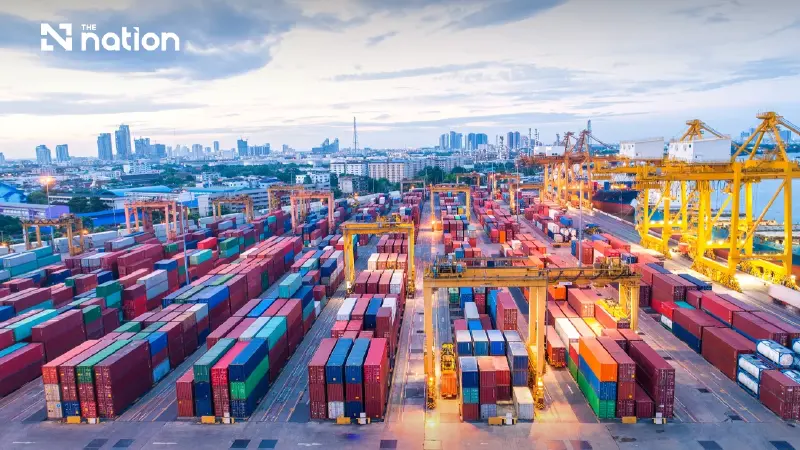


Thai imports surged 36.7% in July, outpacing 21.6% export growth and leaving the country with a US$3.61 billion trade deficit.
Thailand’s export growth remained strong in July, but a sharper rise in imports left the country with a trade deficit of US$3.6105 billion.
Exports increased by 21.6% year on year to US$34.7891 billion, equivalent to 1.128984 trillion baht, while imports surged by 36.7% to US$38.3996 billion.
The result marked the 25th consecutive month of export growth. Excluding oil-related products, gold and military goods, shipments expanded by 23.3%.
Nantapong Chiralerspong, director-general of the Trade Policy and Strategy Office (TPSO), attributed the momentum mainly to electronics and goods linked to advanced-technology investment. Agricultural exports also returned to growth, supported by rice, fisheries products, fresh vegetables, rubber and livestock products.
Seven-month trade deficit reaches US$35.35 billion

Exports in the first seven months of 2026 totalled US$231.531 billion, up 18.2% from the same period a year earlier. Imports reached US$266.8855 billion, an increase of 37.8%, leaving a cumulative trade deficit of US$35.3545 billion.
After excluding oil-related products, gold and military goods, seven-month export growth stood at 18.5%.
Technology goods drive industrial exports
Industrial exports grew by 24.2% in July, extending their expansion to a 28th consecutive month. Shipments in the category increased by 22% over the first seven months.

Video and audio equipment, accessories and components recorded the strongest rise, climbing 754.1%. Telephones, equipment and components increased by 160.3%, followed by computers, equipment and components at 63.2%.
Exports of electrical transformers and components rose by 47.5%, copper and copper products by 41.7%, electrical circuit boards by 35.2%, and machinery and components by 21.7%.
The main industrial products recording declines were motorcycles and components, down 6.3%; gems and jewellery excluding gold, down 5.9%; and air conditioners and components, down 4.9%.
Farm exports return to growth

The combined value of agricultural and agro-industrial exports fell by 1.1% in July, marking a third consecutive month of contraction.
Agro-industrial exports declined by 3.3%, while agricultural shipments grew by 0.6%, returning to expansion for the first time in three months.
Rubber exports rose by 33.8%, while fresh, chilled and frozen shrimp increased by 24.7%. Pet food gained 17.4%, processed chicken 7.5%, rice 5.3%, and canned and processed seafood 2.9%.
Sugar recorded the steepest decline, falling by 34%. Fresh, chilled and frozen chicken dropped by 24.8%, animal and vegetable fats and oils by 11.8%, and wheat products and other prepared foods by 10.1%.
Exports of fresh, chilled, frozen and dried fruit fell by 4.6%, marking a second consecutive monthly contraction.
Combined agricultural and agro-industrial exports declined by 2.9% over the first seven months of the year.
Hormuz tensions and US tariffs cloud outlook
Nantapong expected exports to continue expanding strongly during the remainder of 2026, supported by sustained growth in demand for products linked to artificial intelligence technology.
Uncertainty surrounding the Strait of Hormuz remains a major risk because it could cause energy costs to fluctuate and rise. The TPSO is also monitoring US tariff measures, which are expected to become increasingly targeted at individual countries and products.
The final outcome of US import tariffs affecting Thailand could present a further obstacle to exports in the months ahead.
The Commerce Ministry has promoted Thai fruit sales through leading Japanese department stores and held discussions with the Chinese premier on expanding the market for premium Thai products and innovative agricultural goods.
It is also seeking geographical indication registration in China this year for Thung Kula Rong-Hai Hom Mali Rice, Phetchabun Sweet Tamarind and Pak Phanang Tabtim Siam Pomelo.
The ministry is accelerating negotiations with Washington to conclude the Agreement on Reciprocal Trade (ART) as soon as possible, with the aim of reducing uncertainty for Thai exporters.
