
Thailand and China prepare seven agreements on trade and security


The Cabinet has endorsed cooperation documents covering farm trade, food safety, vocational training, the automotive industry, security and consular staffing.
- Agreements on agricultural trade include new protocols to streamline the export of fresh durian and open the Chinese market for salacca.
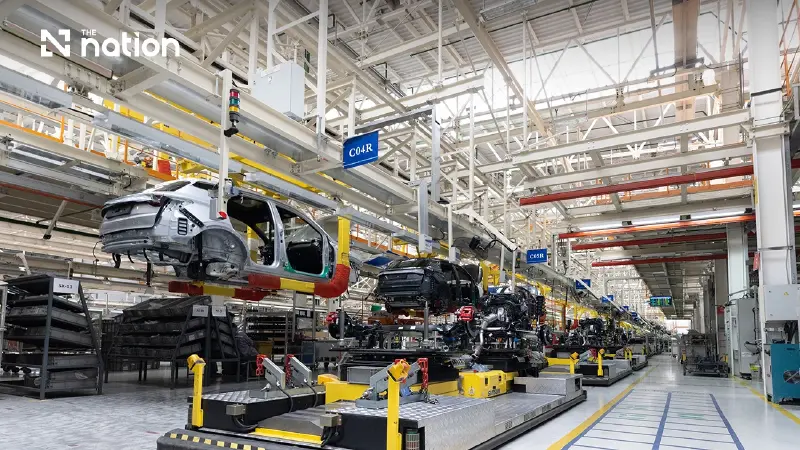
- Industrial and food safety cooperation will be enhanced through a memorandum on the automotive industry, focusing on electric vehicles, and Thailand's entry into a China-led food safety mechanism.
- A security-focused agreement will be signed under China's Global Security Initiative to strengthen the strategic security partnership between the two nations.
- Other agreements aim to improve vocational education to meet industry demands and lift limits on consular staff to facilitate growing economic and diplomatic ties.
Thailand and China are preparing to sign seven cooperation documents during Chinese Premier Li Qiang’s official visit to Thailand from Friday (November 13, 2026) to November 15, according to reports from Government House.
The Cabinet has endorsed drafts covering agricultural trade, food safety, vocational education, the automotive industry, security and foreign affairs.
Durian and salacca
Two phytosanitary protocols between the Ministry of Agriculture and Cooperatives and the General Administration of Customs of the People’s Republic of China (GACC) cover fresh durian and salacca.
China requested signing during the visit, with the agriculture minister or a representative authorised to sign both.
The durian protocol would replace the 2004 tropical fruit quarantine and inspection protocol, clarifying requirements for current trading conditions.
Quarantine pest controls would extend from orchards meeting Good Agricultural Practice (GAP) requirements to packing houses meeting Good Manufacturing Practice (GMP) standards, reducing risks of quarantine, pest detections and import suspensions at Chinese checkpoints.

Fresh durian is Thailand’s highest-value cash crop in China.
Exports from January 1 to September 30, 2026, totalled 1,217,695 tonnes worth THB139.878 billion.
The government wants implementation in time for the export season.
Normal harvesting runs April–June in the East and July–September in the South, with off-season harvests in February–March and December–February, respectively.
The Agriculture Ministry expects stronger Chinese confidence and faster customs and plant quarantine clearance, preserving freshness and quality for consumers, sustaining and expanding export earnings, and providing continuing income for farmers and businesses.
The salacca protocol aims to open a new market for salacca in China, Thailand’s largest fruit export destination with strong purchasing power.
Output averages about 32,000 tonnes annually, with year-round harvesting peaking in May–June and August–September.
The ministry wants signing in time for the approaching harvest and estimates additional annual export value of a minimum of THB76 million.
Access to China would reduce risks from falling domestic prices and generate income for farmers and businesses.
The protocol would also raise orchard standards under GAP and bring packing houses up to international standards, strengthening confidence in Thai fruit’s phytosanitary safety and bilateral trade cooperation during the visit.
Food safety cooperation
The Cabinet endorsed joining the Belt and Road Initiative (BRI) Food Safety Cooperation Mechanism for imports and exports and its draft terms of reference (TOR).
GACC established the mechanism in 2023 to strengthen food safety oversight and facilitate food trade; membership stands at 19 countries.
The agriculture minister or a representative was authorised to sign the TOR for formal membership.
GACC requires ministerial-level signing with the Agriculture Ministry.
GACC invited Thailand at the ninth Thailand–China Joint Technical Committee on Sanitary and Phytosanitary Measures (JTC-SPS) meeting, hosted by the Agriculture Ministry in Bangkok on April 7–9, 2026.
The agency sent a formal invitation and draft TOR on April 9 to the National Bureau of Agricultural Commodity and Food Standards, Thailand’s principal food safety coordinator.
Participation aligns with the 2022–2026 Joint Action Plan on Thailand–China Strategic Cooperation and the cooperation plan on the Silk Road Economic Belt and 21st Century Maritime Silk Road.
China welcomed Thailand’s intention to join in July’s joint statement towards a Thailand–China community with a shared prosperous future.
Shared goals include stronger food safety oversight and greater agricultural and food trade value.
The ministry envisages information exchanges and food safety cooperation with China and other BRI members, participation in relevant international frameworks and stronger JTC-SPS cooperation.
Automotive industry
A draft memorandum of understanding (MOU) between Thailand’s Ministry of Industry and China’s Ministry of Industry and Information Technology covers investment, trade, technological innovation, standards, regulations and industrial management exchanges.
The industry minister or a designated representative was authorised to sign.
Priorities include electric, modern and smart vehicles, environmental sustainability, stronger automotive chains from upstream to downstream and international competitiveness.
Based on equality, mutual benefit and reciprocity, cooperation would promote fair, transparent and predictable markets.


Vocational education
China drafted the vocational education MOU between the two education ministries to turn cooperation into practical action and provide a framework for expansion.
Thailand’s secretary-general of the Vocational Education Commission was authorised to sign.
The MOU aims to improve vocational education, align young people’s skills with industry demand and develop highly skilled workers for industrial upgrading and economic and social development in both countries, based on equality, mutual benefit, mutual respect and shared development.
Security cooperation
A draft MOU between the Thai and Chinese foreign ministries under the Global Security Initiative expresses political intent to strengthen their strategic security partnership through mutual respect and trust.
Foreign Minister Sihasak Phuangketkeow, or a designated representative, was authorised to sign.
Cooperation would involve consultations on fields and projects; coordination through international organisations, multilateral and regional forums and Association of Southeast Asian Nations (ASEAN) mechanisms; and measures consistent with domestic laws and international obligations.
The Foreign Ministry expects comprehensive bilateral cooperation respecting universal principles and each side’s interests, alongside a stronger regional and multilateral security role for Thailand supporting regional peace, stability and prosperity.

Consular staffing
The Cabinet also endorsed lifting consular staffing limits and a Foreign Ministry draft exchange of letters amending three agreements establishing consulates-general, approved on July 19, 1988, July 13, 1993, and March 19, 1996.
These capped Chinese consulates-general in Thailand and Thai consulates-general in China at 12 staff each, reflecting security concerns over personnel from socialist countries.
Thailand subsequently opened five more consulates-general in China, which imposed no limits on Thai staffing.
Expanding economic, trade, investment, tourism and people-to-people ties prompted both foreign ministries to view removing the ceiling as mutually beneficial.
Staffing would be settled through friendly consultations based on reciprocity and confirmed in writing through diplomatic channels.
Investment and tourism
Speaking at Government House on November 11, Sihasak described China as a partner, major export market and growing investor.
The government wanted stronger political ties following the Thai prime minister’s visit to China and meetings with President Xi Jinping, the country’s top leader, and the Chinese premier.
“His visit shows the importance he attaches to Thailand. A key issue will be strengthening economic cooperation, particularly investment in new industries where China is advanced, such as artificial intelligence (AI) and electric vehicles,” the foreign minister said.
“We want Chinese investors to do more than assemble products: we want them to develop technology and transfer knowledge to Thai people, including AI and workforce development.”
On tourism, Sihasak described China as a major market and Thailand as safe.
Chinese concerns about tourists being deceived required clearer explanations of what was known about those involved in many cases.
Some announcements had caused alarm and needed greater clarity.
Cooperation to reassure China about tourist safety would also be linked to efforts to combat cybercrime.
US tariff negotiations
Thailand and the United States have reached agreement in principle on tariffs, according to Sihasak.
Commerce Minister Suphajee Suthumpun is handling the agreement, with a document expected to announce the conclusion of negotiations.
“The agreement contains many details and must also go before parliament,” the foreign minister said, adding that he believed both countries were satisfied.
Trade matters still under negotiation could also feature in discussions during the trips to attend the ASEAN summit in the Philippines and the Asia-Pacific Economic Cooperation (APEC) summit.
