
Thailand weighs five US demands tied to 19% tariff ahead of Nov 17 statement
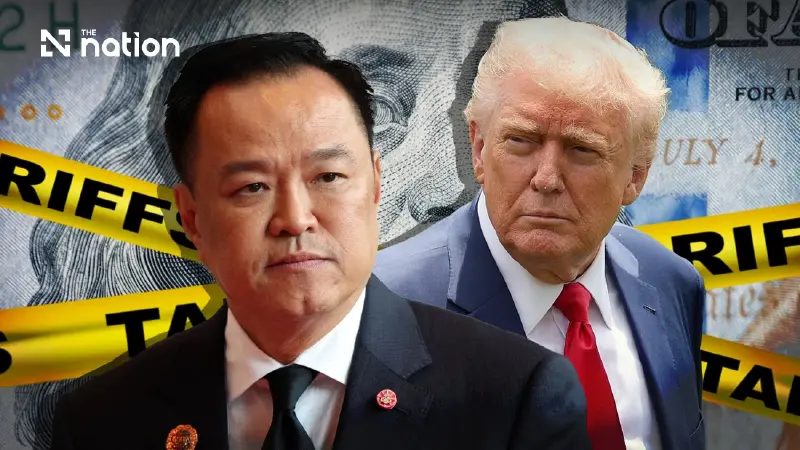


Thailand’s three negotiating red lines cover sanitary standards, national security and investment as US demands span five areas of economic policy.
- Thailand is negotiating five key US demands tied to a proposed 19% reciprocal tariff, with leaders set to sign a joint statement on November 17 as a step towards a new trade agreement.
- The five demands from the US cover wider agricultural market access, stronger labor rights, stricter intellectual property enforcement, new digital trade rules (including no digital taxes), and lifting foreign ownership limits in the telecommunications sector.
- Specific US requests include Thailand accepting more meat imports (like pork with ractopamine) and removing the 49% foreign ownership cap in telecommunications.
- Thai officials have stated they have "red lines" and will not compromise on sanitary standards for food imports, national security, and certain investment rules.
Thailand’s negotiations over a 19% US reciprocal tariff cover five sensitive areas, from food imports to telecoms ownership, as Prime Minister Anutin Charnvirakul prepares to sign a joint statement with US President Donald Trump on November 17, 2026.
The leaders’ meeting is scheduled for 7.30pm Philippine time, or 6.30pm in Thailand. The statement will mark progress towards an Agreement on Reciprocal Trade (ART); the full agreement remains subject to further domestic procedures.
Thailand’s Cabinet endorsed the draft statement on November 10. Both countries must subsequently complete their respective legal requirements for the full agreement.
For Thailand, legal teams must settle the substance and wording before seeking Cabinet endorsement ahead of signing. Parliamentary consideration and public consultation are also required, with details to be disclosed through those processes.
The US demands linked to the 19% tariff framework cover five areas: agricultural market access, labour protection, intellectual property, digital trade and telecommunications investment.
Deputy Prime Minister and Commerce Minister Suphajee Suthumpun has maintained that Thailand will not compromise its negotiating limits on sanitary standards, security and investment.

1. Wider access for US food and agricultural products
Washington wants Thailand to reduce non-tariff barriers (NTBs) and speed up the issuance of import permits, particularly for meat and poultry certified by the US Food Safety and Inspection Service (FSIS).
The requests cover pork, beef, poultry and offal, as well as restrictions involving ractopamine, a growth-promoting substance used in livestock production.
US demands also include reviewing import requirements for horticultural and agricultural products, including distillers dried grains with solubles (DDGS), a by-product of ethanol production. Requirements would need to reflect scientific evidence and risk assessments, alongside acceptance of certificates issued by US regulators as agreed by both sides.
Accepting foreign certification would need to preserve food safety standards, sanitary inspections and consumer protection. Wider market access could also increase price and competition pressures on Thai farmers and food producers, especially smaller businesses with higher production costs.
2. Stronger labour rights and controls on forced-labour imports
The labour provisions call for changes to Thai law and enforcement to fully protect freedom of association and collective bargaining, in line with international standards.
They also require stronger action against violations in sectors exposed to forced labour and child labour.
The US has used Section 301 of its Trade Act of 1974 to examine trading partners’ failure to prohibit and prevent imports made with forced labour, an issue with implications for tariff treatment.
Suphajee has clarified that Thailand’s required legislation concerns imports of goods produced using forced labour in third countries, extending beyond abuses within Thailand itself. Relevant agencies are working on the measures.
The changes could affect employer–employee relations and business costs, while stronger labour protection could enhance confidence in Thai products and reduce their risk of exclusion from international supply chains.
3. Action on counterfeiting, copyright piracy and patent delays
Washington’s intellectual property demands address longstanding problems involving trademarks, copyright and patents.
They include more effective action against counterfeit goods and trademark infringement, unauthorised digital distribution of copyrighted works, misconduct by collective management organisations, and circumvention of technological measures protecting intellectual property. Clearing the backlog of patent applications is another priority.
The two countries must also finalise additional commitments on geographical indications (GIs), which link products to their place of origin.
Protecting Thailand’s many registered GI products is important because they add value to agricultural goods and community products. Negotiations would need to safeguard their names, rights and reputation without restricting their use or access to export markets.
Stronger intellectual property protection could build investor and business confidence, but would also need to balance the interests of rights holders, businesses and consumers.
4. Digital tax, cross-border data and payment processing
The digital provisions would commit Thailand to refrain from imposing digital services taxes (DSTs) or measures discriminating against US digital services and products.
They also cover free transfers of business data across trusted borders and support for a permanent World Trade Organization (WTO) moratorium on customs duties on electronic transmissions.
The US also wants Thailand to refrain from imposing foreign film screening quotas and to remove requirements for domestic processing of retail electronic payments made in Thailand using Thai-issued debit cards.
The potential benefits of easier access to international markets and technology would need to be weighed against concerns over tax revenue, fair competition, cybersecurity and personal data protection under Thailand’s Personal Data Protection Act (PDPA).
Any changes would also need to avoid placing Thai businesses at a disadvantage to foreign platforms or weakening government oversight of data and digital transactions important to the economy and national security.
5. Fewer foreign ownership restrictions in telecommunications
Washington wants greater access for US investment in Thai telecommunications, extending beyond mobile and internet services to communications systems, networks and technologies supporting the digital economy.
The restrictions involve Thailand’s Foreign Business Act of 1999, the Telecommunications Business Act of 2001 and rules administered by the National Broadcasting and Telecommunications Commission (NBTC).
The US regards the 49% foreign ownership ceiling and special permission requirements as obstacles to investment and competition. The ownership rules vary by licence category: Type Two and Type Three telecommunications licensees must not be classified as foreign under Thailand’s foreign business law.
The US-published framework does not specify a replacement ownership ceiling, leaving the extent of any legislative changes unsettled.
Any relaxation of ownership restrictions would need to take account of market competition, investment by Thai operators and the security of communications, internet, data networks and other digital infrastructure.
Suphajee has reiterated that Thailand’s three negotiating red lines are intended to prevent long-term harm to the country.
“Thailand’s three red lines remain unchanged: sanitary and phytosanitary standards concerning pork imports containing growth promoters, security, and investment,” she said.
“The US wants 100% ownership in certain sectors, such as telecommunications.”
