
Thailand eyes US trade pact in two months and forced labour tariff cut to 10%


A 10% duty would put Thai exports on the same footing as three regional rivals. Thailand’s commerce minister expects the trade pact to be signed in about two months.
- Thailand expects to sign a reciprocal trade agreement with the United States in approximately two months, after leaders confirmed negotiations are substantially complete.
- A key goal for Thailand is to press the US to lower a tariff on goods linked to forced labour from its current 12.5% down to 10%.
- The requested 10% tariff rate would match that of regional competitors like Malaysia, Indonesia, and Cambodia, improving the competitiveness of Thai exports.
- As part of the deal, Thailand is expected to eliminate tariffs on US exports, including agricultural products, vehicles, medical devices, and pharmaceuticals.
Thailand expects to sign its trade agreement with the United States in about two months and will press Washington to cut a tariff linked to forced labour from 12.5% to 10%, Deputy Prime Minister and Commerce Minister Suphajee Suthumpun said.
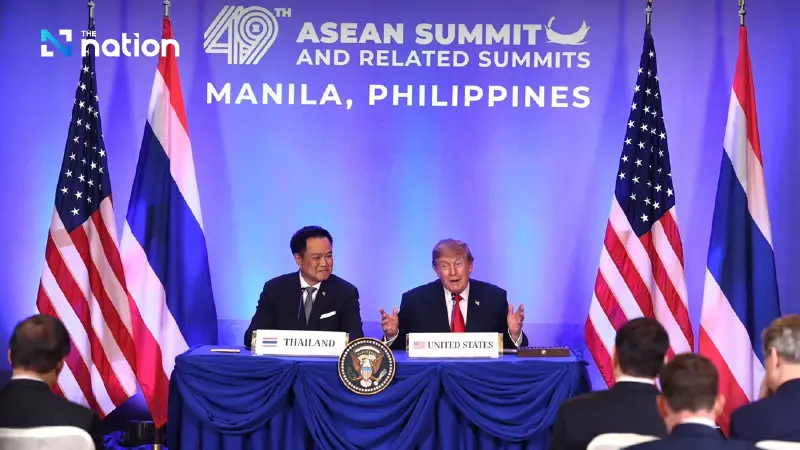
Suphajee outlined the timetable after Thai Prime Minister Anutin Charnvirakul and US President Donald Trump signed a joint statement in Manila on November 17, 2026. The leaders confirmed that negotiations on the Agreement on Reciprocal Trade were substantially complete. The statement sets out the next steps but does not specify tariff rates.

Thailand presses for the same rate as regional rivals
Suphajee said Thailand would use the joint statement to open talks immediately on the 12.5% US duty on covered Thai exports. Washington imposed the duty under Section 301 following an investigation into how countries prevent imports of goods made with forced labour.
Malaysia, Indonesia and Cambodia, which have already signed reciprocal trade agreements with the United States, face a 10% duty on covered goods. Securing the same rate would close a 2.5-percentage-point gap for Thai exporters. Suphajee said Washington had indicated it was willing to treat Thailand on the same basis as those countries.
On the broader tariff negotiations, Suphajee said Thailand had asked for assurances that the combined US rate would stay within the 19% benchmark and keep Thai goods competitive. She expected the overall rate to be no higher than 19%, although a separate US Section 301 investigation into excess manufacturing capacity remained open. She also cited possible US measures under Sections 232 and 122 as factors Thailand would need to monitor.
Legal review before signing
Legal teams from both countries will refine the text before it goes through their respective approval processes. In Thailand, the Cabinet must approve the agreement before it can be signed. Public hearings, parliamentary approval and any necessary changes to Thai laws or regulations would follow before it takes effect.
Suphajee said a signing before the end of 2026 was unlikely, given the legal work still to be done and the US holiday period beginning in mid-December. The agreement would build on the 1966 Treaty of Amity and Economic Relations and the 2002 Trade and Investment Framework Agreement.

US farm exports and safeguards for Thai producers
Trump said Thailand would eliminate tariffs on US exports and remove significant non-tariff barriers affecting vehicles, medical devices, pharmaceuticals, ethanol and poultry. He estimated that Thailand would buy an additional US$2.6 billion worth of American agricultural products.
Suphajee said the product-by-product terms remained confidential during the legal review. Thailand’s priorities included giving consumers more choice and manufacturers access to quality raw materials at reasonable prices, while protecting the interests of farmers, small businesses and exporters and supporting domestic investment and jobs.
Thailand already grants broad market access to many of the goods under long-standing trade agreements with Southeast Asian partners, Australia and New Zealand, she said. Many potential US imports were goods that Thailand produces in insufficient quantities or needs for food and energy security. Domestic demand and production capacity would guide import decisions, with quotas available to prevent a surge that could harm Thai producers.
Anutin thanked Trump for helping advance the negotiations and said he expected the remaining details to be settled soon. “Our partnership is beyond trade and investment,” he said.

