
Markets rally on bets a Democratic Congress will curb Trump’s policy swings
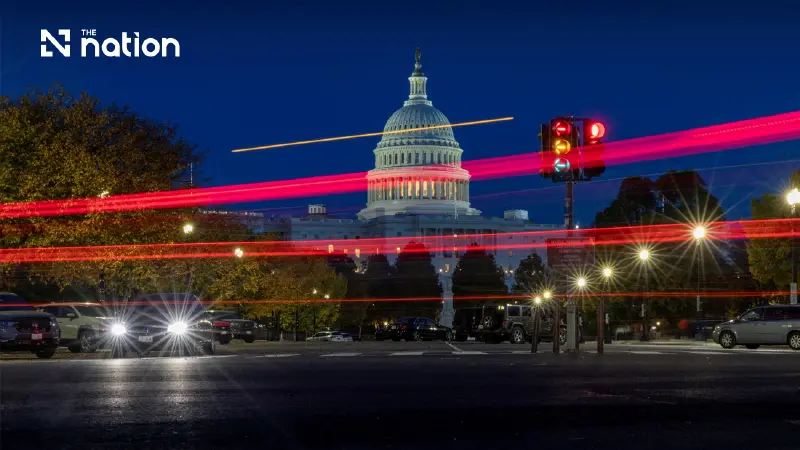


Investors bet a Democratic Congress will restrain US spending, lifting Treasury prices, while the prospect of closer scrutiny weighs on data centre shares.
- Investors believe a Democratic-controlled Congress will create legislative gridlock, making it harder for President Trump to enact sudden policy changes and creating a more predictable market environment.
- US Treasury yields fell as investors anticipated a Democratic Congress would scrutinize fiscal policy more closely and constrain the administration's ability to increase federal spending.
- Oil prices fell sharply on speculation that the election result would pressure the White House to de-escalate the war with Iran.
- While big tech shares rose, chipmakers and data center operators fell on expectations that Democrats would more closely regulate the AI industry, leading to a more measured pace of spending and development.
Global shares and US government bonds rallied on Wednesday, November 4, after Democrats won the House of Representatives and the Senate in the November 3 midterm elections. Investors bet that a Democratic Congress would make it harder for President Donald Trump to push through spending increases or spring policy changes on markets.
All three main Wall Street indices traded higher. For two years, investors had faced sharp shifts in US policy, from tariffs to the war with Iran, with little opposition to Trump from the Republican-controlled Congress. In the weeks before the vote, uncertainty over the war, federal spending and rules for artificial intelligence (AI) had unsettled stock and bond markets. The result made investors more willing to take risks.
“Gridlock is the market’s friend,” said Mark Hackett, chief market strategist at Nationwide. Hackett expected little beyond essential legislation to pass over the next two years, giving investors a more predictable backdrop.
US equities also have a history of gains after midterms. In an analysis of elections dating back to 1946, Glenmede found that the S&P 500 returned an average of 19.9% in the 12 months following the vote.

Brent falls nearly 9% as investors reassess the Iran war
Brent crude fell nearly 9% on November 4 as traders weighed whether the Republican defeat would prompt the White House to pursue an end to the war with Iran. US Vice President JD Vance distanced himself from Trump’s decision to go to war, questioned its value and blamed the conflict entirely for his party’s electoral losses.
“Investors may be starting to price in a de-escalation,” said Shawn Snyder, economic strategist at Potomac Fund Management.
Joseph Zidle, chief market strategist at Cresset Capital, interpreted the oil sell-off as a signal that the war’s unpopularity was putting pressure on the administration to reconsider its course. If lower oil prices persisted, Zidle said, they could ease inflation and take pressure off the US Federal Reserve.
Big tech gains while chipmakers and data centre operators fall
Shares in Amazon.com, Meta Platforms and Alphabet rose on November 4, while data centre operators IREN, Applied Digital and Core Scientific fell. Chipmakers also lost ground, with the PHLX Semiconductor Sector Index down 3.6% during the session.
Opinion polls before the election had shown growing public opposition to AI and new data centres. Investors expected a Democratic Congress to examine the industry more closely. A slowdown in construction could weigh on operators and suppliers, but it could also ease concerns about the cost of borrowing to build new facilities. Nationwide’s Hackett saw the gains in large technology shares as evidence that investors wanted a more measured pace of spending.
Democrats won the governorship in all five states that Jefferies tracks for their exposure to data centre development. The firm’s strategists expected the incoming governors to set conditions on projects while allowing construction to continue. In their view, clearer rules could give the industry a more secure political footing and limit disruption to an investment boom that has supported economic growth and corporate profits.
Treasury yields fall as December funding deadline looms
US Treasury prices rose and yields fell as investors anticipated tighter limits on federal spending. Some also saw a link between AI policy and interest rates. If closer regulation slowed investment and economic growth, the Federal Reserve could have less reason to raise rates.
Phoenix Kalen, global head of emerging markets research at Société Générale, expected a Democratic Congress to scrutinise fiscal policy more closely and constrain Trump’s ability to increase spending. That could ease pressure on US bond yields, which had risen during 2026 amid concern about federal debt that recently exceeded US$40 trillion.
Divided government also increases the risk of a spending dispute that could shut down federal agencies. Congress postponed negotiations over funding for the 2027 fiscal year until after the elections, leaving lawmakers until December 11 to reach an agreement.
The implications differ by industry. Angelo Kourkafas, senior strategist at Edward Jones, said hospitals and managed-care companies could benefit if lawmakers from both parties support an extension of Affordable Care Act subsidies. Parts of the financial, defence and cryptocurrency industries that had counted on deregulation or other favourable policies could face a tougher environment. Kourkafas cautioned against making large sector bets on the election result alone.
In a note to investors, Ed Mills, a Washington policy analyst at Raymond James, pointed to presidential executive action, spending disputes, geopolitical risks, unsettled AI policy and the approaching start of the 2028 presidential campaign. Together, he wrote, they present “a significant wall of worry”.
