
Thailand targets global cannabis, hemp and kratom market with higher standards
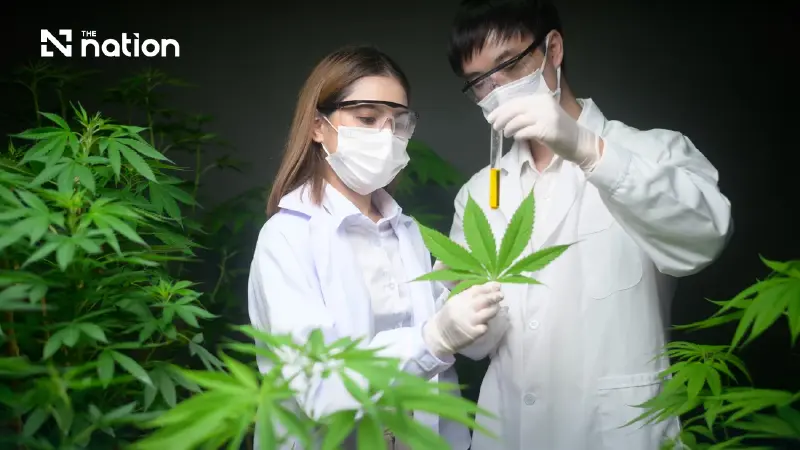


Thailand is pushing higher medical, cultivation and production standards for cannabis, hemp and kratom as it seeks a stronger position in Asia’s health and herbal-products market.
- Thailand is raising its medical, cultivation, and production standards for cannabis, hemp, and kratom to strengthen its position in the global market.
- The strategy shifts focus from production volume to scientific evidence, product safety, and developing higher-value processed goods that meet international requirements.
- Confidence in the industry is being built through certifications like Good Agricultural and Collection Practices (GACP), laboratory testing, and research into higher-quality plant varieties.
- By improving standards and focusing on evidence-based medical applications, Thailand aims to become a regional hub for raw materials, processing, and a more significant international competitor.
Thailand is seeking to strengthen its position in Asia’s cannabis, hemp and kratom industries by raising medical, cultivation and production standards while expanding research and higher-value processing.
Industry figures and government officials say the next phase of growth will depend less on production volume and more on scientific evidence, product safety, internationally recognised standards and clear regulation.
Thailand has potential to become a regional centre for raw materials, processing and medical applications if it can combine its agricultural strengths and traditional knowledge with scientific research and credible quality controls.

Medical use seen as option for elderly and palliative care
Dr Kengpong Tangarunsanti, president of the Senior Health Service and Trade Association, said cannabis and kratom extracts could have a role in elderly care, palliative treatment and the management of certain chronic or specific symptoms, including insomnia, anxiety and pain.
He stressed, however, that medical use must be based on appropriate indications, evidence and safety standards.
“There is demand for health and elderly-care products containing cannabis extracts, but research evidence, product-quality standards and safety are essential to build confidence in their use,” he said.
Medical-grade cannabis starts at cultivation
Pathummas Sirikawin, deputy director of the Division of Medical Cannabis at the Department of Thai Traditional and Alternative Medicine, said confidence in the industry had to begin at cultivation sites.
Thailand has developed certification systems covering standards such as Good Agricultural and Collection Practices (GACP), organic cultivation and Global GACP, while production batches must undergo laboratory testing to verify quality and safety.
The Department of Thai Traditional and Alternative Medicine officially maintains a Thailand Cannabis GACP certification system and lists certified cultivation sites.
Testing is intended to detect risks including microbial contamination, heavy metals, pesticide residues and excessive moisture so that cannabis supplied for medical purposes meets required standards.
Under current Public Health Ministry rules, cannabis inflorescences are classified as a controlled herb. Commercial sale requires authorisation, while electronic and online sales are prohibited under the controlled-herb regulations.
The government has tightened the framework around medical cannabis during 2026, with cultivation, distribution and processing increasingly linked to GACP and other regulated medical-use requirements.

Research targets stronger cannabis and kratom varieties
Songmet Sangnoi, director of the Cannabis, Hemp and Kratom Research Group at the Department of Agriculture, said the department was continuing research into plant varieties and production systems.
The aim is to select high-quality varieties and control cultivation from the farm level so raw materials can meet international standards and remain free of unacceptable contamination.
Songmet said higher-quality raw materials could give doctors and healthcare facilities greater confidence while also supporting Thailand’s medical-tourism and herbal-product industries.

Industry sees three-to-five-year opportunity
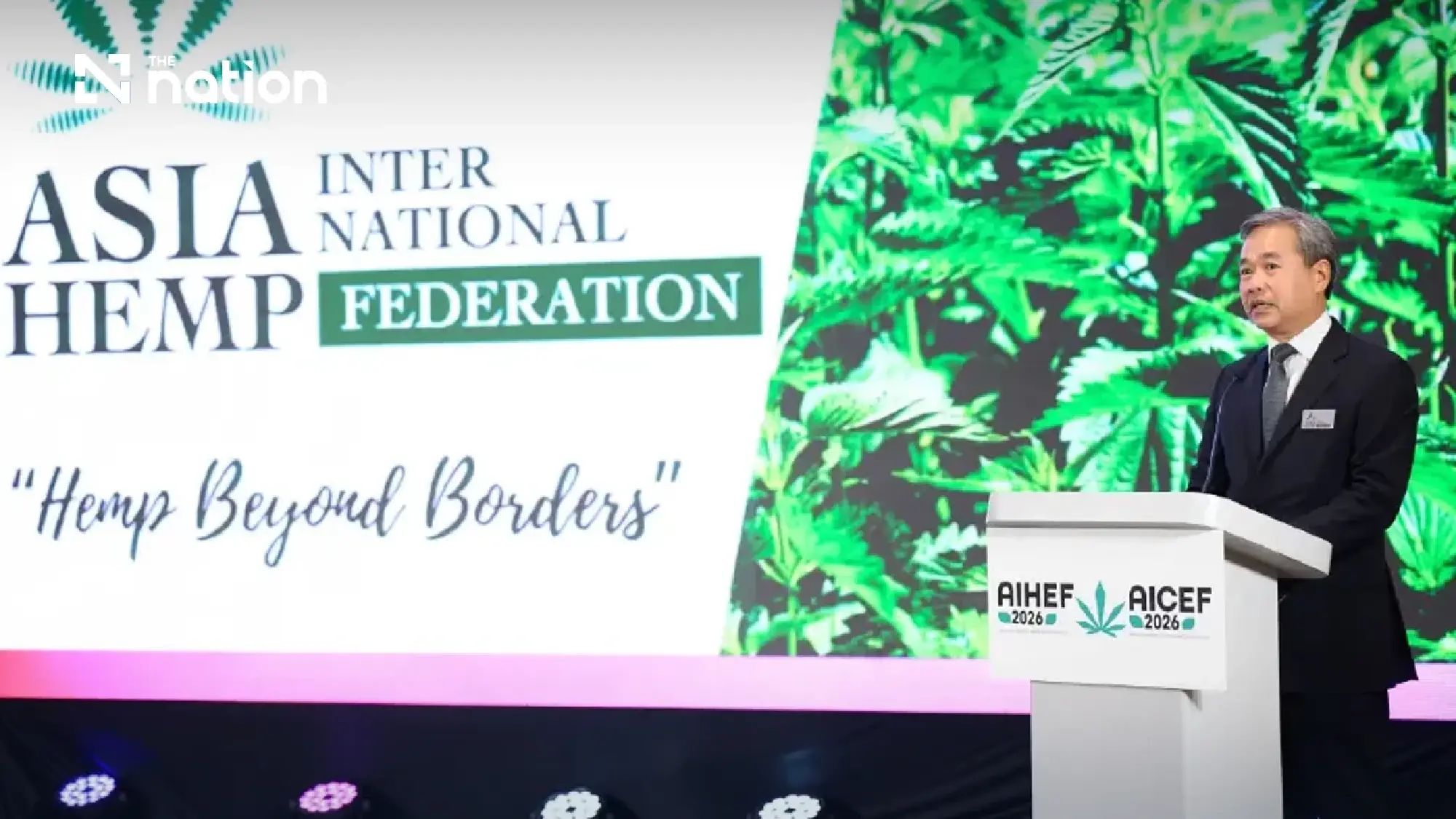
Phumjai Khamphaphoto, president of the Asia International Hemp Federation, said Thai producers would have to improve standards throughout the production chain if they wanted to compete internationally.
Although Thailand currently represents only a relatively small share of the global market, he expects the country could become a more significant player within the next three to five years if the public and private sectors coordinate on standards, investment and value-added products.
Phumjai said sustainable growth would require businesses to move beyond simply producing raw crops and focus on products that could meet international requirements and generate higher economic value.

Thai kratom promoted on quality advantage
Chakri Jitjet, a specialist in commercial kratom development and a director of BanThaiHerb Center Co Ltd, said Thai kratom had a potential competitive advantage because of local varieties, climate and growing conditions.
He argued that Thailand could build on these strengths by developing processed products for medical and commercial markets rather than relying on sales of unprocessed leaves.
BanThaiHerb Center describes its business as covering the cultivation, processing, extraction and distribution of kratom and related products for domestic and international markets.
The company and industry groups are also promoting traceability and higher standards as part of efforts to position Thai kratom for international buyers.
Bangkok expo to connect farms with global buyers
The industry’s next major gathering will be Asia International Hemp Expo & Forum 2026 (AIHEF 2026), held alongside the Asia International Cannabis Expo & Forum 2026 (AICEF 2026) from November 18–20 at the Queen Sirikit National Convention Center in Bangkok.
The event will connect businesses across the supply chain, from farms and extraction companies to processors and finished-product manufacturers, while providing opportunities to meet importers and international partners.
Organisers expect at least 5,500 industry professionals over the three-day event. Official event information confirms the November 18–20 dates and identifies the gathering as a platform covering hemp, cannabis and kratom.
The expo is organised by the Asia International Hemp Federation together with N.C.C. Exhibition Organizer Co Ltd and is intended to promote investment, technology, production standards and international business matching.
The previous AIHEF attracted participants from dozens of countries, highlighting international interest in Thailand as a potential supply, processing and business base for the sector.
Standards will determine Thailand’s global position
Industry participants argue that Thailand already has several foundations needed to expand the sector, including agricultural expertise, traditional herbal knowledge, established processing businesses and a growing regulatory framework for medical use.
But they acknowledge that international competitiveness will depend on evidence-based medical applications, consistent product quality, traceability and compliance with global standards.
The shift therefore marks a move away from the early phase of cannabis and hemp liberalisation towards an industry increasingly focused on medical use, research, safety and internationally recognised production systems.
If those elements can be strengthened together, industry representatives believe Thailand could develop a more sustainable role in Asia’s cannabis, hemp and kratom economy, spanning cultivation, medical products, processing and international trade.
