
Thailand Set to Limit Cannabis Strictly to Medical Use
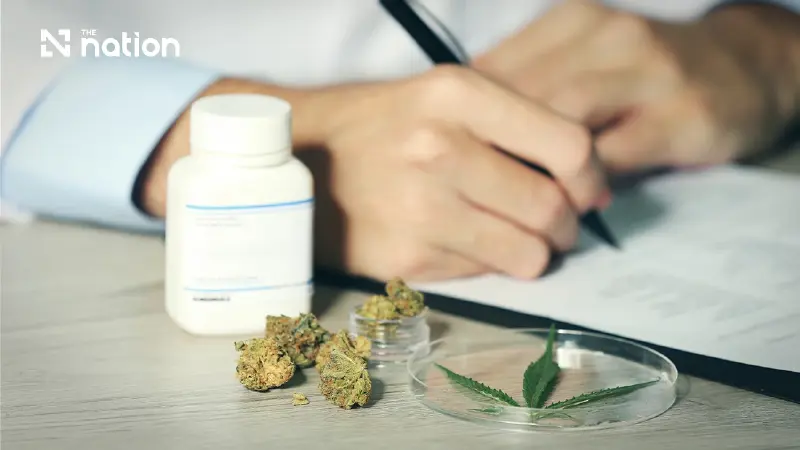


The Ministry of Public Health drafts tough new regulations banning cannabis advertising and restricting its use strictly to healthcare and research
- A new draft bill is being introduced to restrict cannabis use strictly to medical, wellness, and research applications, effectively ending recreational use.
- The proposed law will implement a mandatory three-year licensing system for all commercial cannabis activities, including cultivation, production, and retail.
- A complete ban on advertising and marketing for cannabis flowers, resins, and related accessories will be enforced to curb non-medical appeal.
- The regulations will include strict penalties for violations, prohibit sales to individuals under 20, and ban dispensaries near sensitive locations like schools and places of worship.
The Ministry of Public Health drafts tough new regulations banning cannabis advertising and restricting its use strictly to healthcare and research.
Thailand’s Department of Thai Traditional and Alternative Medicine has unveiled a comprehensive draft bill aimed at reining in the country’s cannabis sector, establishing a strict regulatory framework focused purely on health and wellness.
The draft Cannabis Control Act introduces six primary measures designed to end recreational consumption and restore legal clarity following the plant’s removal from the official narcotics list.
Officials acknowledged that the initial de-scheduling left a regulatory vacuum, forcing authorities to rely on a patchwork of existing laws that created significant enforcement loopholes.
Dr Tewan Thaneerat, deputy director-general of the department, emphasised that the proposed legislation addresses the entire supply chain—from cultivation and processing to retail and export.
Under the new framework, cannabis use will be strictly confined to conventional healthcare, Thai traditional medicine, academic research, and accredited wellness practices.

Key measures under the proposed draft:
National Oversight Body: A newly formed national committee, chaired by the Minister of Public Health, will steer policy, safety standards, and national regulatory strategy.
Three-Year Licensing System: Commercial cultivation, production, import, export, and retail will require an official three-year permit. However, non-psychoactive plant parts—such as roots, stems, leaves, and seeds—will be exempt from licensing to support traditional remedies and domestic health applications.
Vulnerable Group Protections: Sales to individuals under 20, pregnant women, and nursing mothers will be strictly prohibited. Furthermore, dispensaries will be banned from operating near sensitive public spaces, including places of worship, schools, parks, and recreational venues.
Total Ban on Promotion: Advertising, marketing, and public relations campaigns for cannabis flowers, resins, and smoking accessories will be outlawed to curb non-medical appeal and recreational misuse.
Supervised Health Use: Purely therapeutic applications must be prescribed and monitored by licensed healthcare professionals.
Strict Statutory Penalties: Unlicensed commercial activity and sales to protected demographics will carry heavy criminal penalties, including fines and imprisonment. Individuals caught using cannabis outside approved medical parameters will also face statutory fines.
By prioritising clinical oversight and public safety, health officials aim to anchor cannabis firmly within Thailand’s wellness and healthcare landscape, insulating the public—particularly youth—from the risks of unregulated commercialisation.
