
Sense of urgency must turn into action


The term "emergency" means a situation that poses an immediate risk to health, life, property or environment.
It’s a situation that requires a brave, think-outside-the-box and unbiased response in which politics and personal interests play absolutely no part. The goal is simple: Lives must be saved, health threats minimised and property and the environment protected as much as possible.
Thailand’s flood crisis has become a major emergency, and therefore the government of Prime Minister Yingluck Shinawatra must drop any political prejudice and take the bull by the horns.
A sense of urgency, albeit belated, was seen yesterday through the setting up of a new government mechanism to cope with the nationwide flooding of unprecedented scale. Of course, it’s better late than never. But too little the move might prove to be.
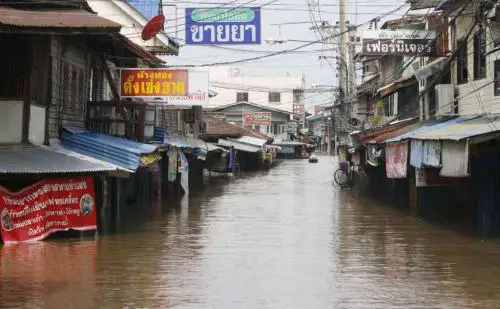
Unorganised agencies have been fighting a rearguard battle as floods wreak havoc from one region to another. Province after province has been submerged. Transport routes have been cut. Relief supplies are yet to reach a large proportion of sufferers, who number in the millions. Vast areas of farmland have been devastated and huge numbers of livestock wiped out. National-heritage sites have been damaged or threatened. Factories are going under and workers face layoffs. Tension has been high between victims and unaffected people in neighbouring areas.
The relief centre announced yesterday, with Yingluck as its head and ministers concerned supervising delegated operations, was at best an attempt to put the embattled house in order and at worst a preparation for a new rear-guard battle. The ministers are the same Cabinet members who have been found lacking in their efforts to cope with this still-unfolding crisis. Agencies coming under this mechanism are the ones already fighting the floods in desperation. It seems the success of the plan announced by Yingluck yesterday will rely more on nature’s mercy than human efficiency.
The military, meanwhile, has played a largely passive part, but the government apparently hopes the Armed Forces will play a greater role under the new plan. Yingluck does not want to empower the military more than necessary in this crisis, for obvious reasons. In the Thai political context, each sanction of the Armed Forces’ new authority is met with apprehension and distrust – more so when the Yingluck government is concerned.
The question is how much will be considered “more than necessary”. One school says Thailand’s political system practically allows a democratic government to mobilise warships or soldiers and utilise advanced and ready equipment of the Armed Forces to cope with a natural disaster without really having to change anything legally. Yesterday’s announcement means this school still prevails.
The other school says that when an emergency becomes overwhelming, all principles must be reconsidered. The thinking is admittedly controversial. It’s too bad that Thai politics does not give much room for flexibility, even for troops to perform civic duties in an increasingly grave situation. This is why yesterday’s development fell short of depicting the flood disaster as a state of emergency, as it is supposed to be.
A “state of emergency” we are having. But such a term has unfortunately become inseparable from politics, although what’s happening in 28 Thai provinces has nothing to do with politicians or the problems between them and others. The Yingluck administration has decided to opt for incremental changes in coping with growing criticism related to its flood response.
If a catastrophe is averted, lives are saved, food reaches all starving victims and diseases are pre-empted or contained, the new flood-relief mechanism will have proved to be a proper response. If the opposite happens, the question of why the government did not do more will resound, although by then any question may prove irrelevant.
