
Lethargy over water woes will hurt govt
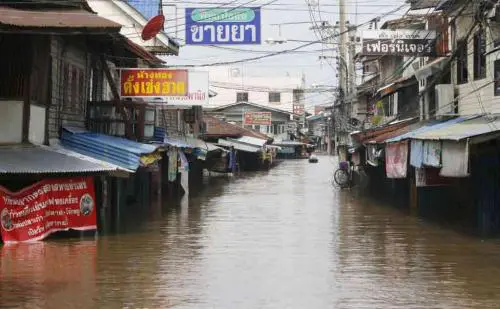


Water power is formidable, and Prime Minister Yingluck Shinawatra may be drowned in the floods if her government continues to toy with such a powerful force of nature.
After months of heavy rain, Yingluck has just realised the severity of excess water. On Sunday, she paid attention for the first time to draining run-off into the sea and evacuating flood victims. It is almost too late because run-off has already started arriving in Bangkok.
Although the government has set a top priority to tackle seasonal floods since August, Yingluck’s inspection trips were photo opportunities rather than any serious attempt at water management.
Thailand has had plenty of warning signs about climate change, resulting in unusual rain.
From 2008, the country recorded plentiful rain above the 30-year average compiled by the Meteorological Department. Last year saw the worst flooding in recent memory. Some 39 provinces and about 2 million people were affected by severe floods, which killed 180 people.
This year, above-average rain, particularly in the upper North – stricken by drought the year before – started from January. Flash floods and land-slides hit the South in March.
Abundant rain was recorded across the country with the advent of the rainy season in May.
In June, the first of five storms, Haima, dumped rain in the North. The second storm, Nock-Ten, came in July and rainfall broke the 60-year record in Nong Khai. Some 20 provinces and more than one million people were flooded. The casualties rose to 20 dead.
Yingluck began to address the inundation in August by appointing Interior Minister Yongyuth Wichaidit as the man in charge.
Floods intensified and the water level in five major dams in the North climbed sharply while Yongyuth appointed four subcommittees in charge of mitigating the natural disaster.
As two storms, Nesat and Haitang, were poised to bring more rain in September, the Irrigation Department warned of looming disaster. The fifth storm, Nalgae, has caused heavy rainfall this month.
Of 33 big dams, 28 saw water retention at more than 80 per cent of capacity. Excess water must be released in order to accommodate more rainfall over remaining weeks of the season.
The department alerted farmers and provincial authorities in the Central region and the lower North to organise an early rice harvest in order to save crops.
The government carried on work in the flood-as-usual manner. The Hydrology and Water Management Office declared a red alert – a highest critical level 3 – on water management on September 5, but Yingluck and top government leaders did not acknowledge the crisis at hand.
On September 26, HM the King granted a royal audience for the prime minister to report on the floods. Yingluck told reporters that His Majesty was concerned about draining the excess water into the sea.
In the first week of October, Yingluck finally came to grips with the reality of the force of nature after Bhumibol Dam opened its emergency spillway for five consecutive days.
At 2am on Thursday, run-off was approaching Ayutthaya and the government was forced to make a split-second decision whether to save the Asian Highway or the Rojana Industrial Estate. Transport Minister Sukumpol Suwanatat took swift action to save the country’s electronics hub.
Faced with the mighty water flow, Yingluck formed a new task force, dubbed the National Flood Relief Centre and led by Justice Minister Pracha Promnok. The centre, activated on Saturday, will supersede Yongyuth’s 24/7 Emergency Operation Centre for Flood, Storm and Landslide.
By the time Yingluck began to talk about drainage, flooding had already spread to 30 provinces affecting 2.4 million people.
