
Reconciliation meet exposes divisiveness


Play
Key players in the so-called |reconciliation process yesterday showed how efforts to bring peace back to Thailand can turn furious, if not explosive.
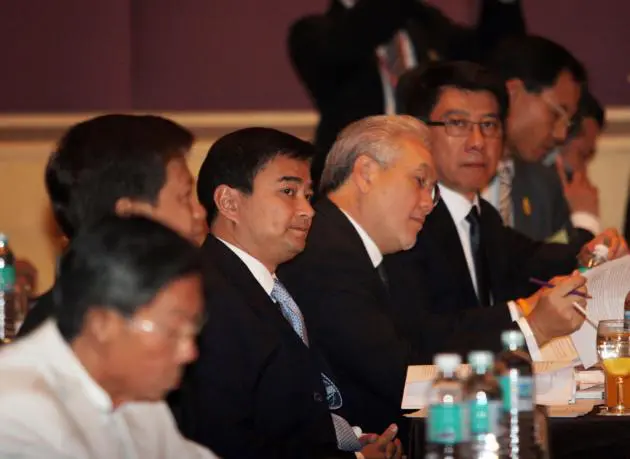
At the Miracle Grand Convention Hotel, academics, politicians and a former coup leader-turned-peacemaker aspirant expressed serious disagreement over what should and should not be done. The forum ended without the one and only good sign – that it could be held at all. Before they left, participants were urged to calm down and go back to search their hearts before another meeting could take place.
General Sonthi Boonyaratkalin, the man who led the 2006 coup to oust Thaskin Shinawatra, is now trying to convince Thailand that he is now a man of peace and national reconciliation. However, it is unclear if many will follow his advice.
“Forget the past. Think about today and build the future,” said Sonthi, now an MP and chairman of the House Committee on National Reconciliation.
According to Sonthi, Thailand was once “a society of love, peace and unity” but the political rift over the past six years has made things “very dangerous” and jeopardised the survival of “nationhood”.
The former junta leader urged all parties to foster a climate of national reconciliation, “in order to restore peace and caring to society”.
Opposition politicians who took the microphone, led by Democrat Party leader Abhisit Vejjajiva, were in no mood to accept the proposals made by King Prajadhipok’s Institute at the request of Sonthi’s committee.
Abhisit severely criticised many aspects of the report. He cited the omissions of many crucial incidents in the political conflicts. Also, proposals made by experts during KPI’s interviews were never included, he said.
Two sticking points are who should be granted amnesty and what should be done about the actions of the now-defunct junta-appointed Assets Examination Committee (AEC).
Abhisit warned that KPI’s proposals may in fact create more political conflicts.
“Is this reconciliation? If your answer is no, anyone who is thinking of making [such proposals] are the true opponents of reconciliation,” he said.
MP Phiraphan Phalusuk, Pheu Thai Party member in the Reconciliation Committee, used the same words to criticise Abhisit, saying the former premier was only looking for defects in KPI’s proposals.
Phiraphan insisted that actions taken by the AEC against Thaksin Shinawatra must be annulled as the members were appointed by the military government led by Sonthi. Abhisit argued that it was not the AEC but ultimately the courts that decided Thaksin was guilty of corruption.
Wuthisan Tanchai, leader of KPI’s research team and deputy secretary-general of the Institute, acknowledged that the report had its shortcomings but it was not intended to serve any party in particular.
Wuthisan said the team is com
mitted to serving society. However, after 120 days of research, he found that the climate for national reconciliation does not yet exist.
“No matter what we propose there will be those who disagree. If we do it the other way around there will also be disagreement. The biggest support we can hope for is from people who haven’t spoken,” said Wuthisan.
Listening to all the heated exchanges, the man who led the coup more than five years ago later urged everyone to “reflect into their hearts and see what each of you are thinking”.
“Let everyone return and create good feelings. I want to see smiles,” said Sonthi, who will submit proposals on national reconciliation to Parliament by the middle of April.
