
Yingluck to propose establishment of nuclear monitoring network


Play
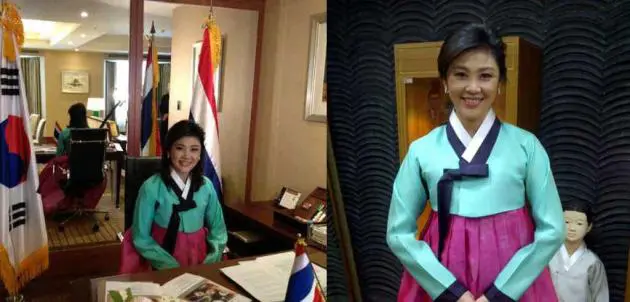
Thai Prime Minister Yingluck Shinawatra on Tuesday joined the leaders of more than 50 nations attending the 2012 Seoul Nuclear Summit, which is focusing on achieving more specific actions to prevent nuclear terrorism and to ensure atomic safety.
The summit, being held at Seoul’s Convention and Exhibition Centre (COEX), is the second of its kind and follows the inaugural gathering in Washington DC two years ago, hosted by US President Barack Obama.
Thai News Agency reported that the Thai premier is expected to suggest the establishment of a nuclear monitoring network in the Southeast Asian region as well as a Centre of Excellence to investigate nuclear traces.
The Centre could help expand capabilities to scientifically investigate and track transnational smuggling of nuclear weapons.
The discussion among the world leaders could boost cooperation for more effective prevention of nuclear terrorism.
The Seoul summit is expected to serve as a stepping stone in translating the political will generated at the Washington summit into action, while laying a cornerstone for attaining key nuclear security goals in the mid- and long-term, a senior Seoul official with information on the summit was quoted by local media as saying on Tuesday.
The 47 world leaders agreed at the previous summit that nuclear terrorism is a top global security challenge and that strong nuclear material security measures are the most effective way to prevent it.
A “Seoul Communique” will be announced at the end of the summit.
The Netherlands has agreed to host the third Nuclear Security Summit in 2014.
Yingluck is scheduled to attend a Plenary Session to discuss the topic, “National Measures and International Cooperation to Enhance Nuclear Security” followed by a working lunch among the leaders. The International Atomic Energy Agency (IAEA) and the United Nations will lead a discussion on “Synergy between Nuclear Security and Nuclear Security”.
Afterwards Yingluck will join a dinner reception hosted by South Korean President Lee-Myung-bak and the first lady to honour the leaders attending the conference.
The premier departs Seoul Tuesday night, arriving in Thailand Wednesday at 2.55am.
