
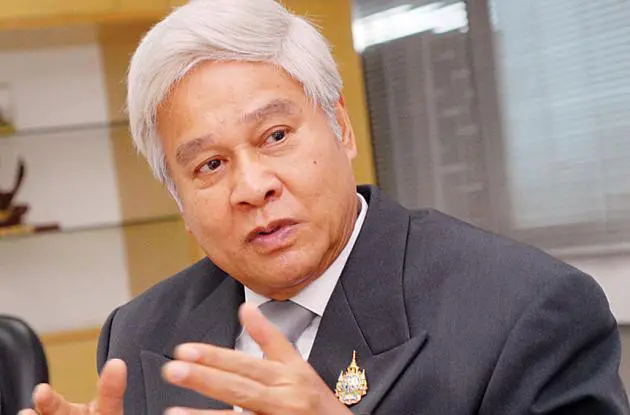
Dialogue would be a waste of time, Yongyuth says


Play
There is no need for the government to hold dialogue with people who still disagree with key elements of the national reconciliation plan as it has been endorsed by Parliament, Deputy Premier and Interior Minister Yongyuth Wichaidit said.
The idea for dialogue was proposed previously by King Prajadhipok’s Institute, which submitted an academic report on national reconciliation to Parliament.
“No need to do that. It’s a waste of time. Please understand first what the House of Representatives is, so we understand that we cannot let people give opinions directly.
“We don’t have that much space for 60 million people. We have to depend on the system of representatives that were elected fairly. We have to listen to the voices of the representatives.
“At the same time we don’t ignore the minority. The majority decides, and listens to the minority. That’s it,” Yongyuth said.
However, Prime Minister Yingluck Shinwatra suggested the government would commission a committee to study the reconciliation report and look into details of various proposed measures.
At present, she had assigned the panel in charge of monitoring implementation as per the Truth for Reconciliation Committee of Thailand’s proposal for the job.
Deputy Prime Minister and Interior Minister Yongyuth Wichaidit is chairman of the panel.
Responding to a question by a reporter on whether Pheu Thai Party plans to push for an amnesty bill by September, Yingluck said she was unaware of such a goal.
“In fact, we should talk about our aim to move the country forward and how to create reconciliation and find the solution together. However, we should let the study panel work and then it can propose [a study result] to the Cabinet,” she said.
Asked why he said this when the idea for dialogues was proposed by KPI, Yongyuth said it was the Institute’s business, not the government. KPI used government funding to conduct the research, so its report must be considered as belonging to a government agency. When it is released, it will be a matter for the public to criticise and KPI must accept that. It should not take the report back just because the report was criticised, Yongyuth told Matichon.
Yongyuth said there would be no selective conduct to help fugitive former premier Thaksin Shinawatra.
“The Yingluck Shinwatra government came from votes by almost 20 million people. Would these 20 million people let the government do something just for one man?” he said, adding that he did not think the decision would cause more conflict as nobody wanted a civil war.
Yingluck’s Pheu Thai Party got over 15 million party-list votes last year.
The parliamentary committee on reconciliation led by General Sonthi Boonyaratglin last week presented its report, which included study results by KPI on proposals for reconciliation.
KPI also issued a statement emphasising that it proposed dialogues be held nationwide as a prolonged process to reconciliation. It threatened to take back its report if it is misused by politicians.
Meanwhile, the opposition earlier attacked government MPs, saying they selectively highlighted KPI’s proposal on giving amnesty and cancelling work by the Assets Examination Committee in favour of fugitive former premier Thaksin Shinawatra.
Pheu Thai spokesman Prompong Nopparit said it was up to the government whether to hold dialogues or issue a law on reconciliation.
He said the government was entitled to pass a law now that Parliament had agreed on the proposal and passed its work to the government. The Democrats’ opposition to passing a law meant nothing, as the party would oppose whatever Pheu Thai proposed.
House Speaker Somsak Kiatsuranont said earlier that the parliamentary meeting on Thursday was to “acknowledge” the report from the Sonthi panel. It voted to approve the panel’s comment on KPI’s proposal.
After Pheu Thai MPs retracted their move to push for an amnesty law for politicians last year, Deputy Prime Minister Chalerm Yoobamrung said he had finished drafting a “Reconciliation Bill” consisting of six articles but he declined to reveal any details. It is very likely that the draft includes an amnesty for politicians.
