
Progress in porn pic probe


Play
Image may have been sent by Samsung device; phone number could be known within days
Electronic devices of a particular brand were found yesterday to be capable of sending data to display screens inside Parliament and could be responsible for a recent “porn pic” scandal.
Kamphi Ditthakorn, deputy secretary-general of the House of Representatives, who chairs a fact-finding team investigating the scandal, said yesterday the culprit could be a Samsung smart phone.
He said an examination was underway to determine the phone number of the device used to send a lewd picture to display screens during a recent parliamentary meeting. Technicians from CAT Telecom and LG, which provides the display screens, were checking records of use, and the result could be known within two days.
Kamphi said some 86 people were found to have used mobile phones on the day of the meeting, from 4 am on April 18 to 4 am on April 19.
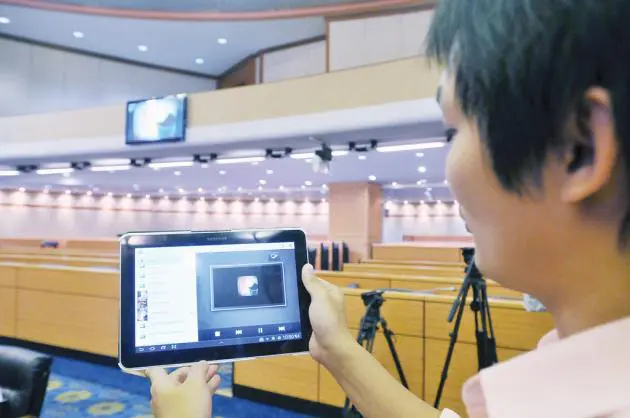
Parliament officials including Kamphi and technicians from CAT Telecom took part in an experiment in the chamber yesterday involving mobile phones, smart phones and tablets of different brands.
On April 18, during a televised debate on constitutional amendment, large display screens inside the parliamentary chamber briefly showed a picture of a partly unclothed woman in a lewd pose.
Yesterday’s investigation found that Samsung Galaxy Tab tablet computers and Samsung Galaxy Note smart phones could send data to the LG plasma TV screens inside the meeting chamber, without having to provide a password. The devices have a built-in application that allows the user to transmit data wirelessly to the screens through their WiFi dongle.
During the experiment, a link between the devices could be established within five seconds before an image file could be sent from a Samsung device to a screen.
Other devices, such as Apple’s iPhone smart phone and iPad tablet computer, and Nokia mobile phones, could not make a wireless connection with the LG screens without a password. iPhone and iPad require an extra application called LGTV Remote to establish a connection, with a password.
Lower House secretary-general Pitoon Pumhirun said it was news to him that there was technology that allowed images to be sent wirelessly to a TV screen without a password or authorisation.
Pitoon said he would consult with experts to ensure that no unauthorised data could be transmitted to screens in the future. He said technicians at Parliament would also investigate to see whether they had been responsible for sending the photo, possibly unintentionally. Any technician responsible would face disciplinary punishment.
Meanwhile, Pheu Thai MP Paijit Sriworakhan, chairman of the House committee on parliamentary affairs, said his panel would meet on Thursday to discuss a similar controversy involving Democrat MP Nutt Bantadtan.
Nutt was photographed during a recent parliamentary debate using his phone with an image of a scantily dressed woman on the screen. He told a press conference later he was checking Facebook messages when the photo emerged and he sought to delete it.
Democrat Party spokesman Chavanond Komalyasut said Nutt used an iPhone so he was unlikely to be involved in sending any lewd image to the chamber’s screens. He also said that Nutt was not in the chamber when the image appeared on the screen. The spokesman was responding to a suggestion by Pheu Thai MPs that Nutt may have sent the lewd image to large screens in the chamber.
