
Ministry calls for yet another dam impact study


Play
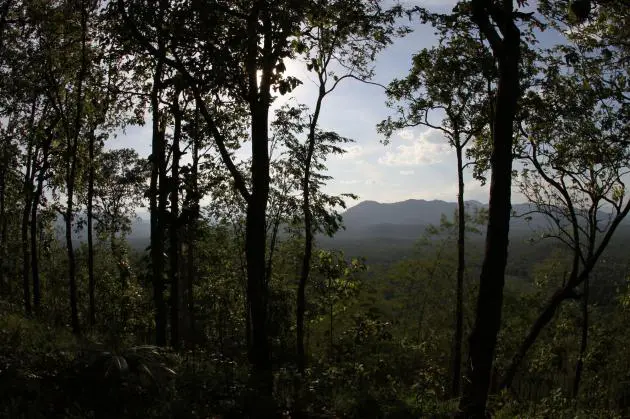
The Royal Irrigation Department (RID) has been given the green light to conduct an environmental and health impact assessment on Mae Wong National Park in Nakhon Sawan.
The move came after Natural Resources and Environment Minister Preecha Rengsomboon learned that assessments on the project had been rejected by the National Environmental Board (NEB) several times since 1995.
“The ministry has allowed the RID to go inside Mae Wong National Park to find out more about the environmental impact on the forest from dam construction,” he said.
“If the [survey finds] dam construction will not affect the environment and it can generate benefits for local people, the government will go ahead with the plan to construct the dam as it could resolve drought and flood problems in the long-term.”
On April 10, Cabinet approved a budget of more than Bt13 billion for the Mae Wong Dam even though an environmental and health impact assessment on the project has not been completed. The dam would be located inside Mae Wong National Park, which straddles Nakhon Sawan and Kamphaeng Phet provinces.
“If the study reveals no environmental impact on the forest in Mae Wong National Park – and most local people agree with the dam, I think the answer would be [to go ahead with] the dam project,” Preecha said.
However, the RID has done an environmental impact study some 10 times since 1995, and submitted it to the NEB and a panel of water experts – and it has always been rejected.
The report showed that about 12,000 rai of forest area in Mae Wong National Park would be destroyed by the dam construction– 51 per cent of mixed deciduous forest, 36 per cent bamboo forest and 15 per cent other forest.
Mae Wong National Park has 558,750 rai of forest area. Dam construction would cover only 2.2 percent of the park and 0.12 per cent of the western forest complex.
Dam construction activities would also affect the habitats of 196 species – about 17 amphibian species, 30 species of reptiles, 37 species of mammals and 37 species of fish.
“The department would need to take a lot of time to study the environmental impact on forest areas in Mae Wong National Park as we want full information before making a decision,” RID deputy chief Somchai Kiatworrachai said.
RID had hired two environmental consultant companies to conduct the EIA. NEB rejected the report and asked RID in 2004 to improve its EIA and water management plans for the Sakae Krang watershed – a tributary of the Chao Phraya River.
The consultants were asked to consider the environmental impact on forest and wildlife resources in Mae Wong National Park, as well as conflict among local village people.
“RID had never conducted a survey on the real environmental impact on forest and wildlife in Mae Wong National Park. That’s why NEB has rejected its report several times,” Seub Nakhasathien Foundation’s deputy secretary-general Panudet Kerdmali told The Nation.
The Foundation has declared Mae Wong National Park to be one of the richest forests in the country and a habitat for diverse species, especially tigers.
According to a study conducted by the Wildlife Conservation Society, at least eight wild tigers were recently spotted. Researchers have also found tapir, black bear, wild boars and peacocks in the area.
It said this national park represented an important wildlife breeding area.
