
Islamic delegation leader condemns South violence
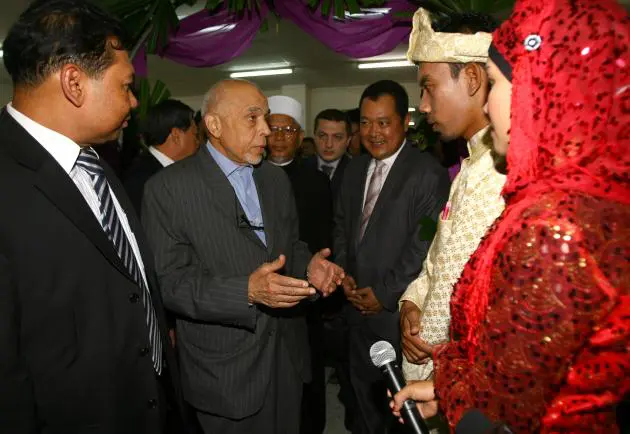


The head of a delegation of the Organisation of the Islamic Conference yesterday condemned the violence in the Muslim-majority South and urged the government to lift the controversial Emergency Law.
OIC Ambassador Sayed Kassem el-Masry said during a visit to Yala that his organisation condemned violence against innocent people, regardless of who is behind it, and added that the Koran clearly prohibited the taking of innocent lives.
Speaking to Thai officials who are assigned to the restive region where more than 5,000 people, mostly Muslims, have died violently during the insurgency, Masry said the taking of one innocent life was like the elimination of an entire race.
However, he said the OIC and the Thai government were in agreement that the insurgency is not about religion but is rooted in differences in culture and identity between the Buddhist-majority state and the Malay Muslims in the three southernmost provinces.
Masry said he was glad that the government valued Malays’ identity and cultural space, pointing to the permission it has granted for the use of the Malay language in pilot projects in public schools.
Academics and historians have blamed the country’s policy of assimilation for the conflict, saying the unrest is deeply rooted in Thailand’s nation-state construct that leaves little room for Malays’ identity or their cultural and historical narratives.
Moreover, the culture of impunity among security officials does not help in bridging the historical trust gap between the Malays and the Thai state, some analysts say.
The OIC visit comes just weeks after massive car bombs in Yala and Hat Yai that resulted in more than 10 deaths and more than 100 injuries. No group claimed responsibility but exiled separatist leaders and Thai officials said separatist militants on the ground affiliated with the Barisan Revolusi Nasional-Coordinate (BRN-C) were behind the attacks.
Government and separatist sources said the attacks were a slap in the face to the Thai administration and in response to requests for peace talks. While other long-standing separatist groups met with the Pheu Thai Party’s de facto leader, Thaksin Shinawatra, in mid-March, the BRN-Coordinate decided to boycott the meeting.
In November 2010 the OIC chief, Dr Ekmeleddin Ihsanoglu, met with the leaders of long-standing separatist movements and urged them to unite and form a political front, the United Patani People Council. But the government of the day led by Abhisit Vejjajiva shot down the idea of having the OIC mediate peace talks.
The Thai military is also against the idea of the government engaging in negotiations with the separatists. But political and military insiders say the disagreement has more to do with who owns the process. The military has been holding secret talks with separatist leaders since the 1980s, but these have produced nothing in terms of policy change towards the Malay-speaking region.
