
'Dirty tricks' ahead of Mae Wong Dam hearing today


Play
Thousands of people in Lat Yao district in Nakhon Sawan and nearby areas will join a public hearing today to learn about an environmental and health impact assessment (EHIA) linked to the Mae Wong Dam.
The event, held by the Royal Irrigation Department, aims to reveal final results of the EHIA and seek opinions from locals and relevant agencies, Kuesak Thathong, chief of RID’s Environmental Bureau, said.
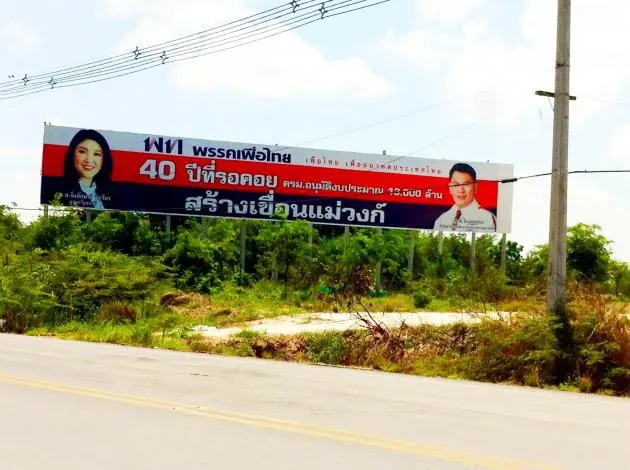
A battle to sway public opinion has begun with many pro-dam billboards erected in Lat Yao and a conservationist warned not to discuss negative impacts from the dam.
The RID hired an environmental consultant/creative technology company to conduct the EHIA for the dam project. The firm began conducting a study for the assessment in August last year. It is expected to be done by July 25 this year.
The EHIA report says the dam will cover 12,900 rai of Sob Kok mountain in Nakhon Sawan’s Mae Wong district and Khanuworalukburi in Kamphaeng Phet province. Some 12,300 rai of this is in Mae Wong National Park. And the dam will deliver water to 291,900 rai of irrigated areas.
The study found over 12,900 rai of forest will be destroyed. Most of these areas are mixed deciduous forest, dry dipterocarp forest, and bamboo forest. Dam construction will affect the head watershed class 2 and class 3A. Building the dam will also affect the habitat of more than 400 wildlife species – most of them birds.
However, the study proposes five ways to resolve water issues in Mae Wong district and Sakae Krang watershed – a tributary of the Chao Phraya River.
The first solution the study suggests is for related agencies to manage existing irrigation infrastructure and not invest any budget. The second suggests these agencies invest Bt579 million for the construction of small dams along the river.
The third ‘solution’ is to build small dams and a reservoir on a farmer’s rice plantation. This would cost about Bt 1.8 billion. The fourth is to build small dams and develop an underground water system. This would cost about Bt600 million to build. The fifth is to build the Mae Wong Dam, at a cost of Bt13 billion.
To date, there are about 164 projects in Sakae Krang watershed to resolve water problems. In Lat Yao district in Nakhon Sawan, there are two projects, including small dams on Klong Khun Rat. Small dams have also been installed at Ban Wang Sam Ran to resolve water problems.
Panudej Kerdmail from the Sueb Nakhasathian Foundation said they would send a person to the hearing. But it had found the EHIA by the company lacked details about the impact from the dam on the number and species of wildlife and flora that will be affected. It also did not mention compensation for locals who will lose land.
A resident from Lat Yao district, who did not want to be named, said she did not have much information about the dam. No officials had explained the pros or cons of the project. She heard via the media that today's event would give results of the final EHIA study.
“Even if the dam is good for us, it would be better related agencies dredge and maintain the ‘dead’ canals,” she said.
Meanwhile, many billboards voicing backing the dam project were installed in the district prior to today’s public hearing.
Another local person, who leads a conservation group, who did not want to be unnamed, said he would not attend, because had been threatened by a group of armed people, who asked him to not speak about environmental impacts from the dam.
