
Ties with generals improving: Sukampol
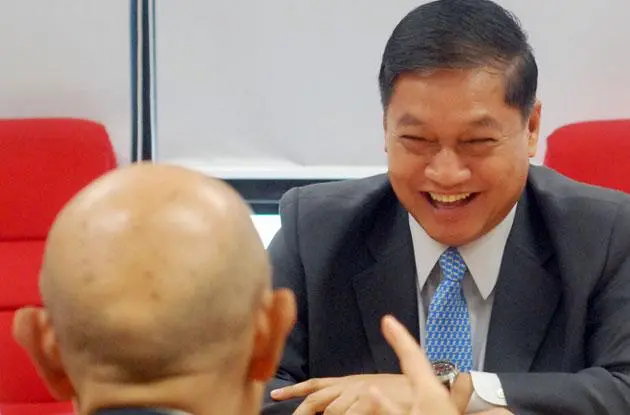


Defence minister says military is not one of government's major worries
Defence Minister Sukampol Suwannathat does not like having to deny speculation about a possible coup every second day. But when talking about his relationship with the military top brass nowadays, he sounds eager and positive.
“People who started off on the wrong foot against each other can be good pals if they manage to come to terms with each other,” he told Nation Group in an exclusive interview. That, coupled with his emphatic denial that the military poses a threat to the Yingluck government, confirmed what many analysts believe: The ruling camp’s anxiety has shifted from the military barracks to some place else.
According to Sukampol, the Yingluck Cabinet has been making one political retreat after another not because it was worried about the men in uniform. The military was a considerable cause for concern when Sukampol replaced Yuthasak Sasiprapha in the last Cabinet reshuffle five months ago, but the situation has changed somewhat.
It’s debatable if Sukampol played a big role in breaking the ice – but the potentially explosive issue of proposed legal changes to increase the government’s leverage over military affairs has dropped off the administration’s priority list. The defence minister said that as long as the current system allowed key questions to be settled in the defence council, there should be no need to stir up the hornet’s nest.
“I like to talk straight. And when you talk straight, you don’t have to engage in a long conversation,” he said, suggesting that sometimes sincerity is better demonstrated through brief, yet no-nonsense dialogue.
He is not worried about the current set-up in the defence council, believing that the government has strong leverage in the governing body. And with key political games panning out mainly in Parliament, the military has become a lesser subject of government concern.
Sukampol’s routine role used to be lashing out at reporters asking him about coup speculation, which he often claimed originated in coffee shops. But he has since found himself having to explain why the government chose to back away from the Nasa weather study project, although the Thai armed forces did not seem to oppose it.
The defence minister suggested the government backed off on the Nasa scheme and other plans for the same reason: A judicial accident can still happen if the ruling party is not careful.
Sukampol implied that the government did not do the Nasa about-turn not because it did not want to risk debating the pros and cons in Parliament, but because “independent bodies” could step in and change the political equilibrium in the blink of an eye. Simply put, when it comes to issues that risk invoking a party dissolution procedure, the ruling camp would rather play it safe.
Apart from the controversial Nasa weather study project, the Yingluck government has halted its push to pass the “reconciliation bills” that involve the contentious issue of political amnesty. There have also been signals that if the Constitution Court declares the charter amendment plan unconstitutional, the government may also end its campaign for a constitutional revamp.
“I don’t think the military can stage another coup,” he said. “None of the proclaimed objectives of the 2006 coup was achieved. That is the reason why I firmly believe a coup will not happen.”
Another reason, analysts believe, is the way the Yingluck government has become “accommodating” toward the needs of the military. Government leaders, as well as Thaksin Shinawatra, have been seen as trying to distance themselves from hardcore red shirts who harbour controversial political ideologies. There are also rumours about high-level contacts to mend fences between the ruling party and the armed forces.
A few weeks ago, Sukampol’s name was among those speculated as likely to be targeted in a Cabinet reshuffle. His is a job with a strange KPI (key performance indicator), though. It is based purely on how the damaged fences between the ruling party and the armed forces are mended. That means things remain fragile and can change quickly, but the defence minister certainly must have reason to be positive.
