
Plan to revive Northeast water project
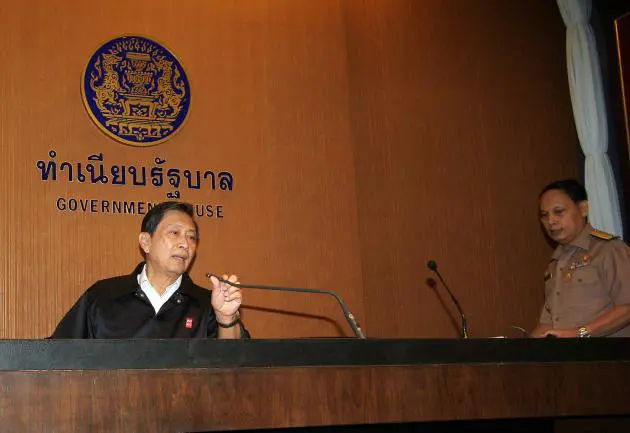


The Water and Flood Management Commission (WFMC) wants to revive a project to construct simple piped water systems in drought-stricken parts of the Northeast.
“I am going to tell the prime minister about this idea soon,” WFMC chair Plodprasob Surassawadee said yesterday after the commission’s meeting on drought. He is also the science minister.
Surveys are now being conducted to determine which areas need the piped-water systems. A management committee will be established to operate each system, which must include some villagers as members.
Plodprasob expected each unit of the piped-water system to cost less than Bt25 million.
When asked whether the need for so many units would mean a massive budget, Plodprasob said the money would be well spent for people’s benefits.
“The government doesn’t care how much money such projects will need. The budget comes from taxpayers’ money. Such projects are a way to give direct return to people,” he said.
Plodprasob said the project to operate simple piped-water systems in the Northeast was abandoned about 20 years ago because of management problems. “But now we have better technologies,” he said.
The systems would involve above-ground water pipes and elevated water tanks.
MOVE TO FIGHT DROUGHT
The project is one of seven anti-drought measures.
“If we can prevent floods, we should be able to prevent drought too,” Plodprasob said.
Other measures included rainmaking operations and adding water to small reservoirs and wells.
Rainmaking operations have already started and would last for about one month.
“There are five teams for the Northeast and one for the Central region,” Plodprasob said.
With the rainy season ending soon, Prime Minister Yingluck Shinawatra has instructed the WFMC to shift its focus to drought.
Plodprasob said the country would not face more big storms this year.
“There’s a possibility of only two big low-pressure ridges during the rest of 2012,” he said, adding that would mean an increase in relative humidity and raise the success rate of the rainmaking missions.
Rear Admiral Witoon Tantikul, deputy director-general of the Nautical Chart and Publication Services Hydrographic Department, said the forecast shows reduced rainfall and the coming of cold weather.
Both Witoon and Plodprasob denied concerns about rising water levels in the Chao Phraya River.
“Now, it’s the high-tide period. It will continue to Sunday. The water level in waterways will be 20 per cent higher,” Wittoon said.
During the high tide, the level of the Chao Phraya will be between 1.77 metres and 1.87 metres.
“Last year [during the flood], the water level was up to 2.52 metres,” he said.
