
Strong AI demand lifts Japan’s core machinery orders by 5.2%


Demand linked to artificial intelligence, large orders from non-ferrous metal producers and digital investment helped lift August’s core total to 1,069.8 billion yen.
- Japan's core private-sector machinery orders, a key indicator of corporate capital investment, increased by 5.2% in August.
- The rise was significantly driven by strong demand associated with artificial intelligence (AI) and computer chips.
- This demand led to a 9.3% increase in orders from general-purpose and production machinery makers, which includes manufacturers of semiconductor equipment.
- The Cabinet Office maintained its assessment that machinery orders are "showing signs of picking up."
Japan’s machinery orders showed contrasting trends in August, with core private-sector orders rising 5.2% from the previous month after seasonal adjustment while the overall total fell 3.7%.
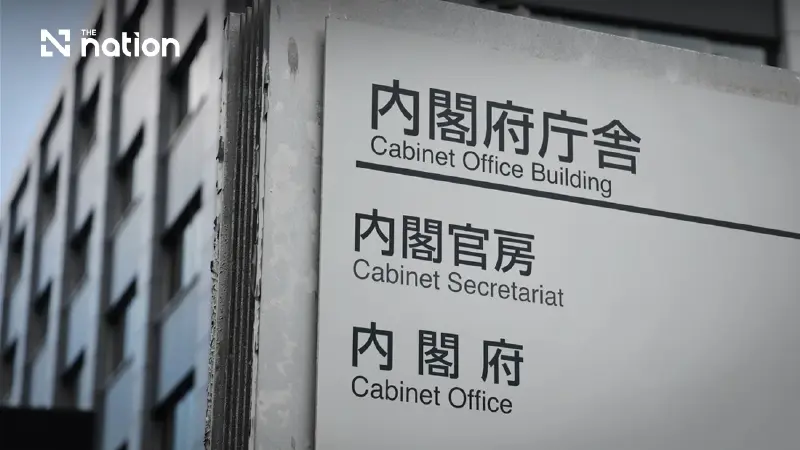
The core figure reached 1,069.8 billion yen, according to data released by the Cabinet Office on Thursday (October 15).
This measure excludes private-sector orders for ships and power equipment and serves as a leading indicator of corporate capital investment.
Weaker demand from the public sector and overseas brought total machinery orders, which include both categories, down to 4,041.9 billion yen.
Growth extended to both manufacturing and non-manufacturing businesses.
A 2.9% increase took non-manufacturing core orders to 541.3 billion yen, while manufacturers’ orders advanced 1.6% to 527 billion yen.
Large orders, including those for heat exchangers used in industrial plants, helped drive a 2.3-fold increase in the non-ferrous metals industry’s orders.
Orders for aircraft and machine tools also grew.
Strong demand associated with artificial intelligence (AI) and chips drove a 9.3% increase in orders from general-purpose and production machinery makers, a group that includes manufacturers of semiconductor-manufacturing equipment.
Among non-manufacturers, brisk digital investment supported orders in leasing, telecommunications, wholesale and retail.
The Cabinet Office kept its assessment unchanged, describing machinery orders as “showing signs of picking up”.

[Copyright The Jiji Press, Ltd.]
