
Life in Thailand not that bad after all


Play
19 teachers from Bhutan have been adapting quickly to a very different environment
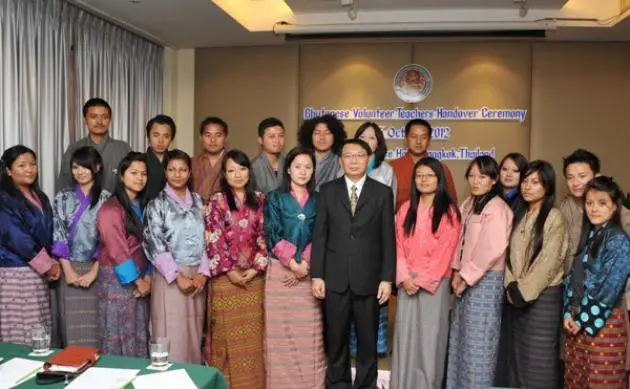
Though Thai culture has little in common with their country, 19 Bhutanese teachers on an exchange programme are starting |to love it here.
Halfway into their term in Thailand, which started on November 1 last year, to teach English at different schools, the young teachers were pining for their families and the fresh air at home. They found it difficult to deal with the language barrier and the rather spicy Thai cuisine. But things are getting better.
“It has been an incredible experience both professionally and socially,” Tshering Denkar, who is working at Bungphra Commercial College in Phitsanulok province, said.
Pema Lhamo Tawpow, posted at Science Vocational College in Chon Buri, loves the new culture, different people and new experiences. “I’ve been happy to work and travel around Thailand over the last four months,” she said.
Even those who didn’t like Thailand initially seem to be changing their minds.
“I’m starting to like Thailand as time passes,” Choeku, who is posted with Phothong Industrial and Education College in the Northeast, said. “Many Bhutanese find working in a foreign land challenging, but for me, it’s a lifetime opportunity.”
Thailand is the second foreign country he has visited after India.
When asked if they would like to spend another year in Thailand, most said yes.
“I wouldn’t mind staying here for a couple more years,” said Tshering Denkar, who won a rare invitation to speak at the National Army Force Centre and Phitsanulok prison. “I feel blessed.”
These 19 men and women were handpicked from 172 university graduates. Usually Bhutanese graduates find jobs as teachers, call-centre officers, marketing staff or as employees of international business firms, but this exchange programme will help widen their chances. Plus, it is also strengthening the bilateral relations.
Before their arrival in Thailand, the 19 graduates underwent a 10-day intensive course that covered various aspects of teaching, lesson planning and student-progress reporting. Since most of them lacked experience, this course prepared them well for what lay ahead in Thailand.
“I went in as a fresh graduate, but came out as a confident teacher,” Choeku said.
When asked how they dealt with life in a foreign country, they replied “adapting quickly”.
“To make it work, you have to just adjust to Thai culture and tradition,” Tshering Denkar said. “I kept in mind that teachers must inspire and support students, not show our weaknesses.”
Here, they are provided with free housing, health insurance, incentives, free utilities and a monthly salary of Bt18,000. Some have also been given a motorbike by the college they are working at.
However, adapting to Thailand did not come easy. It wasn’t just the language barrier, but also the cuisine, known for its spiciness. Plus, many found their lives here rather “adventurous”, especially in terms of the language barrier.
“Things began improving after I started learning Thai,” Choeku said, adding that people here were nice and generous. As for food, many have started cooking at home.
Most responded positively when asked if the Bhutanese government should continue with such initiatives to ease unemployment for new graduates back home. They said prospects for English-language teachers in Thailand were a lot higher.
Plus, this batch of teachers has inspired other new graduates back home. “I have come across many Bhutanese now willing to work in Thailand after I came here,” Choeku said.
Their ability to quickly adapt and their willingness to continue working in Thailand is also testimony to sceptics back home who were critical about sending fresh graduates to work in Thailand.
“As long as your goal is to make students understand and speak English fluently, then you have done your job well,” Pema Lhamo Towpow said.
