
DSI agrees to look into irregularities


Play
Minister to be asked for details as agency set to probe delay in construction among other things
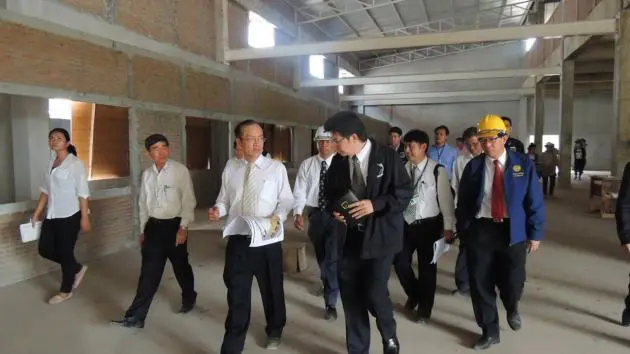
The Department of Special Investigation (DSI) will next week launch an inquiry into the delay and alleged irregular bidding process for the Government Pharmaceutical Organisation’s (GPO) influenza vaccine plant being built in Saraburi province.
On April 17, the agency will also ask Public Health Minister Pradit Sinthawanarong to provide evidence and more details about the issue.
The DSI’s decision to investigate the case comes after Pradit questioned the delay in the plant’s construction as well as the bidding process.
The Bt1.4-billion influenza vaccine plant, aimed at producing up to 100 million doses in case of a pandemic, was given the green-light by Surayud Chulanont’s government in 2008. Construction of the plant began the following year and was meant to be completed by 2011, but the deadline had to be extended by two years.
Since the project was approved, there have been a lot of problems causing delays.
Tanin Prempree, director of DSI’s corruption prevention and suppression centre who oversees the case, said the DSI would look into four key points.
First, it will look into how the GPO spent the budget over the past few years, as well as the purchasing and procurement contracts for the project.
“We will look at why there were so many purchasing and procurement contracts. There appear to be about seven contracts with different construction firms,” he said.
He added that he will write to the Budget Bureau about the GPO’s budget spending to see if it had followed the framework under the 2008 Cabinet resolution.
The second point the DSI will look into will be the changes in the design and structure of the plant, which allegedly delayed the construction.
“The DSI will find out if the budget increase and deadline extension had been done as per regulations,” he said.
The third point of investigation would be the changes in the terms of reference after the project won Cabinet approval in 2008. The Cabinet had initially approved the GPO’s proposal to build an inactivated influenza vaccine plant, but the GPO changed its plan later and decided to build a plant that can produce both live-attenuated and inactivated vaccine.
“We do not mind if the GPO is able to build a plant that can produce both live-attenuated and inactivated vaccine. We just want to know if the Cabinet had approved the change in plans,” he said.
Lastly, the DSI will look into the bidding process after it discovered that only one firm had taken part in the bidding process for the first section of the construction worth Bt321 million.
Dr Wichai Chokwiwat, a former president of the GPO’s board, said the construction had been delayed due to unprecedented incidents, such as problems at the site, the need to change the plant’s design, the 2011 floods and a design review which was needed to accommodate updates in the technology to produce vaccine. The GPO also had to follow the World Health Organisation’s requirements for the plant to be built within the bio-safety standard level 2.
As for the many purchase and procurement contracts, he said this was because the GPO wanted to hire different construction firms based on their expertise, adding that these companies had been reporting to the GPO board over the past few years.
Separately, Pradit will set up a panel of experts to study how the vaccine-plant project can move forward. The panel’s decision will be based on recommendations from WHO, which had previously provided guidelines for the GPO to build a flu-vaccine plant.
