
Nostalgia for an old style, sixty years on


Play
Chachoengsao school continues its child-centred, integrated system of learning
Child-centred and integrated learning is not at all something new to Thai education. Indeed, Thailand has had students learning in this way for more than 60 years. A school in Chachoengsao is good evidence that continuous implementation of this style of learning has brought about unexpected success.
However, it’s a pity many other schools that had students learning the same way decades ago are unable to continue implementing it these days.
The old story of child-centred and integrated learning – the technique that has existed so long people hardly know when it came to Thailand, how it was first implemented and what was its impact – is told in a book, entitled Chachoengsao Model Roi To Thee Soon Hai Nai Wong Kan Suek Sa Thai (Chachoengsao Model: Its Disappearance from Thailand’s Education). It was written by Wiwat Pandhawuttiyanon.
The media recently visited the schools in Chachoengsao recorded in this part of the country’s educational history.
The United Nations Educational, Scientific and Cultural Organisation (Unesco) introduced child-centred and integrated learning in its 10-year educational development project in the province from 1951-1959. Thai teachers were trained in the new way by Unesco’s specialists from abroad.
They turned the way they taught from chalk and talk into using instructional media to teach pupils and engage them in activities to improve their learning. Everyday items were turned into instructional media.
“I was impressed by instructional media my teacher used to teach me and a book corner at my classroom when I studied primary education at Wat Sampathuannok School. Having studied with instructional media and learning by doing, I really understood the lessons,” said Anek Thepsupornkul, president of Rajabhat Rajanagarindra University – a primary school student at Wat Sampathuannok. The school was among 10 primary schools in Unesco’s Chachoengsao Pilot Project.
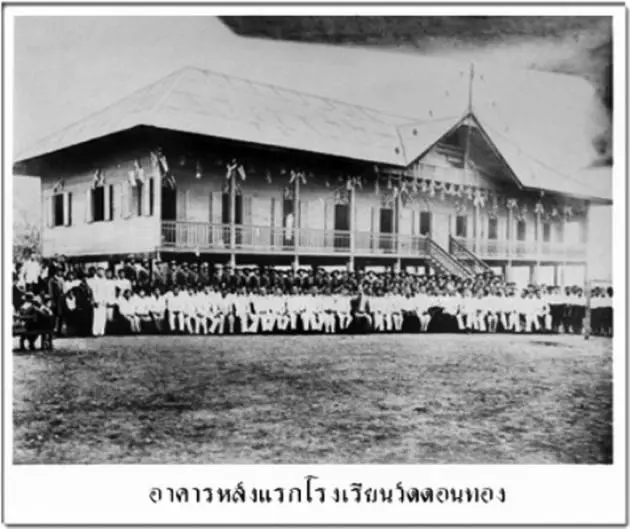
Wat Donthong School, a Chachoengsao primary school has been enjoying unexpected success, although it was not directly in this project. Praphon Jitchobjai, its then principal, learned from the project and applied it to his students.
“I tried to encourage my teachers to keep in their minds that they had to get their students to learn and have fun at the same time. We provided them with activities that they could work out so they were healthy and ready to study,” 96-year-old Praphon said. “We focused on improving students’ learning and getting parents to support the school in an attempt to upgrade it to become as good as or better than the schools in the project.”
Praphon’s successor Wirot Sripoka, also a former principal of the school said he had adopted and applied Praphon’s techniques. With continuous implementation, the number of student enrolments jumped from 300 in 1978 to 3,000 in 2003. The school now remains popular among students.
However, some of the 10 schools in this project were unable to continue implementing such techniques and to improve their education quality. They saw fewer students and became small schools, one of them has already been closed down. Buildings and facilities created in the old time by the Unesco’s project that have existed so far are now seen as reminders of the then educational prosperity when they were role models for school administrators from different provinces.
“Student-centred learning has spread in Thailand for about 60 years, but it has not been implemented continuously in many schools. Both former principals of Wat Donthong School are good examples, as they had a succession plan to continue providing students the best way of learning,” said Nipaporn Kunlasomboon, education specialist of Pico (Thailand).
She said Pico and the university collaborated to create a book aimed at telling people about what has disappeared from Thailand’s education system. The book also tells how the project helped improve other educational levels during its ten years, including pre-primary, secondary extension education and vocational education as well as teacher training and educational management.
“We want educators and interested people to learn good examples from the book as they can be applied to education in today’s world. It also shows that leadership among principals, heads of the province and local communities could bring about better quality education,” Nipaporn said, adding that they should bring back such good management and learning techniques for students.
