
Public health sector caught in wrangles


Play
There seems to be no sign that the battle within the country's public healthcare system is going to ease. In fact, things appear to be getting worse.
For starters, rural doctors and patients’ networks have come out to condemn the dismissal of Government Pharmaceutical Organisation (GPO) managing director Witit Artavatkun.
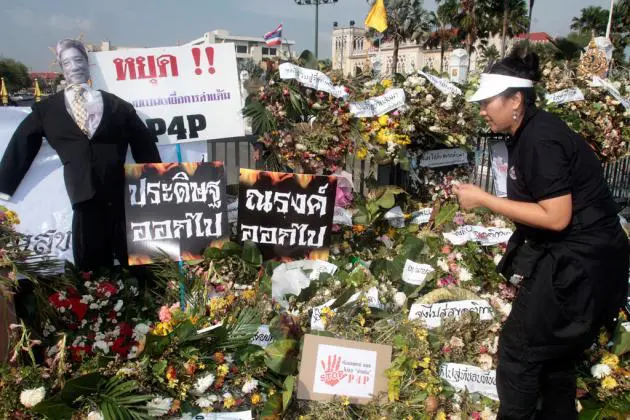
They are now promising to stage a prolonged rally outside Prime Minister Yingluck Shinawatra’s home to push for the firing of Public Health Minister Pradit Sinthawanarong. In fact, some patients with kidney disease are so angry that they are willing to put their lives at risk and undergo dialysis in the blazing sun just to display their displeasure with Pradit’s perceived move to weaken the GPO.
The GPO plays a key role in keeping medicines and medical equipment affordable, and it is alleged that Pradit orchestrated Witit’s departure because he is planning to privatise the agency.
Critics also say that weakening the GPO would open the door for foreign drug companies to make money at the expense of patients.
There is another reason Pradit wanted to fire Witit.
The former GPO chief had close ties with the Rural Doctors’ Society, which has locked horns with the minister over many issues, including the pay-for-performance (P4P) system for medical workers at state hospitals.
Critics believe that P4P will only demoralise rural doctors, who do not treat that many patients every day but are devoted to tending to the sick in far corners of the country. It is believed that at the end of it all, doctors will opt to work at private hospitals.
However, Pradit has to date managed to withstand the pressure and hail of allegations.
His P4P policy was implemented on April 1, and despite the opposition, many state hospitals have already complied with the new rule.
Yet many of Pradit’s supporters say that Witit’s firing is justified because under his leadership the GPO had run into several scandals, such as contaminated precursor chemicals for paracetamol as well as delays in the construction of vaccine facilities.
But the minister’s opponents are not convinced.
Saree Ongsomwang, secretary-general of the Foundation for Consumers, and Aids Access Foundation director Nimit Thien-udom are backing the establishment of a “Fund for Justice in Health” with the aim to help people facing unfair practices in the health sector, including Witit. For instance, the fund will cover legal costs should Witit want to take the issue to court.
Now that there are two sides of the story, how does one work out who is in the right?
Investigations by independent agencies such as the National Anti-Corruption Commission might offer conclusive evidence in the end, but the process could take a long time during which the country’s public healthcare sector might be thrown into disarray.
If the man in charge of the Public Health Ministry does not win trust and acceptance, it will be difficult to expect an effective implementation of his policies no matter what they are.
So, should Pradit be replaced?
This decision relies on the integrity and sincerity of all the movers and shakers. If they find solid evidence against Pradit and produce what they have in hand, then the minister should just accept the truth and step down.
If he is unable to serve well in his post, then there is no point in hanging on.
He needs to prove that his real intention is to change things for the good of the ministry and not abuse his power to persecute government officials.
Likewise, if his opponents are simply bullying him to protect their friends, then they should stop and reconsider.
After all, there is not much point in persecuting someone over personal issues. They need to prove that what Pradit is doing is genuinely wrong, otherwise they should just accept Pradit’s attempts.
Cronyism should not be allowed where public interest is at stake – especially since Thailand is in desperate need of a strong and efficient healthcare system for its people.
