
Conserve Thai elephants too, activists say


Play
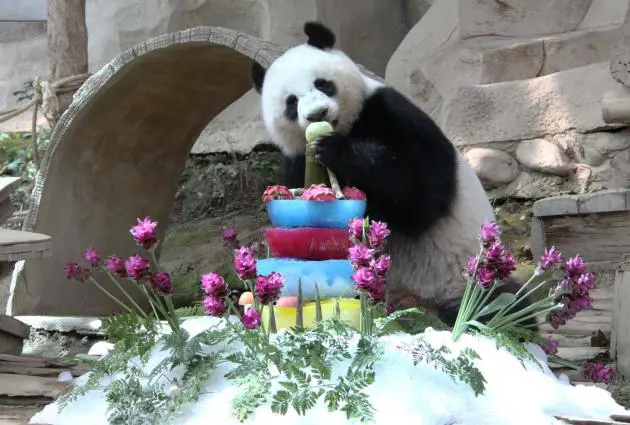
The Friends of the Asian Elephant (FAE) foundation yesterday asked if it was really worth keeping the Chiang Mai-born panda Lin Ping in Thailand for another 15 years and paying China Bt44 million per year for the privilege.
Meanwhile, a veterinarian from the Department of National Parks, Wildlife and Plant Conservation (DNWPC) called on the authorities to treat Thai elephants as national property and implement a similar system of conservation as the one China has put in place for pandas.
At a seminar held yesterday at Kasetsart University’s Faculty of Forestry, university lecturer Naris Phumpakpan said pandas attracted public attention and served as a conservation ambassador. He said China also used the panda research fund to conduct studies on the artificial insemination of the brow-antlered deer, the Chinese goral and tapir.
He said Chiang Mai’s economy had grown as more people are visiting just to catch a glimpse of Lin Ping. “Now the question is how we use the panda research project to help boost other studies as well?” he added.
However, FAE’s Surapol Doungkhae said that waiting for leftovers from the panda research fund to conduct studies on other animals was not an effective approach. Besides, he said, it was pointless spending so much on promoting another country’s national animal, while Thailand’s own elephants are being ignored.
Confirming that Thailand had to join the rest of the world in conserving the panda, which are close to extinction, DNWPC veterinarian Pattarapol Manee-on called on Thai authorities to apply the same conservation model to elephants as China does to pandas. Hence, Thailand would own all Thai elephants, including their offspring, which will have to be returned to the Kingdom by the age of five. Meanwhile, all elephant-related products will also be considered national property.
