
Suranand defuses healthcare crisis, for now


Play
PM's Secretary-General Suranand Vejjajiva has stepped in and successfully defused the biggest time bomb in the country's healthcare sector.
Suddenly, Public Health Minister Pradith Sinthawanarong’s controversial policy to introduce a new pay system for medical workers is no longer the issue. It has been agreed at the meeting presided over by Suranand that the Pay-For-Performance (P4P) policy will take effect only at medical facilities ready to do so.
After emerging from the meeting, the Rural Doctors Society also no longer pressed hard for the removal of Pradith from the helm of the Public Health Ministry.
However, there are several other time bombs ticking in the public-healthcare sector. Probably, one of them will explode very soon.
Since Pradith’s rise to the helm of the Public Health Ministry last November, he has clearly been trying to reform it. Using a rather aggressive approach, he has insisted that the ministry has been operating inefficiently for years and it is time for a change. The P4P, which drew strong opposition from the Rural Doctors Society, is just one of his initiatives.
It is known that Pradith plans to set up a national health authority to oversee five health giants – the Thai Health Promotion Foundation, the Emergency Medical Institute of Thailand, the National Health Security Office, the National Health Commission Office and the Health System Research Institute.
In the past decade, the Rural Doctors Society has had a big say over these independent agencies because most of their board members have had ties with the society.
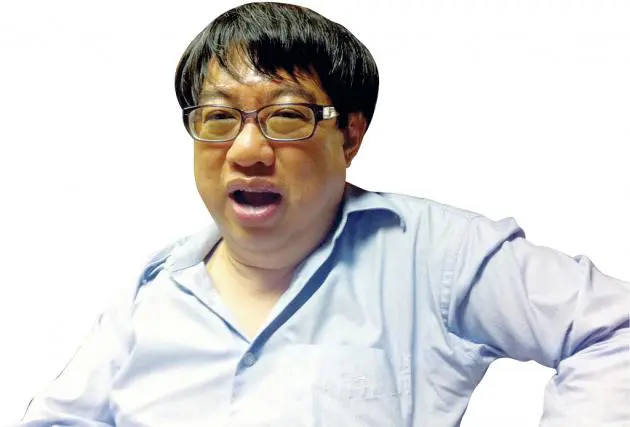
In an exclusive interview with The Nation, Thailand Development Research Institute (TDRI) senior official Viroj na Ranong said the Rural Doctors Society had long fought for fair health policies in a bid to protect rural hospitals. He, therefore, was rather surprised when the society lately stepped up a campaign against Pradith.
“They fiercely tried to have Pradith fired from his ministerial position,” he said.
During the past five years, an independent health agency, the Thai Health Promotion Foundation, had been allegedly involved in a political movement. There are, therefore, speculations that this health agency was one of the targeted organisations to be reformed.
Pradith not only introduced healthcare reform, but also sought investigation into irregularities in state enterprises like the Government Pharmaceutical Organisation (GPO) over the procurement of the ingredient to produce paracetamol and the delay in the construction of the mass production drug plant to produce it, along with the HIV/Aids drug and the Flu vaccine plants. It was also part of his claim to boost the confidence of the public in the state drug-maker’s production.
But it seemed like his actions were strongly opposed by the Rural Doctors Society and its alliances, including the network of patient, health advocates, and GPO’s Labour Union.
During the five months since the conflict was ignited, Pradit has had the accusation levelled at him that as he had never worked at a rural hospital and did not understand the conditions in remote areas, he was merely seeking to create a list of achievements.
“While there are grounds for such accusations, their [the Rural Doctor Society’s] reactions much differ from in the past when they complained that ministers who had no medical knowledge, like Chaiya and Chalerm, were appointed, but they had never launched a campaign like this. So it is like they are fighting for something else,” Viroj said.
When the Rural Doctors Society accused Pradith of introducing the P4P to benefit private hospitals, Viroj says he was not at all convinced.
However, Viroj said the medical-hub policy – as well as the idea of attracting foreign patients – had been implemented by every government since the 1997 economic crisis.
Moreover, most private hospitals would hire specialist physicians from medical schools rather than doctors straight out of rural hospitals, he said, adding, “I think this accusation is at best far-fetched. It sounds just like an invented conspiracy theory.”
“The claim that P4P is being implemented to benefit private hospitals does not convince me,” he added.
When asked about Pradit’s attempt to privatise the GPO, Viroj said the state enterprise still had an important role to play as a state drug-maker and supplier of orphan drugs. However, it currently produces about half of the drugs it sells, and simply acts as a middleman for the other half, which consist mainly of common treatments widely available in the market.
Part of the reason for the GPO acting as a middleman is that it holds monopoly rights under government regulations, which require state hospitals to purchase a certain proportion of their drugs from the GPO instead of from private producers, he said.
“Personally, I don’t think we want the GPO to be just another big business organisation, but an organisation that can provide orphan drugs and reserve certain drugs for use during an emergency,” he added.
However, Viroj criticised Pradit’s policies as not being sufficiently crystallised, with the minister tending to get them implemented in such a hurry that they could cause great problems for the healthcare system rather than improving it.
